
Book, Artifact, and Drawing 'Essential Clay' (made with clay and dust, mixed with water and acrylic medium).
Marta Castelo
FBAUL
Sculpture
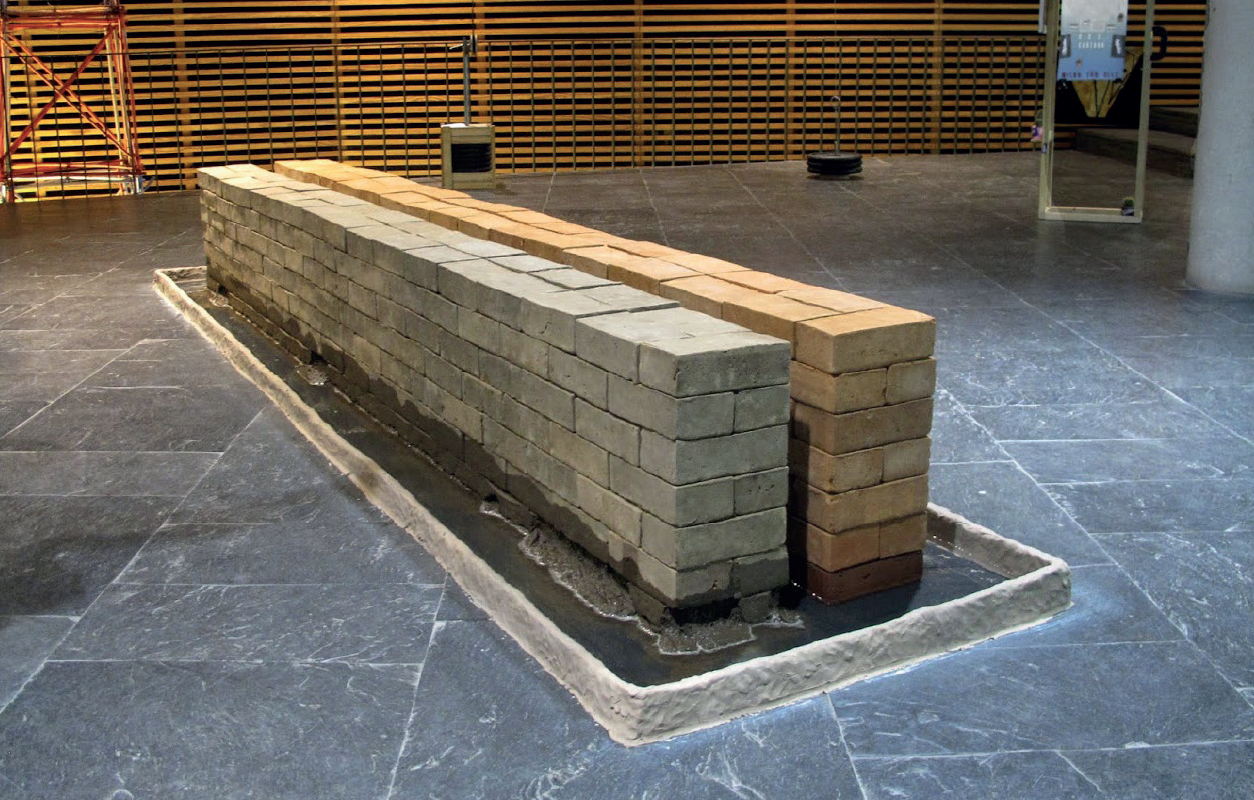
'Untitled', fired bricks, raw bricks, and clay. Variable dimensions. 2013. Image credits: Marta Castelo
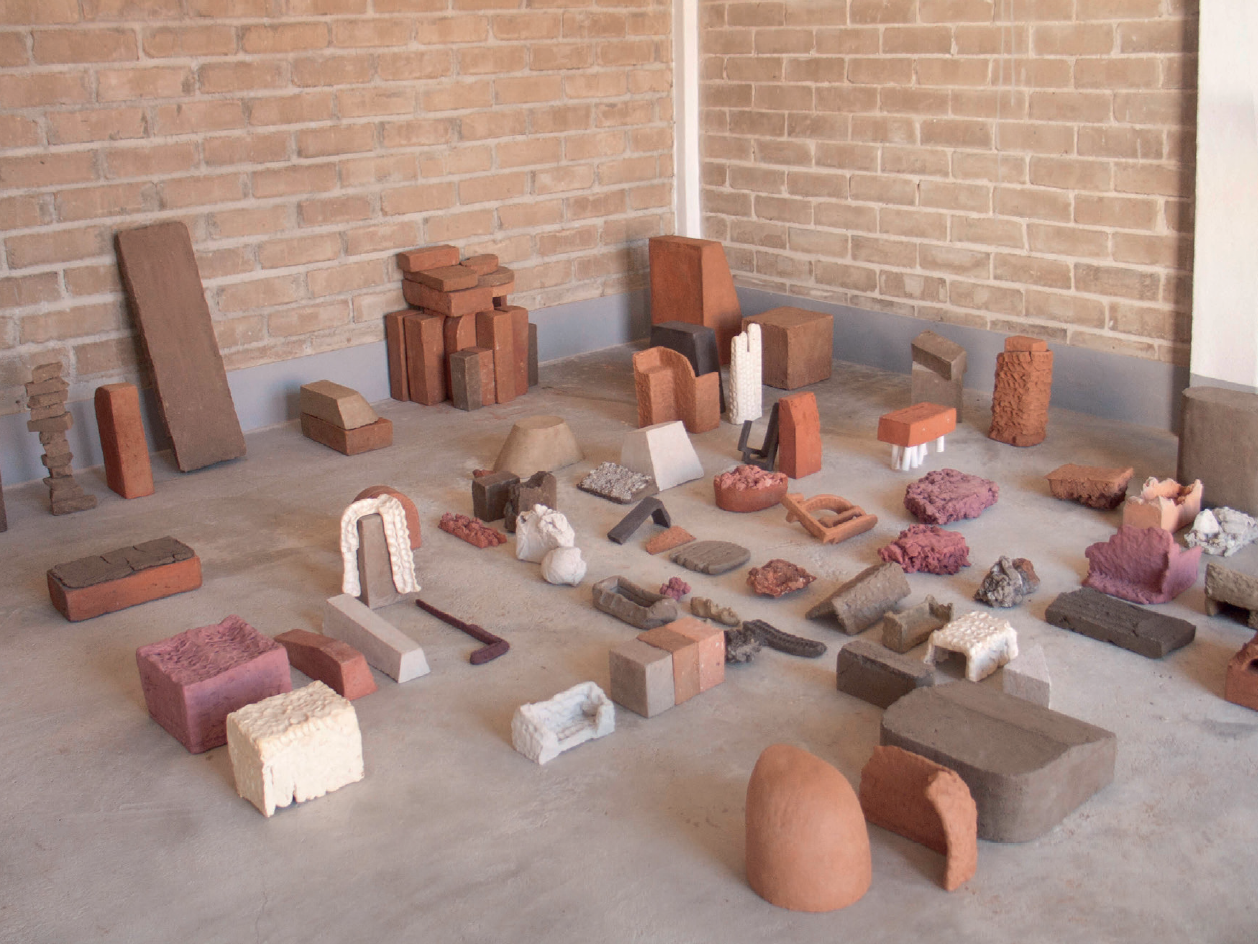
Brick and clay drawings on a black background. Installation. Various clays and ceramics. Variable dimensions. Ceramics and Earth Studio (OCT), Montemor-o-Novo, 2015. Image credits: Marta Castelo.
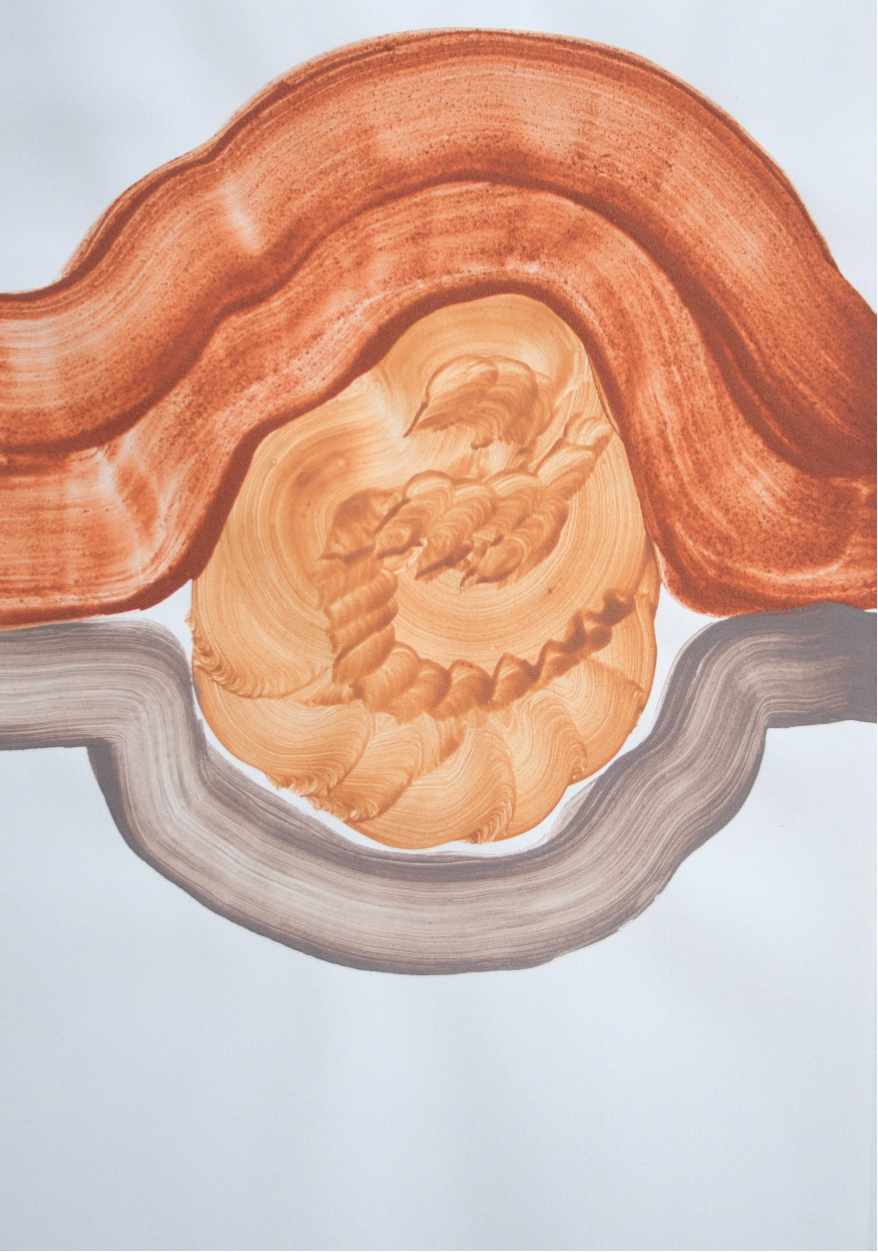
'Essential Clay' (series). Drawing. Various clays and acrylic medium on paper. 42 x 29.7 cm. 2019. Image credits: Marta Castelo.
×
Methods; New Concepts; Related Artworks;
Essential Clay: An Investigation into the Genesis of Artistic Creation
The gesture of molding clays and drawing with earth suggests fluid and instinctive movements that progressively distance themselves from reference as the artistic investigation unfolds. The selected epistemic objects correspond to this culmination of approaching the nature of 'non-fired clay' as 'physis' and, in contrast, the fired clay and its respective constructive and technical dimension. From a methodological perspective, Marta Castelo develops a reflective practice that integrates: a) the conceptual framework with other authors, with particular emphasis on the historical and philosophical context of the theme; b) the artistic process itself.
Clay; Ceramics; Construction; Drawing; Physis; Sculpture; Tekhne;
2020
Book, Artifact, and Drawing 'Essential Clay' (made with clay and dust, mixed with water and acrylic medium).
Marta Castelo
FBAUL
Sculpture
'Untitled', fired bricks, raw bricks, and clay. Variable dimensions. 2013. Image credits: Marta Castelo
Brick and clay drawings on a black background. Installation. Various clays and ceramics. Variable dimensions. Ceramics and Earth Studio (OCT), Montemor-o-Novo, 2015. Image credits: Marta Castelo.
'Essential Clay' (series). Drawing. Various clays and acrylic medium on paper. 42 x 29.7 cm. 2019. Image credits: Marta Castelo.
×
Methods; New Concepts; Related Artworks;
Essential Clay: An Investigation into the Genesis of Artistic Creation
The gesture of molding clays and drawing with earth suggests fluid and instinctive movements that progressively distance themselves from reference as the artistic investigation unfolds. The selected epistemic objects correspond to this culmination of approaching the nature of 'non-fired clay' as 'physis' and, in contrast, the fired clay and its respective constructive and technical dimension. From a methodological perspective, Marta Castelo develops a reflective practice that integrates: a) the conceptual framework with other authors, with particular emphasis on the historical and philosophical context of the theme; b) the artistic process itself.
Clay; Ceramics; Construction; Drawing; Physis; Sculpture; Tekhne;
2020
Specific protocols of assemblage, readymade, and museological accumulation
Ana Pérez e Quiroga
College of Arts, University of Coimbra
Contemporary Art
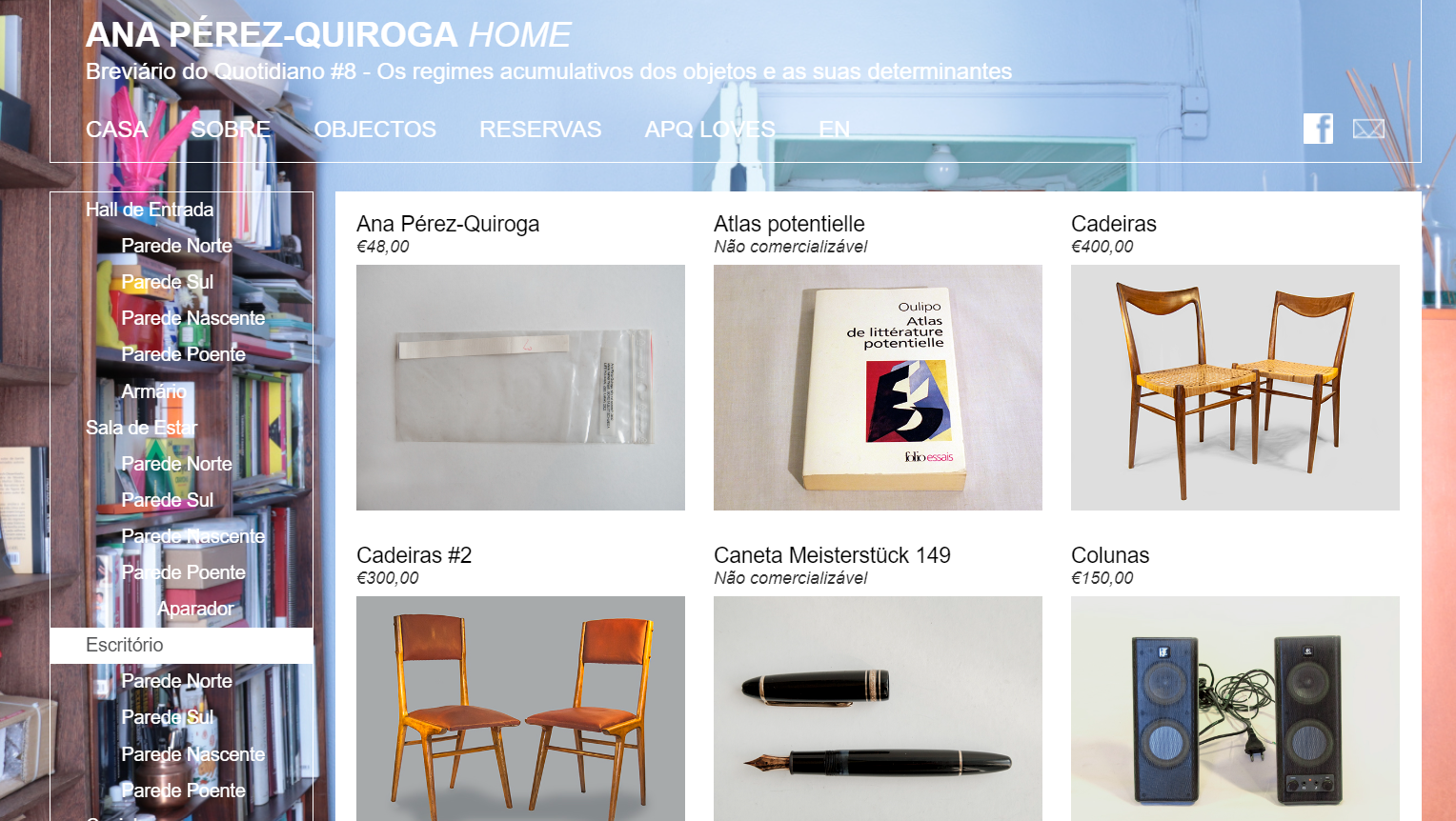
Homepage of the Artist's Website. Image credits: Ana Perez and Quiroga

Homepage of the Artist's Website. Image credits: Ana Perez and Quiroga

Homepage of the Artist's Website. Image credits: Ana Perez and Quiroga
×
Argumentation; Final Object;
Breviary of the Everyday #8 - the cumulative regimes of objects and their determinants
The selected epistemic object (EO) consists of the material and digital facets of the artist's body of work. The focus of the research is the artist-woman's own daily life, a work process revealed through the incorporation of objects that are in her home, informal conversations at home about art-life, and an immersion in the artist's inhabited space: through a visit to her intimate space, 'the home' (a doubly performative and installative act), and, on the other hand, through a digital platform - anaperezquirogahome.com - where the artist's property is rented, a dinner is hosted, and photographs cataloging everyday objects are sold. Here, art-life merge as fundamental elements of her thinking and artistic practice.
Autobiographical Process; Digital Platforms; Domestic Space; Feminism; Installation; Performance; Readymade;
2017
Specific protocols of assemblage, readymade, and museological accumulation
Ana Pérez e Quiroga
College of Arts, University of Coimbra
Contemporary Art
Homepage of the Artist's Website. Image credits: Ana Perez and Quiroga
Homepage of the Artist's Website. Image credits: Ana Perez and Quiroga
Homepage of the Artist's Website. Image credits: Ana Perez and Quiroga
×
Argumentation; Final Object;
Breviary of the Everyday #8 - the cumulative regimes of objects and their determinants
The selected epistemic object (EO) consists of the material and digital facets of the artist's body of work. The focus of the research is the artist-woman's own daily life, a work process revealed through the incorporation of objects that are in her home, informal conversations at home about art-life, and an immersion in the artist's inhabited space: through a visit to her intimate space, 'the home' (a doubly performative and installative act), and, on the other hand, through a digital platform - anaperezquirogahome.com - where the artist's property is rented, a dinner is hosted, and photographs cataloging everyday objects are sold. Here, art-life merge as fundamental elements of her thinking and artistic practice.
Autobiographical Process; Digital Platforms; Domestic Space; Feminism; Installation; Performance; Readymade;
2017
"Documentary Body"
Soraya Vasconcelos
University of Algarve - Faculty of Human and Social Sciences
Culture, Communication, and Arts
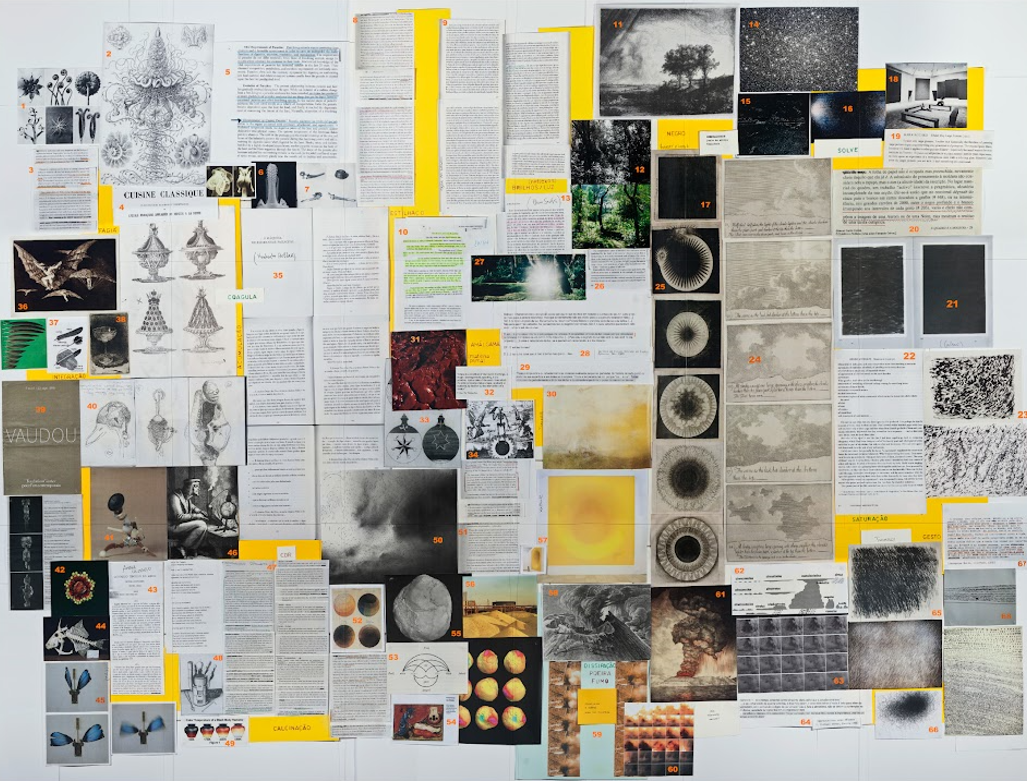
'Documentary Body'. 2014. Image credits: Soraya Vasconcelos
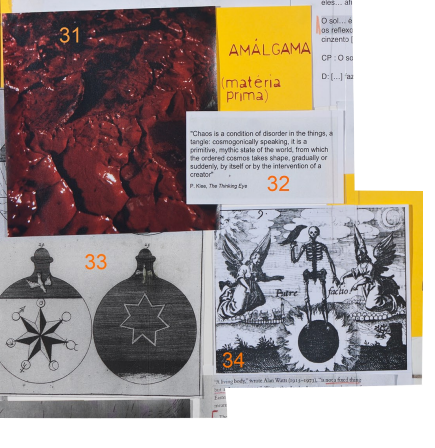
'Documentary Body'. 2014. Image credits: Soraya Vasconcelos
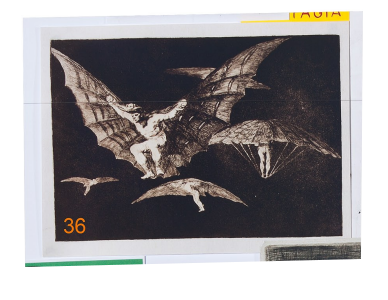
'Documentary Body'. 2014. Image credits: Soraya Vasconcelos
×
Final Object; Visual Concepts;
Affection - Oscilloscope of Meaning
The selected epistemic object consists of the mapping of a documentary section that visually and textually explores - through annotated captions accompanying visual elements - the constellative and rhizomatic process of the artist's investigation. Soraya Vasconcelos shares this sensitive body, which aligns with the free-flowing nature of artistic thought rather than a tree-like, linear, chronological, and hierarchical discourse. The thesis also reflects this decentralization and interconnection, integrating multiple pathways and a plurality of meanings.
Affection; Creative Process; Mapping; Meaning; Rizome;
2014
"Documentary Body"
Soraya Vasconcelos
University of Algarve - Faculty of Human and Social Sciences
Culture, Communication, and Arts
'Documentary Body'. 2014. Image credits: Soraya Vasconcelos
'Documentary Body'. 2014. Image credits: Soraya Vasconcelos
'Documentary Body'. 2014. Image credits: Soraya Vasconcelos
×
Final Object; Visual Concepts;
Affection - Oscilloscope of Meaning
The selected epistemic object consists of the mapping of a documentary section that visually and textually explores - through annotated captions accompanying visual elements - the constellative and rhizomatic process of the artist's investigation. Soraya Vasconcelos shares this sensitive body, which aligns with the free-flowing nature of artistic thought rather than a tree-like, linear, chronological, and hierarchical discourse. The thesis also reflects this decentralization and interconnection, integrating multiple pathways and a plurality of meanings.
Affection; Creative Process; Mapping; Meaning; Rizome;
2014
Catalog 'Meio Concreto' 2013, Serralves Foundation
Alexandre Estrela
FBAUL
Multimedia
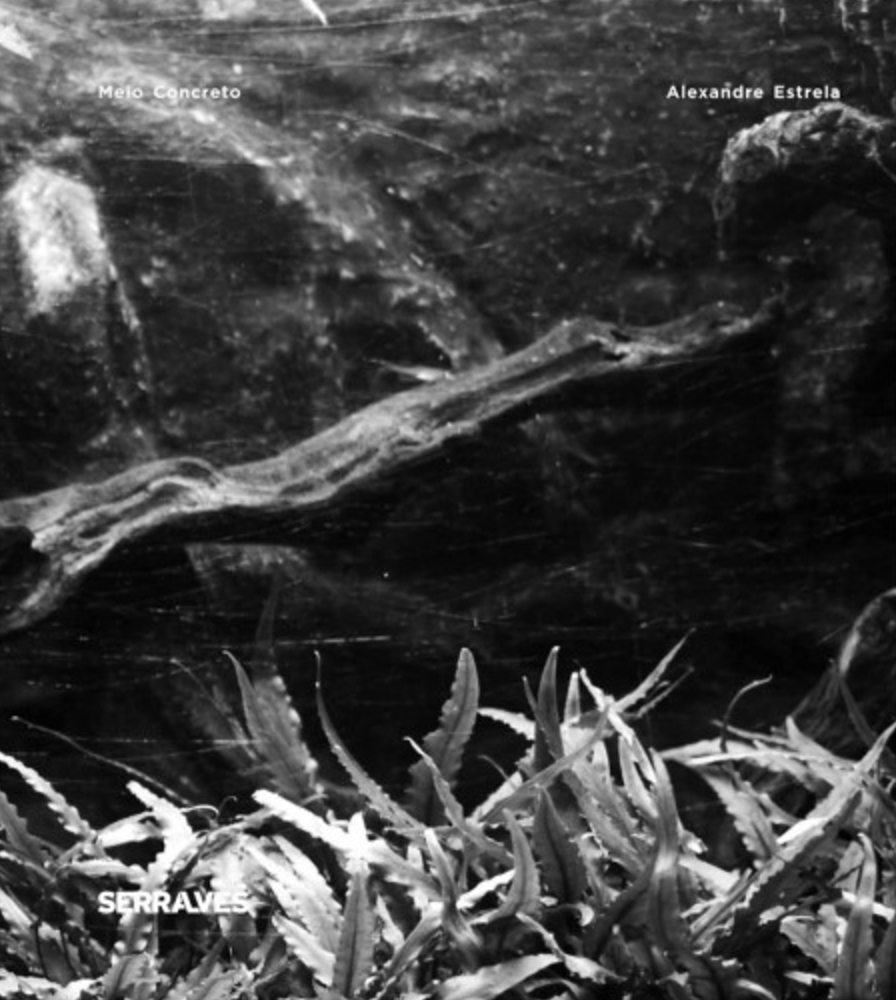
Front cover of the 'Meio Concreto' Catalog, developed within the context of the artist's doctoral research and launched as part of the exhibition 'Alexandre Estrela: Meio Concreto', 2013. Published by the Serralves Foundation.
×
Argumentation; Methods; New Concepts; Thesis Document;
Journey to the middle: concrete middle
The selected epistemic object represents the antithesis and academic questioning of traditional theoretical foundations, thus being important for reflecting on the discourses of a doctoral degree in the arts. In an academic research context, where the sharing of arguments and processes underlying artistic creation are the 'status quo', the author questions the role of the artist and the definition of art as a field of study/research, asserting that art cannot be explained, that it is rather felt.
Academic antithesis; Artistic autonomy;
2016
Catalog 'Meio Concreto' 2013, Serralves Foundation
Alexandre Estrela
FBAUL
Multimedia
Front cover of the 'Meio Concreto' Catalog, developed within the context of the artist's doctoral research and launched as part of the exhibition 'Alexandre Estrela: Meio Concreto', 2013. Published by the Serralves Foundation.
×
Argumentation; Methods; New Concepts; Thesis Document;
Journey to the middle: concrete middle
The selected epistemic object represents the antithesis and academic questioning of traditional theoretical foundations, thus being important for reflecting on the discourses of a doctoral degree in the arts. In an academic research context, where the sharing of arguments and processes underlying artistic creation are the 'status quo', the author questions the role of the artist and the definition of art as a field of study/research, asserting that art cannot be explained, that it is rather felt.
Academic antithesis; Artistic autonomy;
2016
Study 'A Tendency to Forget,' 2012 and Film 'Adventures in Mozambique and the Portuguese Tendency To Forget,' 2016
Ângela Ferreira
FBAUL
Sculpture

Model 'A Tendency to Forget' (space for film projection), 2012, (21 x 28 cm). Image credits: Ângela Ferreira
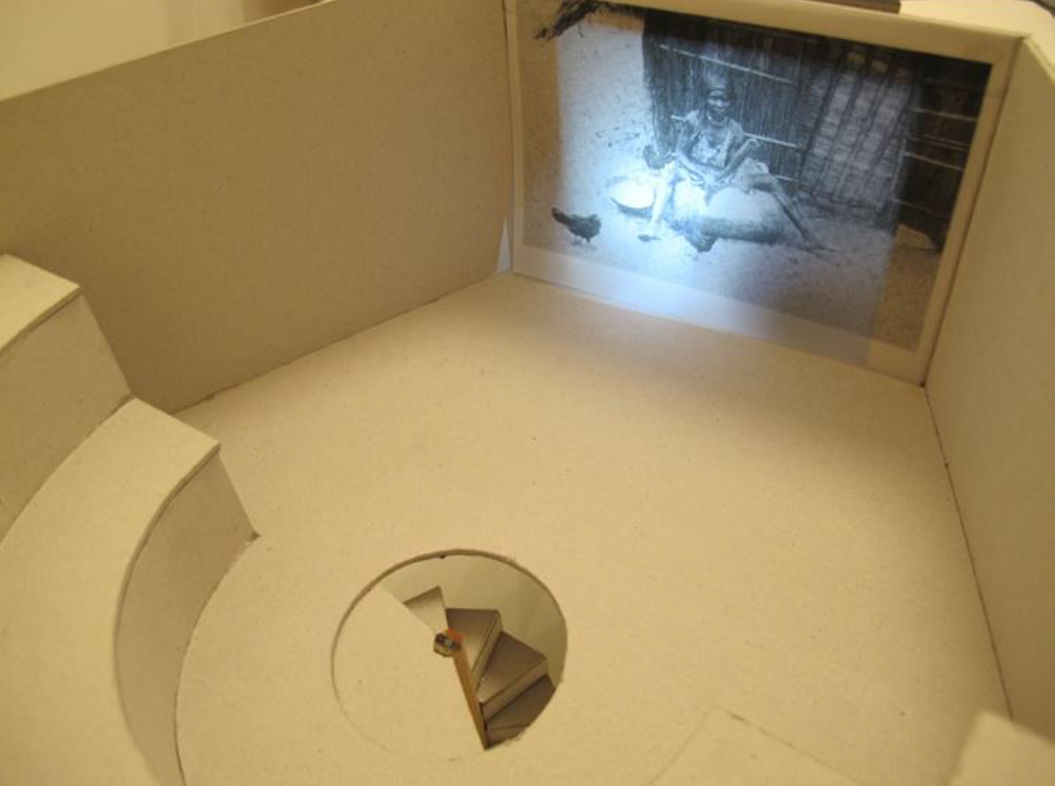
Model 'A Tendency to Forget' (space for film projection), 2012, (21 x 28 cm). Image credits: Ângela Ferreira
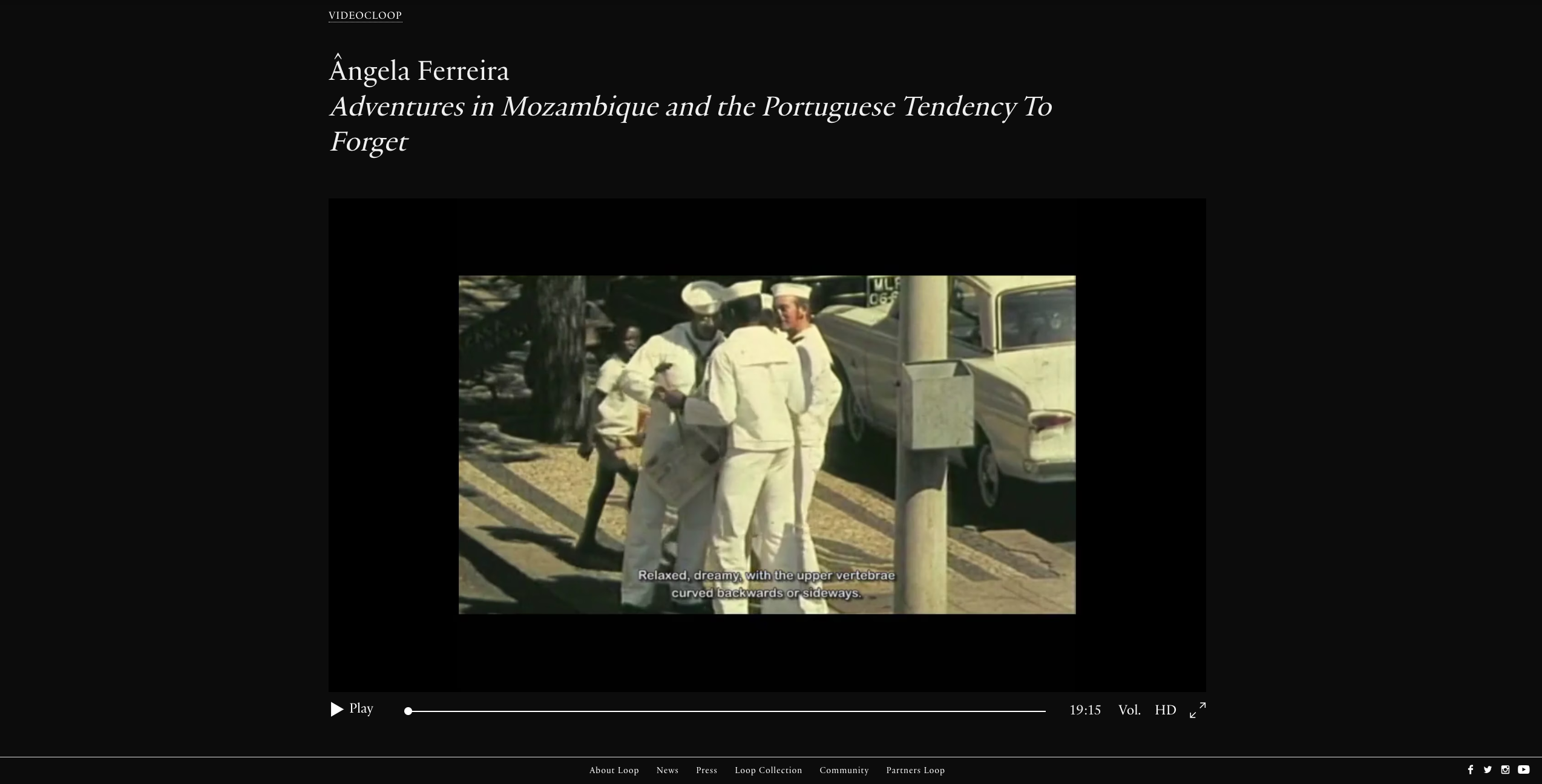
Movie 'Adventures in Mozambique and the Portuguese Tendency To Forget', 2016, available: https://loop-barcelona.com/videocloop/video/angela-ferreira/
×
Argumentation; Final Object;
Artistic Discourse as a Device for Innovation in the Discussion of Post-Postcolonialism
The selected Epistemic Objects (EO): Study 'A Tendency to Forget,' 2012 and Film 'Adventures in Mozambique and the Portuguese Tendency To Forget,' 2016 are materializations of Ângela Ferreira's artistic research through a processual model. These EOs are integral components of a multimedia installation that invites the viewer to inhabit the space, combining photography, architecture, sculpture, and archival footage. The work critically reflects on the lives and work of anthropologists Jorge and Margot Dias, who studied the Makonde people in northern Mozambique and gained international recognition in the 1960s and 1970s. The artist’s research uncovers the hidden political agenda of these anthropologists and their alliance with Salazar’s regime, questioning the complicity between anthropology and colonialism.
Anthropology; Ethnography; Postcolonialism; Sculpture;
2016
Study 'A Tendency to Forget,' 2012 and Film 'Adventures in Mozambique and the Portuguese Tendency To Forget,' 2016
Ângela Ferreira
FBAUL
Sculpture
Model 'A Tendency to Forget' (space for film projection), 2012, (21 x 28 cm). Image credits: Ângela Ferreira
Model 'A Tendency to Forget' (space for film projection), 2012, (21 x 28 cm). Image credits: Ângela Ferreira
Movie 'Adventures in Mozambique and the Portuguese Tendency To Forget', 2016, available: https://loop-barcelona.com/videocloop/video/angela-ferreira/
×
Argumentation; Final Object;
Artistic Discourse as a Device for Innovation in the Discussion of Post-Postcolonialism
The selected Epistemic Objects (EO): Study 'A Tendency to Forget,' 2012 and Film 'Adventures in Mozambique and the Portuguese Tendency To Forget,' 2016 are materializations of Ângela Ferreira's artistic research through a processual model. These EOs are integral components of a multimedia installation that invites the viewer to inhabit the space, combining photography, architecture, sculpture, and archival footage. The work critically reflects on the lives and work of anthropologists Jorge and Margot Dias, who studied the Makonde people in northern Mozambique and gained international recognition in the 1960s and 1970s. The artist’s research uncovers the hidden political agenda of these anthropologists and their alliance with Salazar’s regime, questioning the complicity between anthropology and colonialism.
Anthropology; Ethnography; Postcolonialism; Sculpture;
2016
'Since We #2', Stencil, Flour Assembly, 2014
Filipa Cruz
Faculty of Fine Arts, University of Porto
Fine Arts

'Since We #2', Stencil, Flour Assembly, 2014. Image credits: Filipa Cruz

'Since We #2', Stencil, Flour Assembly, 2014. Image credits: Filipa Cruz
×
Argumentation; Thesis Document; Visual Concepts
Everything I wanted to tell you: The indefiniteness, illegibility, invisibility, and insufficiency of language in artistic practice
The selected epistemic object consists of the materialization of a work by the artist, in which poetic texts and ephemeral organic materials (in this case, flour) expose her perspective at the boundary between the realms of image and word. The research theme and corresponding thesis focus on the contribution of other authors to the artist's creative practice, the penetration of text into the visual arts, its untranslatability, or the impossibility of analytically 'dissecting' the work from an academic standpoint.
Language; Subject; Word / Image; Untranslatability;
2015
'Since We #2', Stencil, Flour Assembly, 2014
Filipa Cruz
Faculty of Fine Arts, University of Porto
Fine Arts
'Since We #2', Stencil, Flour Assembly, 2014. Image credits: Filipa Cruz
'Since We #2', Stencil, Flour Assembly, 2014. Image credits: Filipa Cruz
×
Argumentation; Thesis Document; Visual Concepts
Everything I wanted to tell you: The indefiniteness, illegibility, invisibility, and insufficiency of language in artistic practice
The selected epistemic object consists of the materialization of a work by the artist, in which poetic texts and ephemeral organic materials (in this case, flour) expose her perspective at the boundary between the realms of image and word. The research theme and corresponding thesis focus on the contribution of other authors to the artist's creative practice, the penetration of text into the visual arts, its untranslatability, or the impossibility of analytically 'dissecting' the work from an academic standpoint.
Language; Subject; Word / Image; Untranslatability;
2015
Excerpts from the thesis. Chapters: "Is Art Academic?" (pp. 84-86), "Concept... What's Up with That?" (pp. 106-118)
Richard Meitner
FBAUL
Sculpture
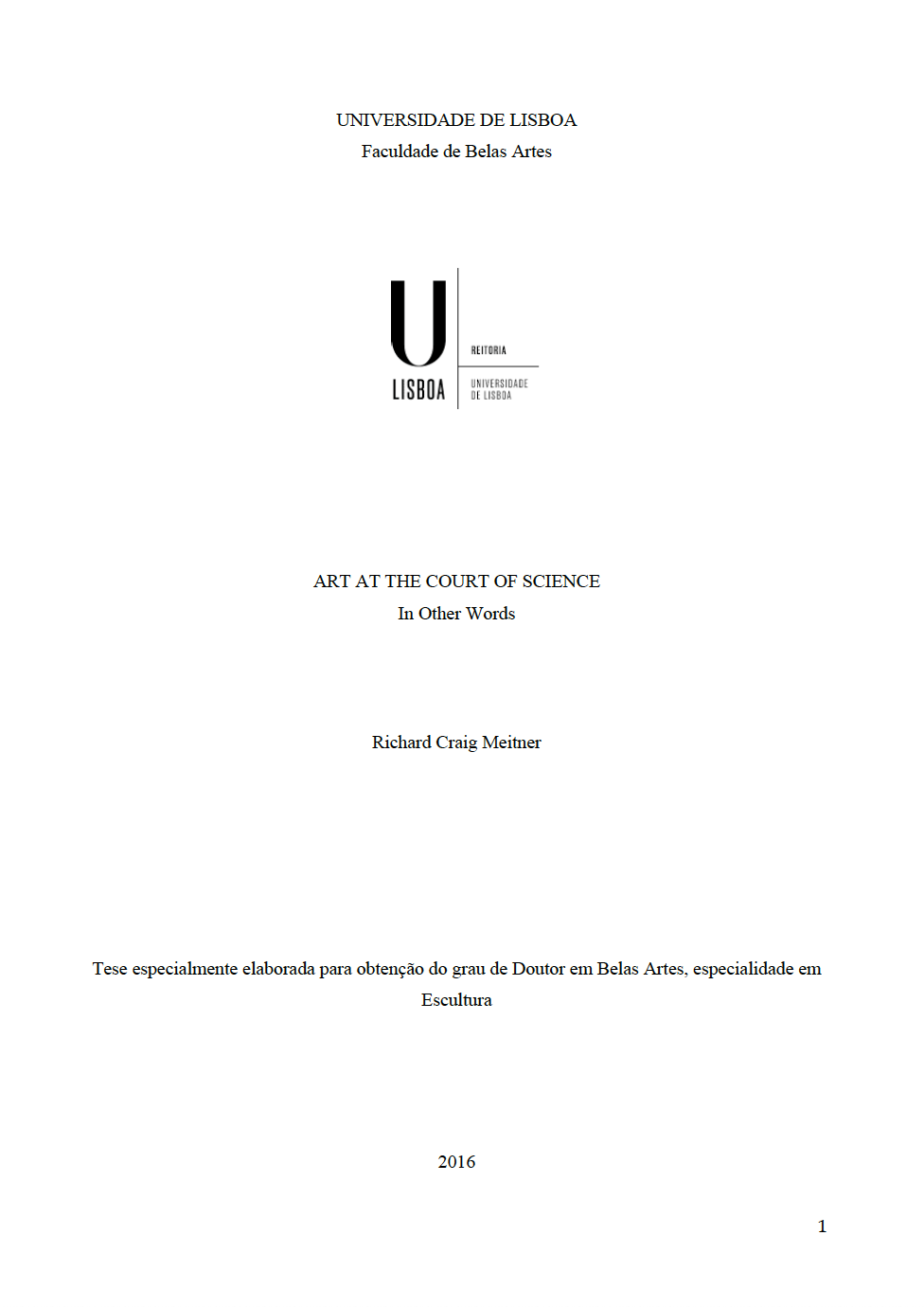
Thesis Cover 'Art at the court of science : in other words', Richard Meitner
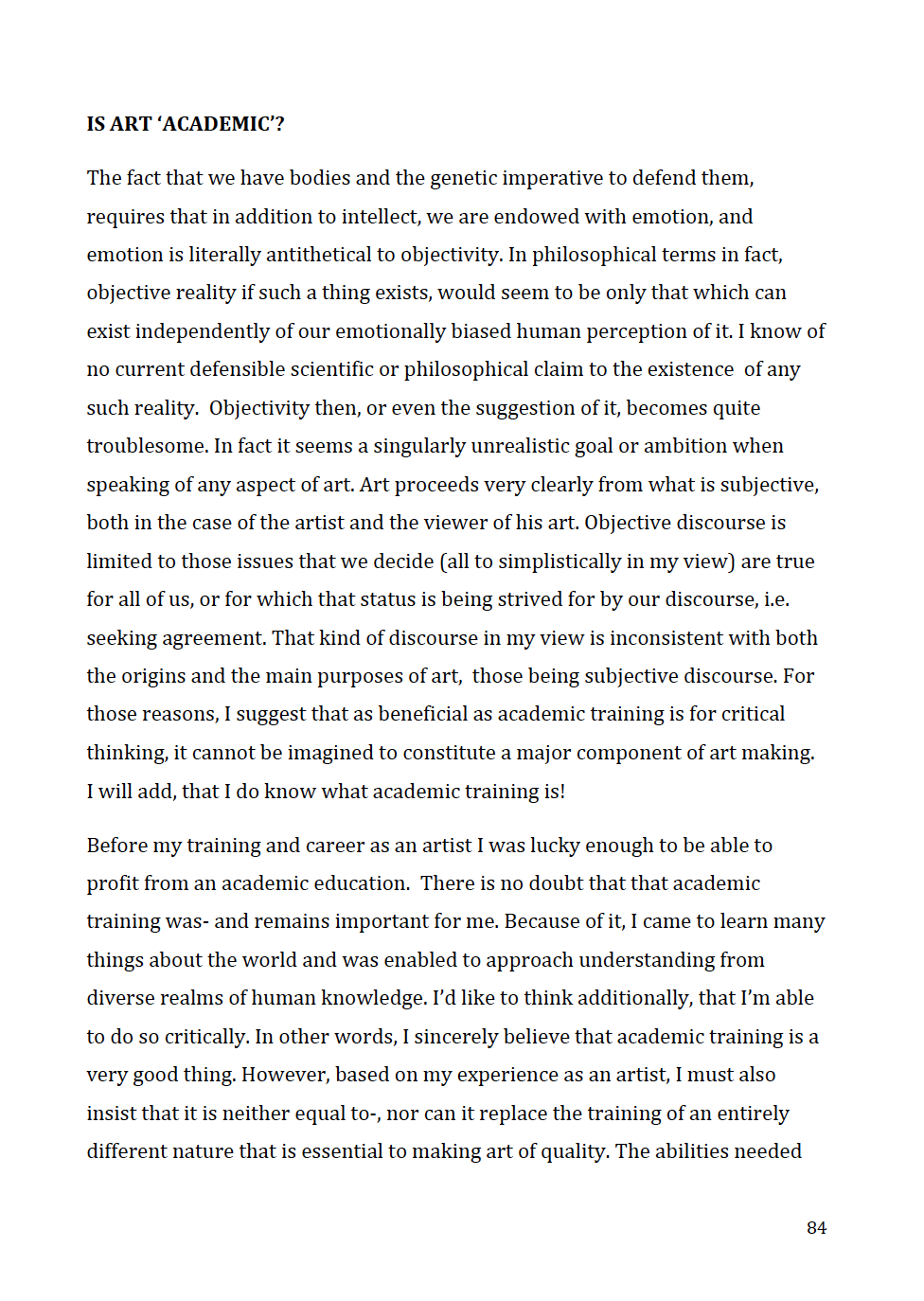
Excerpts from the thesis 'Art at the court of science : in other words', Richard Meitner, 2016.
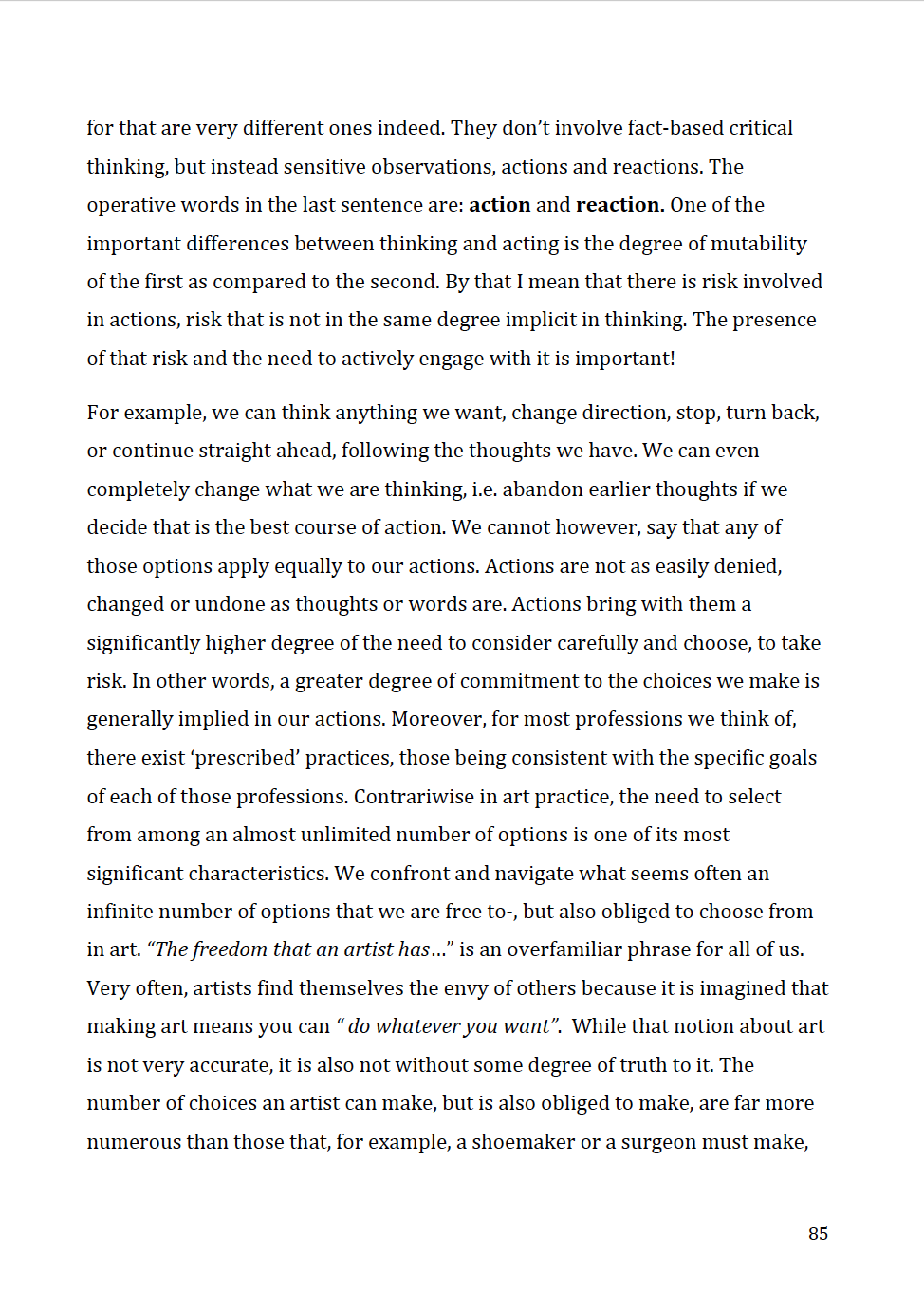
Excerpts from the thesis 'Art at the court of science : in other words', Richard Meitner, 2016.
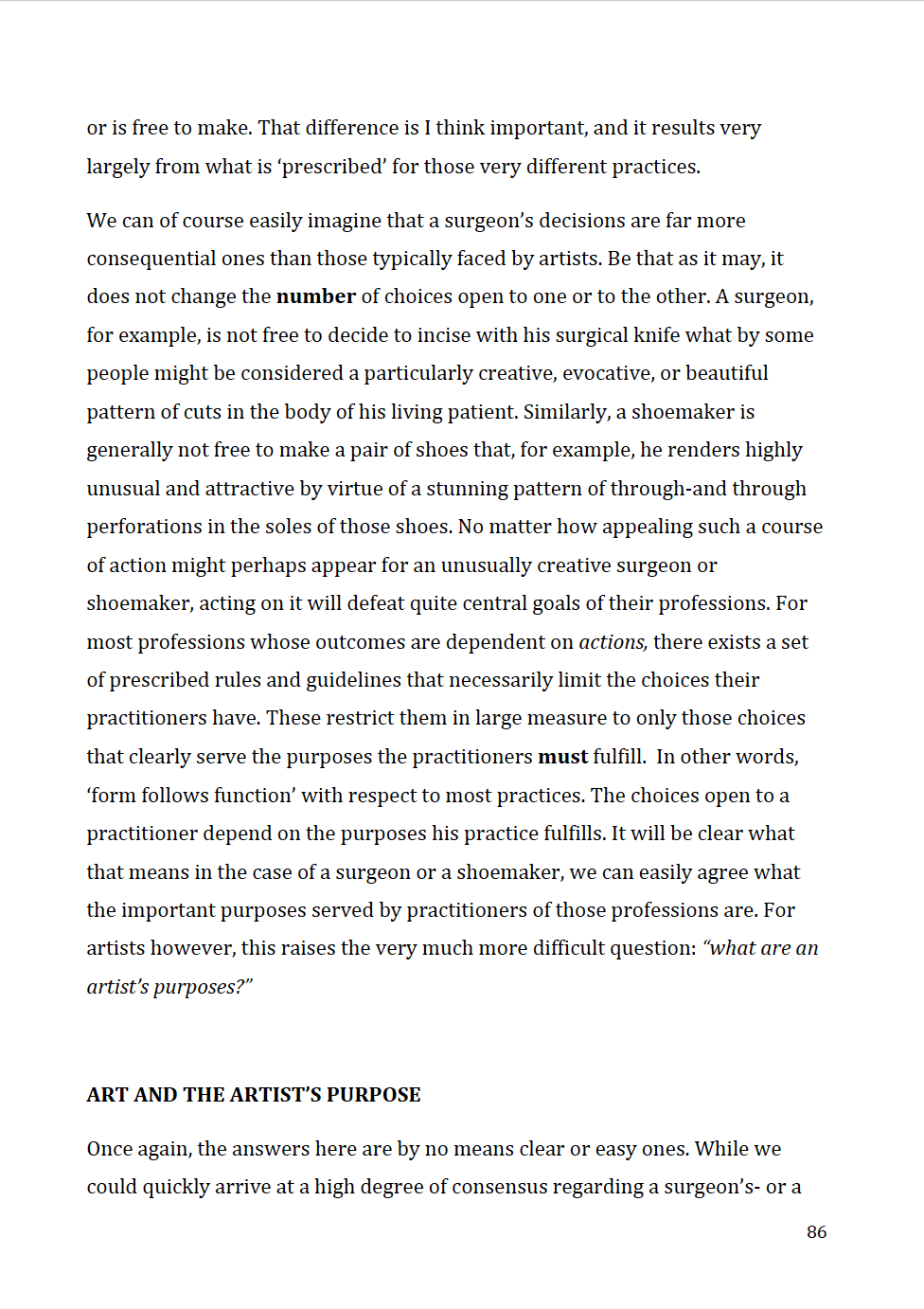
Excerpts from the thesis 'Art at the court of science : in other words', Richard Meitner, 2016.
×
Argumentation; Thesis Document ; New Concepts;
Art at the court of science : in other words
The excerpts from Richard Meitner's thesis selected for this epistemic object represent the confrontation with academicism in the doctoral context. Based on his artistic practice (which is often developed in collaboration with scientists in a laboratory setting, specifically within the VICARTE research unit), the author asserts the independence of art and differentiates it from science: art exists as intuition and emotion, while science seeks to explain the world. Both attempt to understand the universe, but they express it in distinct ways. In this context, the author asserts the impossibility of objective thinking in art and criticizes the premise/requirement of adopting a concept as the basis for artistic research.
Academic antithesis; Art and Science; Artistic autonomy;
2016
Excerpts from the thesis. Chapters: "Is Art Academic?" (pp. 84-86), "Concept... What's Up with That?" (pp. 106-118)
Richard Meitner
FBAUL
Sculpture
Thesis Cover 'Art at the court of science : in other words', Richard Meitner
Excerpts from the thesis 'Art at the court of science : in other words', Richard Meitner, 2016.
Excerpts from the thesis 'Art at the court of science : in other words', Richard Meitner, 2016.
Excerpts from the thesis 'Art at the court of science : in other words', Richard Meitner, 2016.
×
Argumentation; Thesis Document ; New Concepts;
Art at the court of science : in other words
The excerpts from Richard Meitner's thesis selected for this epistemic object represent the confrontation with academicism in the doctoral context. Based on his artistic practice (which is often developed in collaboration with scientists in a laboratory setting, specifically within the VICARTE research unit), the author asserts the independence of art and differentiates it from science: art exists as intuition and emotion, while science seeks to explain the world. Both attempt to understand the universe, but they express it in distinct ways. In this context, the author asserts the impossibility of objective thinking in art and criticizes the premise/requirement of adopting a concept as the basis for artistic research.
Academic antithesis; Art and Science; Artistic autonomy;
2016
Stories of the Artist's Book in 29 Issues
Ana João Romana
University of Algarve - Faculty of Human and Social Sciences
Culture, Communication, and Arts

Stories of the Artist's Book in 29 Issues (2000/2016), 2017. Image credits: Ana João Romana
×
Final Object; Related Artworks;
PUBLISHING THE STORY/HISTORY OF THE ARTIST'S BOOK IN PORTUGAL
The present epistemic object (EO) consists of a collection of 29 issues with interviews conducted with artists, editors, booksellers, collectors, curators, and librarians on the theme of the artist's book in Portugal in the 21st century: a collection that is simultaneously an artist's book and a reference guide on the subject. This EO is an integral part of the systematization of the author's doctoral research, not published afterward, but inserted into the research itself, making it public through the book and an exhibition (installation/reading room). Methodologically, the design of this EO reflects the empirical part of the research, with access to the traditional theoretical foundation in the thesis (including a literature review focused on the subject at hand).
Artist book; Contemporary Art; Modern Art; Story/History;
2017
Stories of the Artist's Book in 29 Issues
Ana João Romana
University of Algarve - Faculty of Human and Social Sciences
Culture, Communication, and Arts
Stories of the Artist's Book in 29 Issues (2000/2016), 2017. Image credits: Ana João Romana
×
Final Object; Related Artworks;
PUBLISHING THE STORY/HISTORY OF THE ARTIST'S BOOK IN PORTUGAL
The present epistemic object (EO) consists of a collection of 29 issues with interviews conducted with artists, editors, booksellers, collectors, curators, and librarians on the theme of the artist's book in Portugal in the 21st century: a collection that is simultaneously an artist's book and a reference guide on the subject. This EO is an integral part of the systematization of the author's doctoral research, not published afterward, but inserted into the research itself, making it public through the book and an exhibition (installation/reading room). Methodologically, the design of this EO reflects the empirical part of the research, with access to the traditional theoretical foundation in the thesis (including a literature review focused on the subject at hand).
Artist book; Contemporary Art; Modern Art; Story/History;
2017
Video-Performance 'Semiótica da Gravidez'. Thesis Document
Mariana do Vale-Gomes
College of Arts, University of Coimbra
Contemporary Art
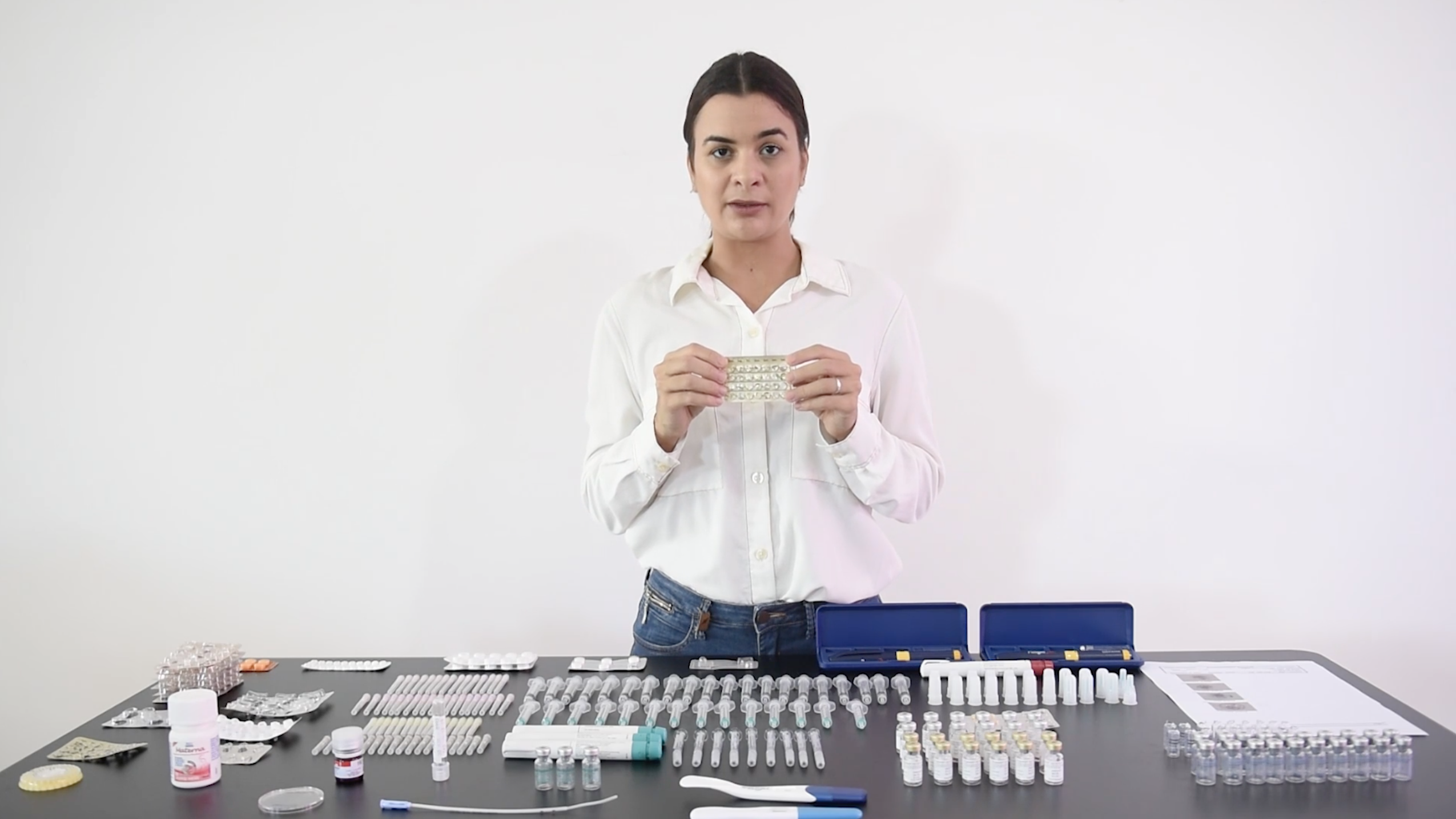
Still Frame of the video-performance 'Semiotics of Pregnancy'. Available at: https://vimeo.com/426382825/9f58ab8ea9
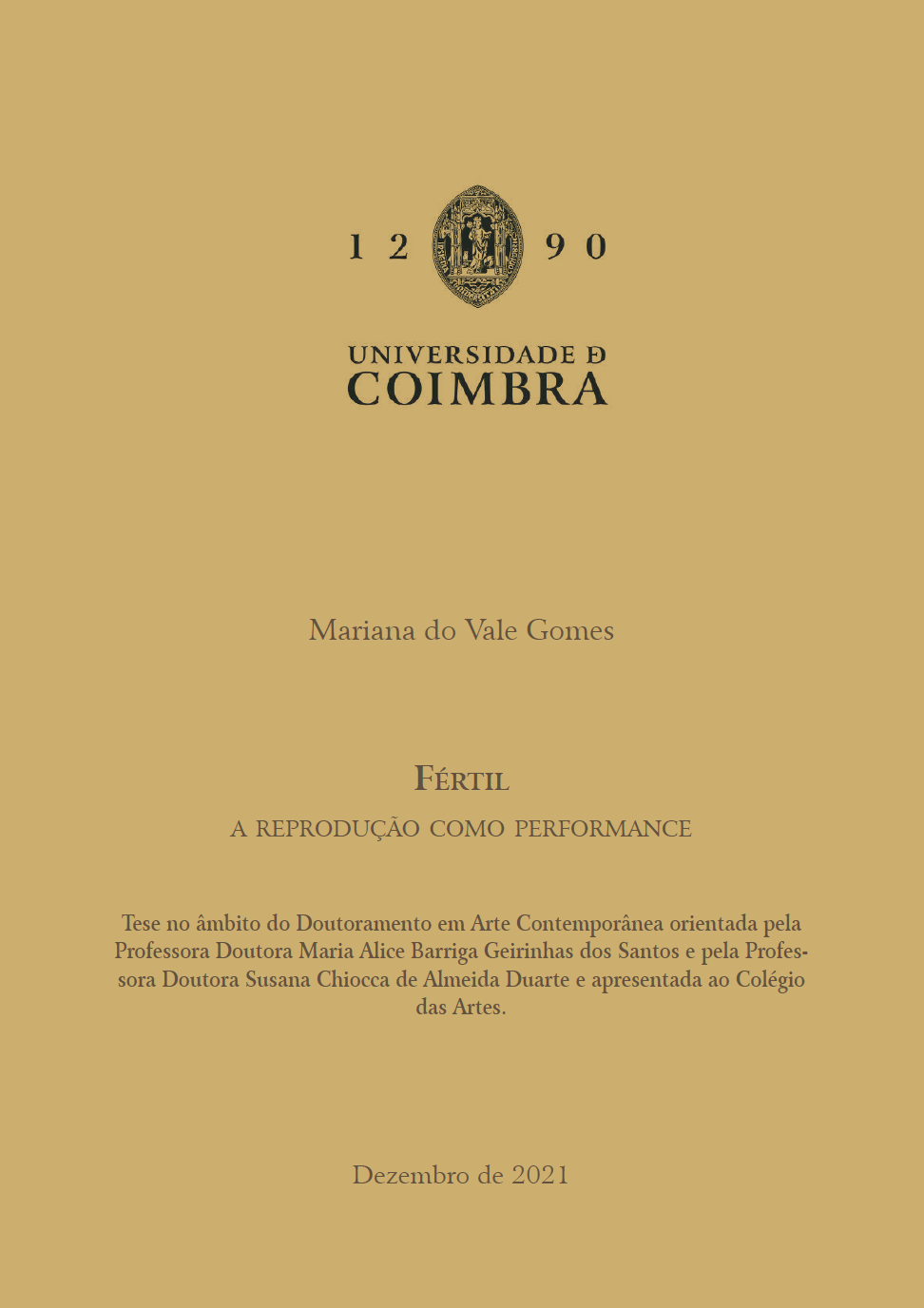
Page from the Thesis 'Fertile: Reproduction as Performance', by Mariana do Vale Gomes.
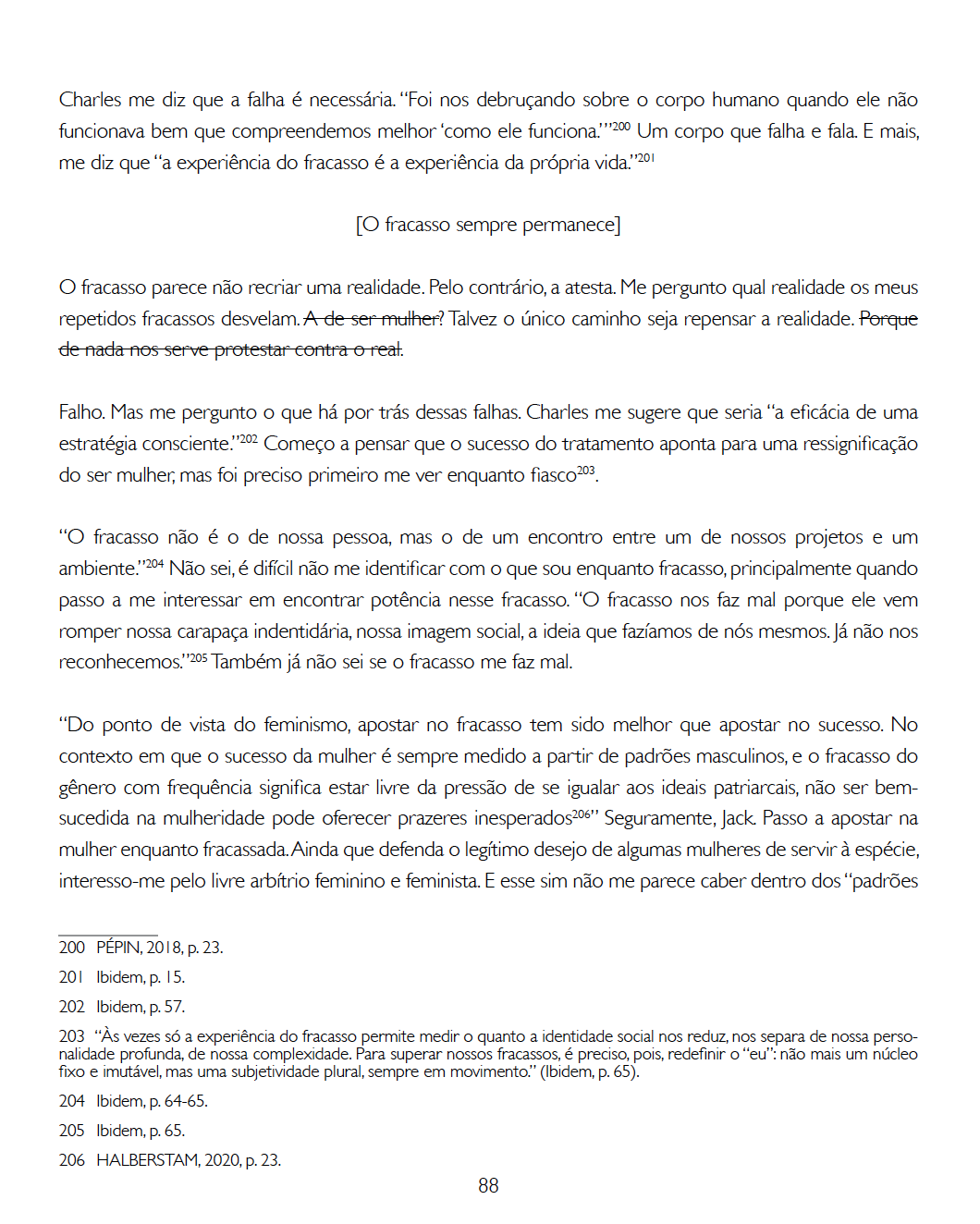
Page from the Thesis 'Fertile: Reproduction as Performance', by Mariana do Vale Gomes.
×
Final Object; Methods; Related Artworks; Thesis Document;
Fertile - Reproduction as Performance
The selected epistemic object consists of Mariana do Vale Gomes' thesis, which is, in itself, representative of performative autobiographical writing and critical thought regarding traditional methodologies within an academic context. In this document, the artist's process of assisted reproduction is expressed, presenting: a) its procedural record; b) performative writing with autobiographical reflections and conceptual framing/articulation with other authors; c) the record of the artist's performances on the theme.
Autobiographical Process; Body; Feminism; Performative Writing; Performance; Reproduction;
2022
Video-Performance 'Semiótica da Gravidez'. Thesis Document
Mariana do Vale-Gomes
College of Arts, University of Coimbra
Contemporary Art
Still Frame of the video-performance 'Semiotics of Pregnancy'. Available at: https://vimeo.com/426382825/9f58ab8ea9
Page from the Thesis 'Fertile: Reproduction as Performance', by Mariana do Vale Gomes.
Page from the Thesis 'Fertile: Reproduction as Performance', by Mariana do Vale Gomes.
×
Final Object; Methods; Related Artworks; Thesis Document;
Fertile - Reproduction as Performance
The selected epistemic object consists of Mariana do Vale Gomes' thesis, which is, in itself, representative of performative autobiographical writing and critical thought regarding traditional methodologies within an academic context. In this document, the artist's process of assisted reproduction is expressed, presenting: a) its procedural record; b) performative writing with autobiographical reflections and conceptual framing/articulation with other authors; c) the record of the artist's performances on the theme.
Autobiographical Process; Body; Feminism; Performative Writing; Performance; Reproduction;
2022
'Censored Object’, 2008/2011, pine wood, nails, spray paint, and white glue; Thesis Document.
Rute Ribeiro Rosas
Faculty of Fine Arts, University of Porto
Fine Arts

"‘Censored Object’, 2008/2011, pine wood, nails, spray paint, and white glue. Image credits: Rute Rosas."
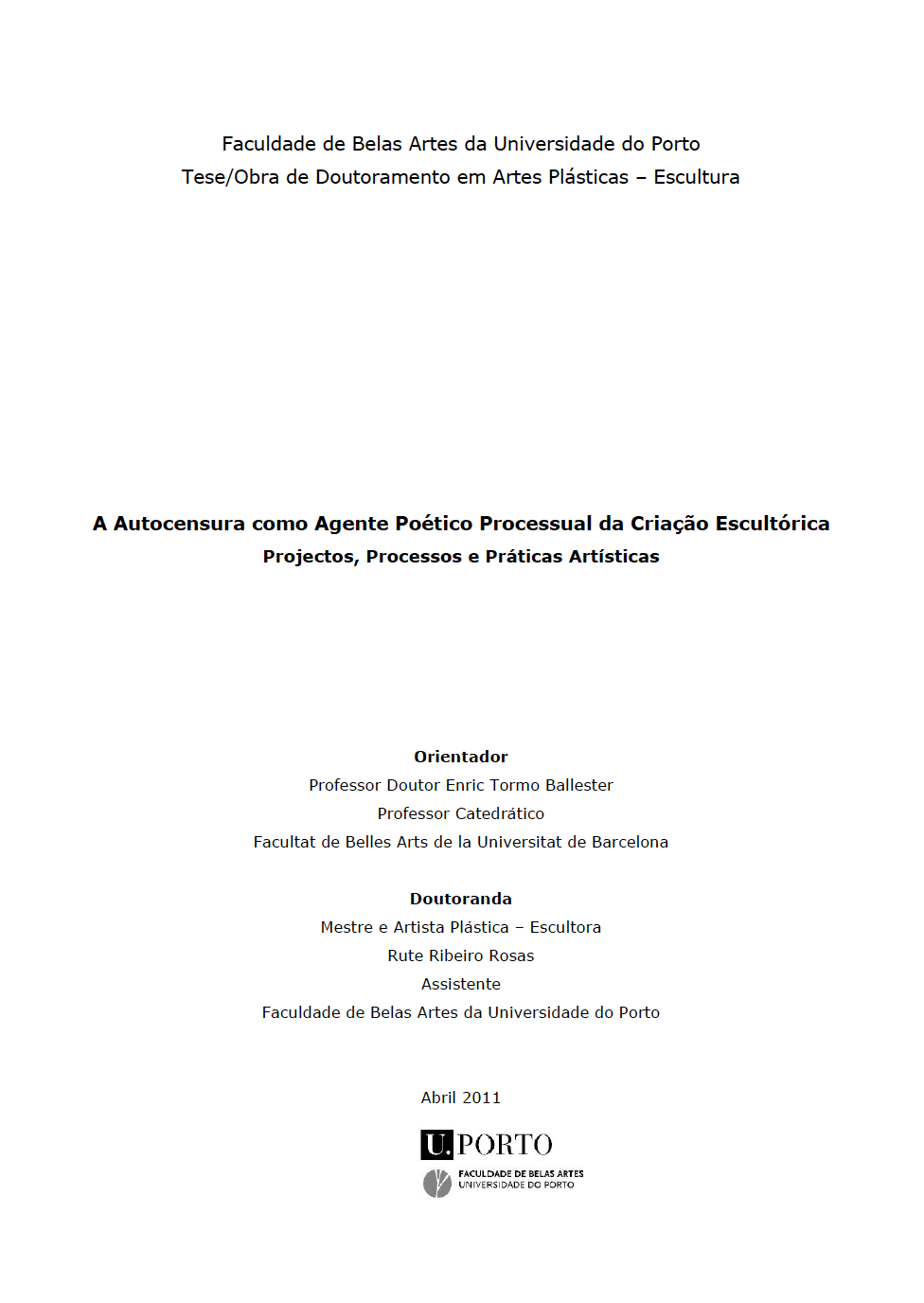
Cover of the Thesis 'Self-Censorship as a Processual Poetic Agent in Sculptural Creation - Projects, Processes, and Artistic Practices', Rute Rosas, 2011.
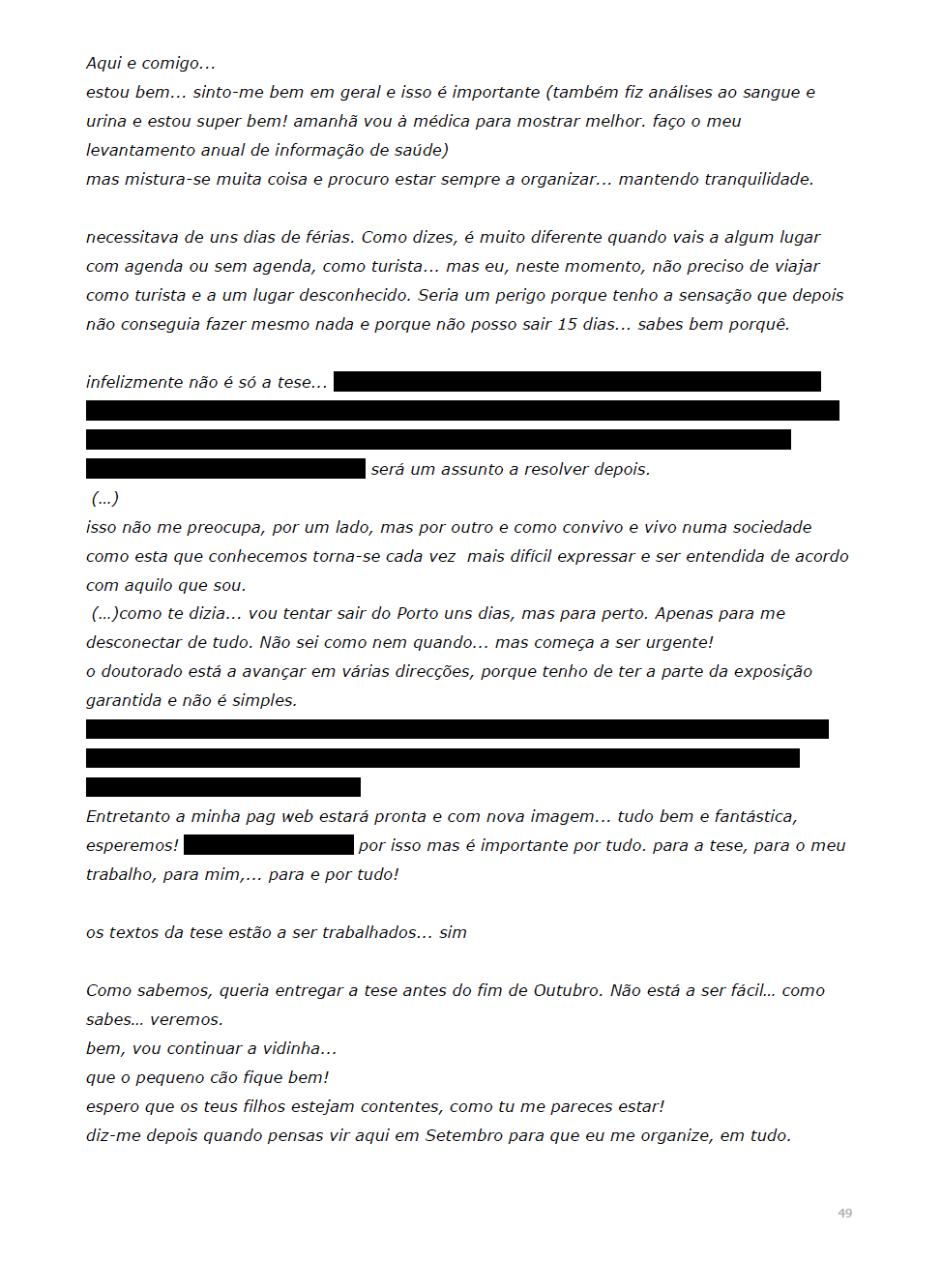
Excerpt from the Thesis 'Self-Censorship as a Processual Poetic Agent in Sculptural Creation - Projects, Processes, and Artistic Practices', Rute Rosas, 2011.
×
Final Object; Methods; Related Artworks; Thesis Document;
Self-Censorship as a Processual Poetic Agent in Sculptural Creation - Projects, Processes, and Artistic Practices
The selected epistemic objects consist of the author's thesis and the materialization of a sculpture. Here, the boundary between the academic document and the artwork becomes blurred. The thesis is presented as an artist's edition in both digital and analog formats, being printed and presented at a public event, which is recorded in audiovisual format and incorporated into the final version of the thesis. On the other hand, the materialization of the sculpture-object adds a thematic layer of self-censorship, which is also the subject of the thesis. Both the thesis-work and the sculpture are censored by the artist.
Art / Life; Autobiographical process; Memory; Self-censorship; Thesis / Work;
2011
'Censored Object’, 2008/2011, pine wood, nails, spray paint, and white glue; Thesis Document.
Rute Ribeiro Rosas
Faculty of Fine Arts, University of Porto
Fine Arts
"‘Censored Object’, 2008/2011, pine wood, nails, spray paint, and white glue. Image credits: Rute Rosas."
Cover of the Thesis 'Self-Censorship as a Processual Poetic Agent in Sculptural Creation - Projects, Processes, and Artistic Practices', Rute Rosas, 2011.
Excerpt from the Thesis 'Self-Censorship as a Processual Poetic Agent in Sculptural Creation - Projects, Processes, and Artistic Practices', Rute Rosas, 2011.
×
Final Object; Methods; Related Artworks; Thesis Document;
Self-Censorship as a Processual Poetic Agent in Sculptural Creation - Projects, Processes, and Artistic Practices
The selected epistemic objects consist of the author's thesis and the materialization of a sculpture. Here, the boundary between the academic document and the artwork becomes blurred. The thesis is presented as an artist's edition in both digital and analog formats, being printed and presented at a public event, which is recorded in audiovisual format and incorporated into the final version of the thesis. On the other hand, the materialization of the sculpture-object adds a thematic layer of self-censorship, which is also the subject of the thesis. Both the thesis-work and the sculpture are censored by the artist.
Art / Life; Autobiographical process; Memory; Self-censorship; Thesis / Work;
2011
Schemes and participatory methodologies in the production of a public sculpture.
Ana Mena
FBAUL
Sculpture

Three-dimensional studies developed by the participants. Image credits: Ana Mena

Assembly of the final artwork. Image credits: Ana Mena
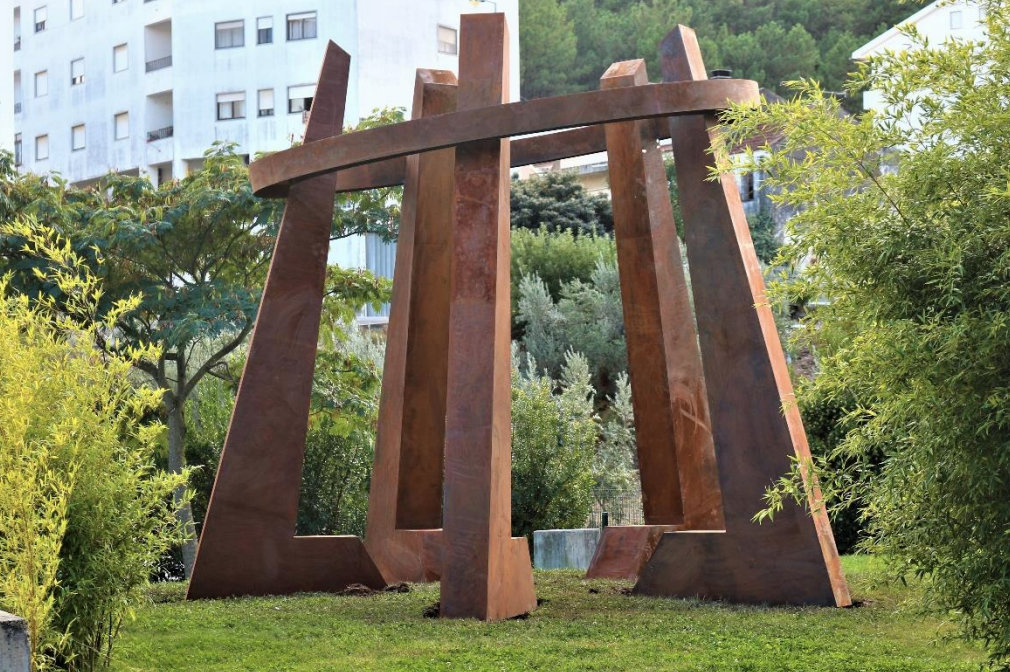
Monument to Citizenship, corten steel, Proença-a-Nova Urban Park, 2017. Image credits: Ana Mena
×
Methods; Final Object
Sculpture in Metal in the 20th Century: Poetics, Methods, and Procedures
The present epistemic object (EO) consists of two models of a public artwork in Proença-a-Nova conceived through participatory methodologies: thematic selection 'Citizenship' and the development of drawings and sketches/models collaboratively with the local population. "Citizenship as the quality of each citizen. For those who have contributed in some way to the growth and development of the municipality; for those who continue to believe and work hard every day; so that everyone continues to practice the essential principles of life in community and contribute to a balanced society." [1] MENA, Ana. 'Sculpture in Metal in the 20th Century. Poetics, Methods, and Procedures'. Doctoral thesis in Sculpture. Supervision by Professor Dr. José Teixeira. 2019. Faculty of Fine Arts, University of Lisbon.
Citizenship; Construction; Participatory Art; Public Art; Sculpture; Metals;
2019
Schemes and participatory methodologies in the production of a public sculpture.
Ana Mena
FBAUL
Sculpture
Three-dimensional studies developed by the participants. Image credits: Ana Mena
Assembly of the final artwork. Image credits: Ana Mena
Monument to Citizenship, corten steel, Proença-a-Nova Urban Park, 2017. Image credits: Ana Mena
×
Methods; Final Object
Sculpture in Metal in the 20th Century: Poetics, Methods, and Procedures
The present epistemic object (EO) consists of two models of a public artwork in Proença-a-Nova conceived through participatory methodologies: thematic selection 'Citizenship' and the development of drawings and sketches/models collaboratively with the local population. "Citizenship as the quality of each citizen. For those who have contributed in some way to the growth and development of the municipality; for those who continue to believe and work hard every day; so that everyone continues to practice the essential principles of life in community and contribute to a balanced society." [1] MENA, Ana. 'Sculpture in Metal in the 20th Century. Poetics, Methods, and Procedures'. Doctoral thesis in Sculpture. Supervision by Professor Dr. José Teixeira. 2019. Faculty of Fine Arts, University of Lisbon.
Citizenship; Construction; Participatory Art; Public Art; Sculpture; Metals;
2019
SynDyn Interactive Intermedia System
André Rangel
School of Arts - Catholic University of Portugal
Science and Technology of the Arts - Interactive Art

SynDyn Interactive Intermedia System. Image credits: André Rangel

SynDyn Interactive Intermedia System. Image credits: André Rangel

SynDyn Interactive Intermedia System. Image credits: André Rangel
×
Visual Concepts; Final Object;
Particular Study of Intermedia Dynamics in the Early 21st Century
The selected Epistemic Object (EO) consists of images documenting SynDyn, an interactive intermedia system where participants, by controlling audiovisual events while performing physical activities, become doubly performers and activators of the artwork. SynDyn suggests a game, however, there is no competition between participants, reinforcing the autopoietic nature and the open dynamics of the process. In André Rangel's thesis, the research methodology based on reflective practice guides the design and documentation of interactive intermedia systems, particularly SynDyn, with an emphasis on documenting the various stages of the work within the research process itself.
Intermedia;
2014
SynDyn Interactive Intermedia System
André Rangel
School of Arts - Catholic University of Portugal
Science and Technology of the Arts - Interactive Art
SynDyn Interactive Intermedia System. Image credits: André Rangel
SynDyn Interactive Intermedia System. Image credits: André Rangel
SynDyn Interactive Intermedia System. Image credits: André Rangel
×
Visual Concepts; Final Object;
Particular Study of Intermedia Dynamics in the Early 21st Century
The selected Epistemic Object (EO) consists of images documenting SynDyn, an interactive intermedia system where participants, by controlling audiovisual events while performing physical activities, become doubly performers and activators of the artwork. SynDyn suggests a game, however, there is no competition between participants, reinforcing the autopoietic nature and the open dynamics of the process. In André Rangel's thesis, the research methodology based on reflective practice guides the design and documentation of interactive intermedia systems, particularly SynDyn, with an emphasis on documenting the various stages of the work within the research process itself.
Intermedia;
2014
Diary 'Silence - Where Are You?' - Incorporated in the Thesis
Andreia Inocêncio
College of Arts, University of Coimbra
Contemporary Art

Page from the diary 'Silence - Where Are You?' Image credits: Andreia Inocêncio

Page from the diary 'Silence - Where Are You?' Image credits: Andreia Inocêncio

Page from the diary 'Silence - Where Are You?' Image credits: Andreia Inocêncio
×
Thesis Document; Final Object; Related Artworks;
Silence - The Search for the Reverse of Urban Space (or the Reverse of Myself)
The pages of the diary represent the empirical exploratory fieldwork process developed by the artist during the specific period of the doctoral research. The act of wandering and drifting are embraced as integral parts of the artist's investigation. This process is presented in the thesis through maps, poetic texts, and images of the traversed landscapes - personal/autobiographical and poetic narratives that intertwine as a way to mediate a final goal: the search for silence. The paths taken open the way for other iterations: wandering, as a sense of possibility for the construction of new artistic and personal paths.
Autobiographical process; Landscape; Map; Nature; Silence; Walk; Wander;
2021
Diary 'Silence - Where Are You?' - Incorporated in the Thesis
Andreia Inocêncio
College of Arts, University of Coimbra
Contemporary Art
Page from the diary 'Silence - Where Are You?' Image credits: Andreia Inocêncio
Page from the diary 'Silence - Where Are You?' Image credits: Andreia Inocêncio
Page from the diary 'Silence - Where Are You?' Image credits: Andreia Inocêncio
×
Thesis Document; Final Object; Related Artworks;
Silence - The Search for the Reverse of Urban Space (or the Reverse of Myself)
The pages of the diary represent the empirical exploratory fieldwork process developed by the artist during the specific period of the doctoral research. The act of wandering and drifting are embraced as integral parts of the artist's investigation. This process is presented in the thesis through maps, poetic texts, and images of the traversed landscapes - personal/autobiographical and poetic narratives that intertwine as a way to mediate a final goal: the search for silence. The paths taken open the way for other iterations: wandering, as a sense of possibility for the construction of new artistic and personal paths.
Autobiographical process; Landscape; Map; Nature; Silence; Walk; Wander;
2021
'A Pesca da Lula' – a comic narrative (65-page book, dimensions 31cm x 20cm)
Daniel Silvestre da Silva
Faculty of Fine Arts, University of Porto
Fine Arts

Cover of the book 'A Pesca da Lula'. Image credits: Daniel Silvestre.
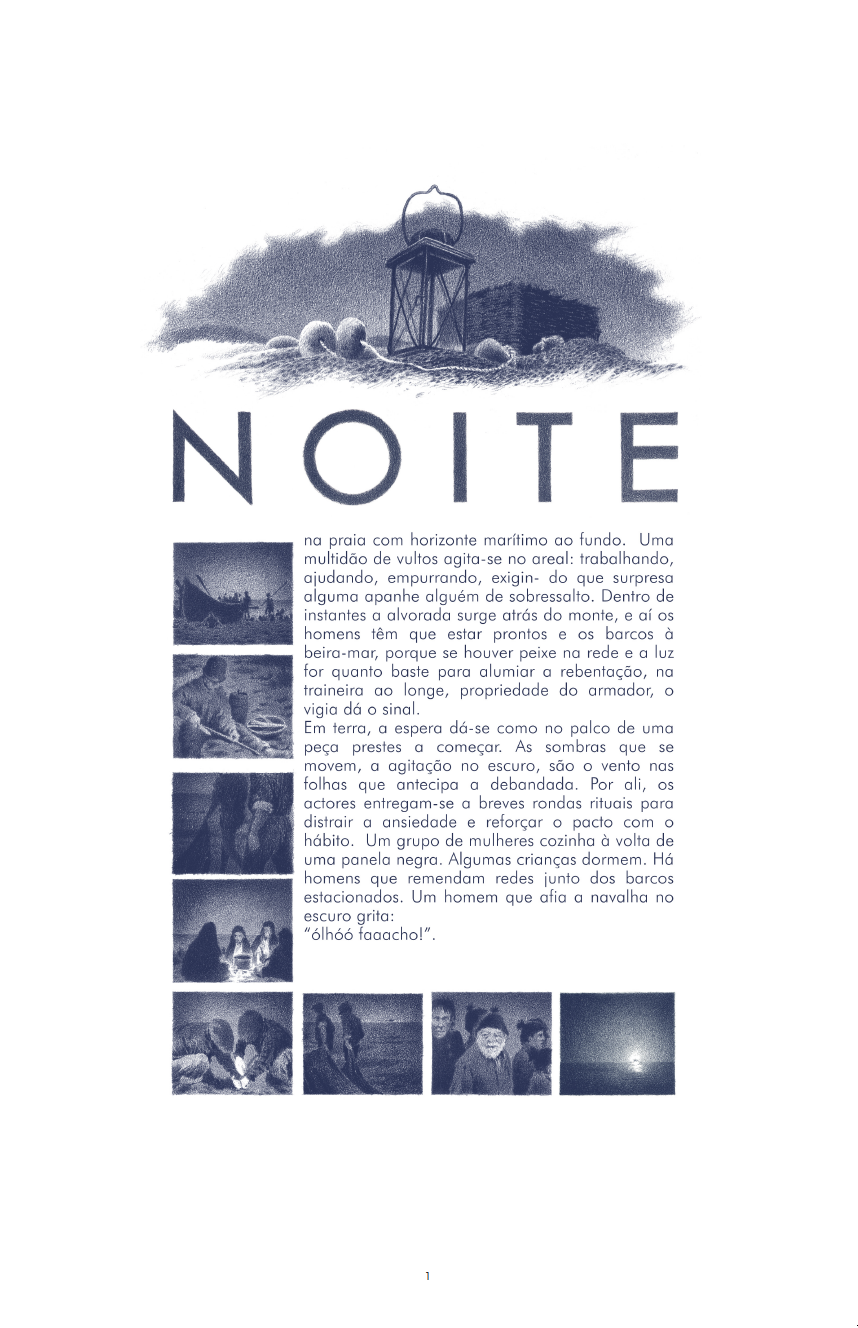
Page from the book 'A Pesca da Lula.' Image credits: Daniel Silvestre

Page from the book 'A Pesca da Lula.' Image credits: Daniel Silvestre
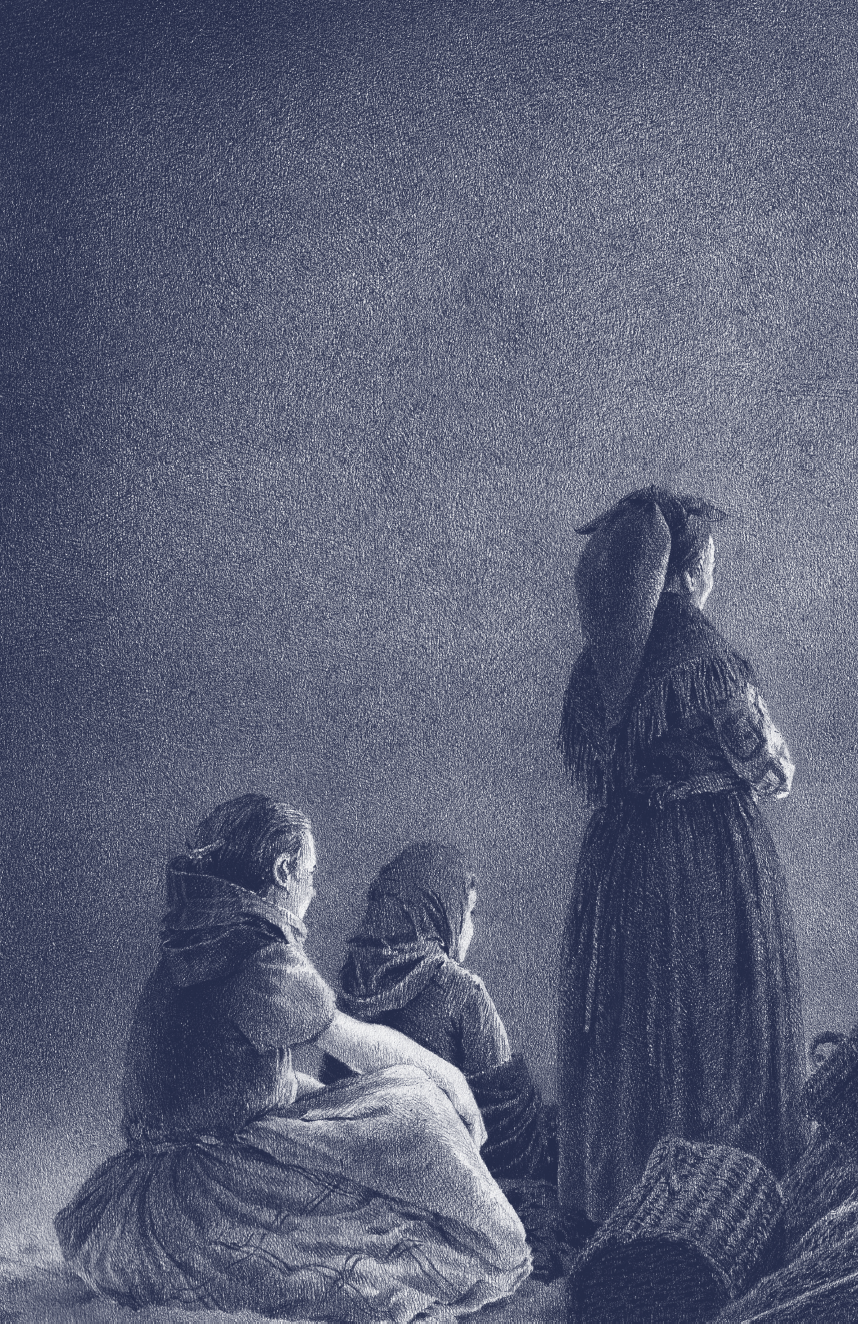
Page from the book 'A Pesca da Lula.' Image credits: Daniel Silvestre
×
Final Object; Related Artworks; Visual Concepts;
Graphic Hybridization Processes in the Construction of the Drawn Narrative "A Pesca da Lula"
The selected Epistemic Object (EO) consists of a final materialization: an artistic work in which the author draws upon his own memory and a series of interviews conducted with his maternal grandfather. Lives connected to the sea are fictionally mirrored in the comic narrative. Here, the methodology employed in the thesis consists of contextualized research: the historical framing of the theme and references to relevant peers/artists, which then give way to the materialization process of the book.
Autobiographical Process; Comic Art; Drawing; Graphic Hybridization; Illustration;
2019
'A Pesca da Lula' – a comic narrative (65-page book, dimensions 31cm x 20cm)
Daniel Silvestre da Silva
Faculty of Fine Arts, University of Porto
Fine Arts
Cover of the book 'A Pesca da Lula'. Image credits: Daniel Silvestre.
Page from the book 'A Pesca da Lula.' Image credits: Daniel Silvestre
Page from the book 'A Pesca da Lula.' Image credits: Daniel Silvestre
Page from the book 'A Pesca da Lula.' Image credits: Daniel Silvestre
×
Final Object; Related Artworks; Visual Concepts;
Graphic Hybridization Processes in the Construction of the Drawn Narrative "A Pesca da Lula"
The selected Epistemic Object (EO) consists of a final materialization: an artistic work in which the author draws upon his own memory and a series of interviews conducted with his maternal grandfather. Lives connected to the sea are fictionally mirrored in the comic narrative. Here, the methodology employed in the thesis consists of contextualized research: the historical framing of the theme and references to relevant peers/artists, which then give way to the materialization process of the book.
Autobiographical Process; Comic Art; Drawing; Graphic Hybridization; Illustration;
2019
Video-Performance. 'Purge - Sonic and Spatial Derivations' (2016-2021)
Dária Salgado
College of Arts, University of Coimbra
Contemporary Art

Still Frame from "Purge - Sonic and Spatial Derivations". Image credits: Dária Salgado.

Still Frame from "Purge - Sonic and Spatial Derivations". Image credits: Dária Salgado.
×
Final Object; Related Artworks;
A Poetics of Landscape: The Spiritual in Contemporary Art, Artistic Production, and Aesthetic Experience
The film/installation "Purge - Sonic and Spatial Derivations" (2016-2021) is an artistic materialization of the critical thinking and process-based methodology employed in Dária Salgado's doctoral thesis. The research methodology is grounded in her artistic practice, unveiling a universe that encompasses not only the presented film but also objects displayed in the exhibition (elements collected from the landscape, photographic images, drawings). These anthological productions of the artist's work provide insights into the reflective and constellative universe of her art. Transcending a single medium, the artist interconnects word-image-process as multiple ways of poetically engaging with and approaching her artistic practice.
Spirituality; Landscape; Poetics; Artistic Process;
2021
Video-Performance. 'Purge - Sonic and Spatial Derivations' (2016-2021)
Dária Salgado
College of Arts, University of Coimbra
Contemporary Art
Still Frame from "Purge - Sonic and Spatial Derivations". Image credits: Dária Salgado.
Still Frame from "Purge - Sonic and Spatial Derivations". Image credits: Dária Salgado.
×
Final Object; Related Artworks;
A Poetics of Landscape: The Spiritual in Contemporary Art, Artistic Production, and Aesthetic Experience
The film/installation "Purge - Sonic and Spatial Derivations" (2016-2021) is an artistic materialization of the critical thinking and process-based methodology employed in Dária Salgado's doctoral thesis. The research methodology is grounded in her artistic practice, unveiling a universe that encompasses not only the presented film but also objects displayed in the exhibition (elements collected from the landscape, photographic images, drawings). These anthological productions of the artist's work provide insights into the reflective and constellative universe of her art. Transcending a single medium, the artist interconnects word-image-process as multiple ways of poetically engaging with and approaching her artistic practice.
Spirituality; Landscape; Poetics; Artistic Process;
2021
Audiovisual Installation 'Bar Huerequeque'
Felipe Arturo
University of Évora - Institute of Research and Advanced Training
Artistic Research, Media, and Cultural Studies
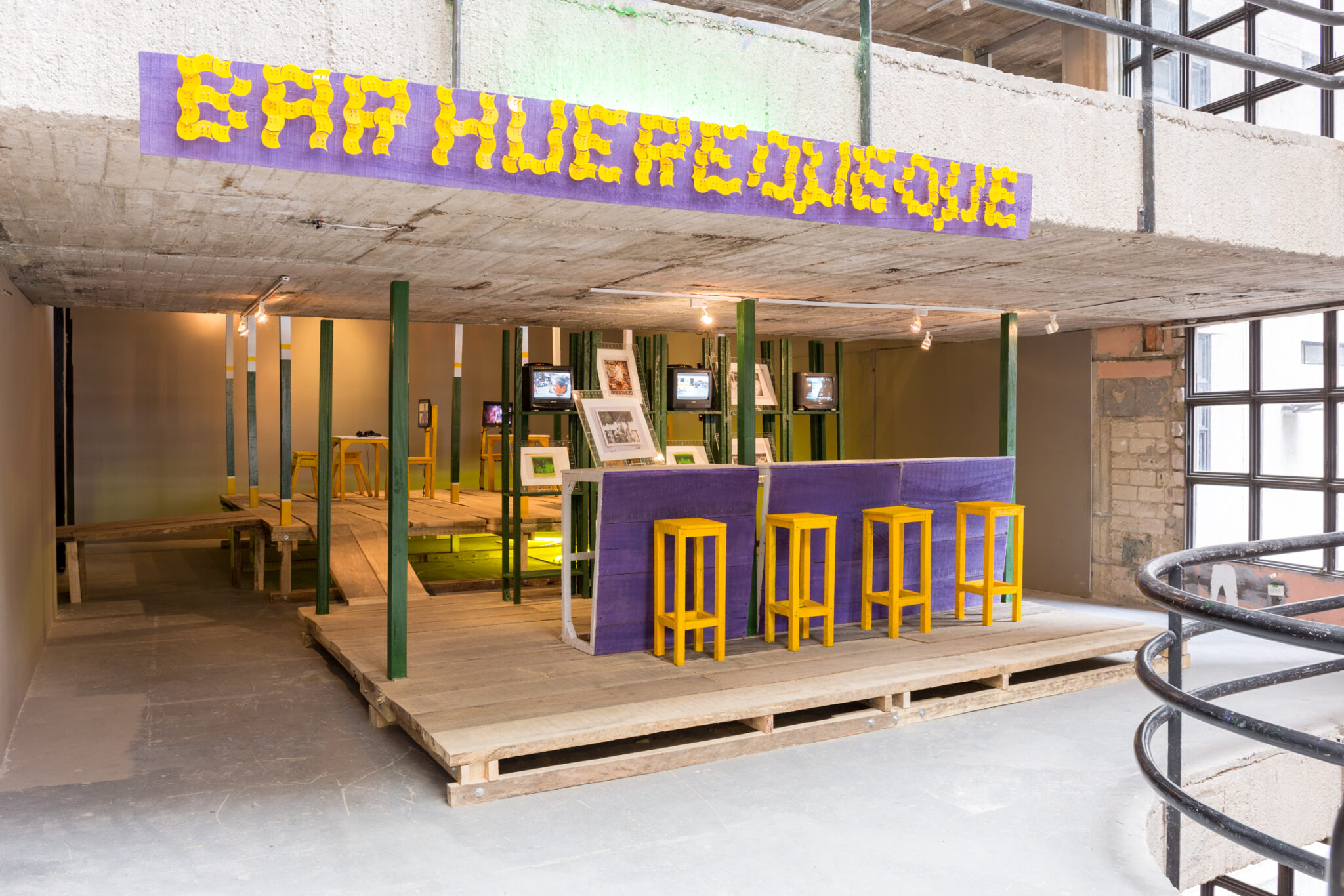
'"Bar Huerequeque", Espacio Odeón, 2017. Image Credits: Felipe Arturo
×
Argumentation; Visual Concepts; Methods; New concepts; Final Object; Related Artworks;
Bar Huerequeque: Audiovisual Installation as Architectural Space and Performance Stage
The selected epistemic object (OE) is the audiovisual installation 'Bar Huerequeque' by Felipe Arturo, an exhibition and scenographic environment that documents poems and autobiographical stories by Huerequeque, along with experimental videos and documentaries framing his work. This OE represents the culmination of Arturo's doctoral research, and the thesis outlines the process that led to the realization of this work: a) The collection of stories and poems from Huerequeque, interviews with the author, editing, and dissemination of his work, contributing to the preservation of his legacy; b) Addressing colonial ethical issues within the historical extractivist context of Peru, establishing a connection with Fitzcarraldo (1982) by Werner Herzog; c) The design of the installation by Felipe Arturo. Thus, this approach prioritizes empirical research with anthropological contextualization, rather than a traditional theoretical framework with a literature review.
Amazon; Audiovisual Installation; Fitzcarraldo; Huerequeque;
2021
Audiovisual Installation 'Bar Huerequeque'
Felipe Arturo
University of Évora - Institute of Research and Advanced Training
Artistic Research, Media, and Cultural Studies
'"Bar Huerequeque", Espacio Odeón, 2017. Image Credits: Felipe Arturo
×
Argumentation; Visual Concepts; Methods; New concepts; Final Object; Related Artworks;
Bar Huerequeque: Audiovisual Installation as Architectural Space and Performance Stage
The selected epistemic object (OE) is the audiovisual installation 'Bar Huerequeque' by Felipe Arturo, an exhibition and scenographic environment that documents poems and autobiographical stories by Huerequeque, along with experimental videos and documentaries framing his work. This OE represents the culmination of Arturo's doctoral research, and the thesis outlines the process that led to the realization of this work: a) The collection of stories and poems from Huerequeque, interviews with the author, editing, and dissemination of his work, contributing to the preservation of his legacy; b) Addressing colonial ethical issues within the historical extractivist context of Peru, establishing a connection with Fitzcarraldo (1982) by Werner Herzog; c) The design of the installation by Felipe Arturo. Thus, this approach prioritizes empirical research with anthropological contextualization, rather than a traditional theoretical framework with a literature review.
Amazon; Audiovisual Installation; Fitzcarraldo; Huerequeque;
2021
Intalação Audiovisual 'Bar Huerequeque'
Felipe Arturo
Universidade de Evora - Instituto de Investigação e Formação Avançada
Investigação Artística, Media e Estudos Culturais
'Bar Huerequeque', Espacio Odeón, 2017. Créditos da Imagem Felipe Arturo
×
Argumentação; Conceitos Visuais; Métodos; Novos conceitos; Objecto Final; Obras de Arte Conexas;
Bar Huerequeque instalación audiovisual como espacio arquitectónico y escenario de actuación
O objecto epistémico (OE) seleccionado consiste na instalação audiovisual 'Bar Huerequeque' de Felipe Arturo, um ambiente expositivo e cenográfico que documenta poemas e histórias autobiográficas de Huerequeque e vídeos/documentários experimentais que enquadram a sua obra. Este OE consiste no culminar da investigação doutoral de Arturo e a respectiva tese expõe o processo que leva à concretização desta obra: a) com o levantamento de histórias e poemas de Huerequeque, entrevistas ao autor, edição e divulgação da sua obra, contribuindo para a conservação do seu legado; b) articulação com os problemas éticos colonialistas num contexto histórico extrativista do Perú, onde se estabelece interligação com Fitzcarraldo (1982) de Werner Herzog; c) concepção da instalação de Felipe Arturo. Trata-se, por isso, de uma abordagem que priveligia a investigação empírica com contextualização antropológica, ao invés de uma base teórica tradicional com revisão de literatura.
Amazonas; Fitzcarraldo; Huerequeque; Instalação audiovisual;
2021
Test pieces of luminescent float glass.
Fernando Quintas
FBAUL
Painting
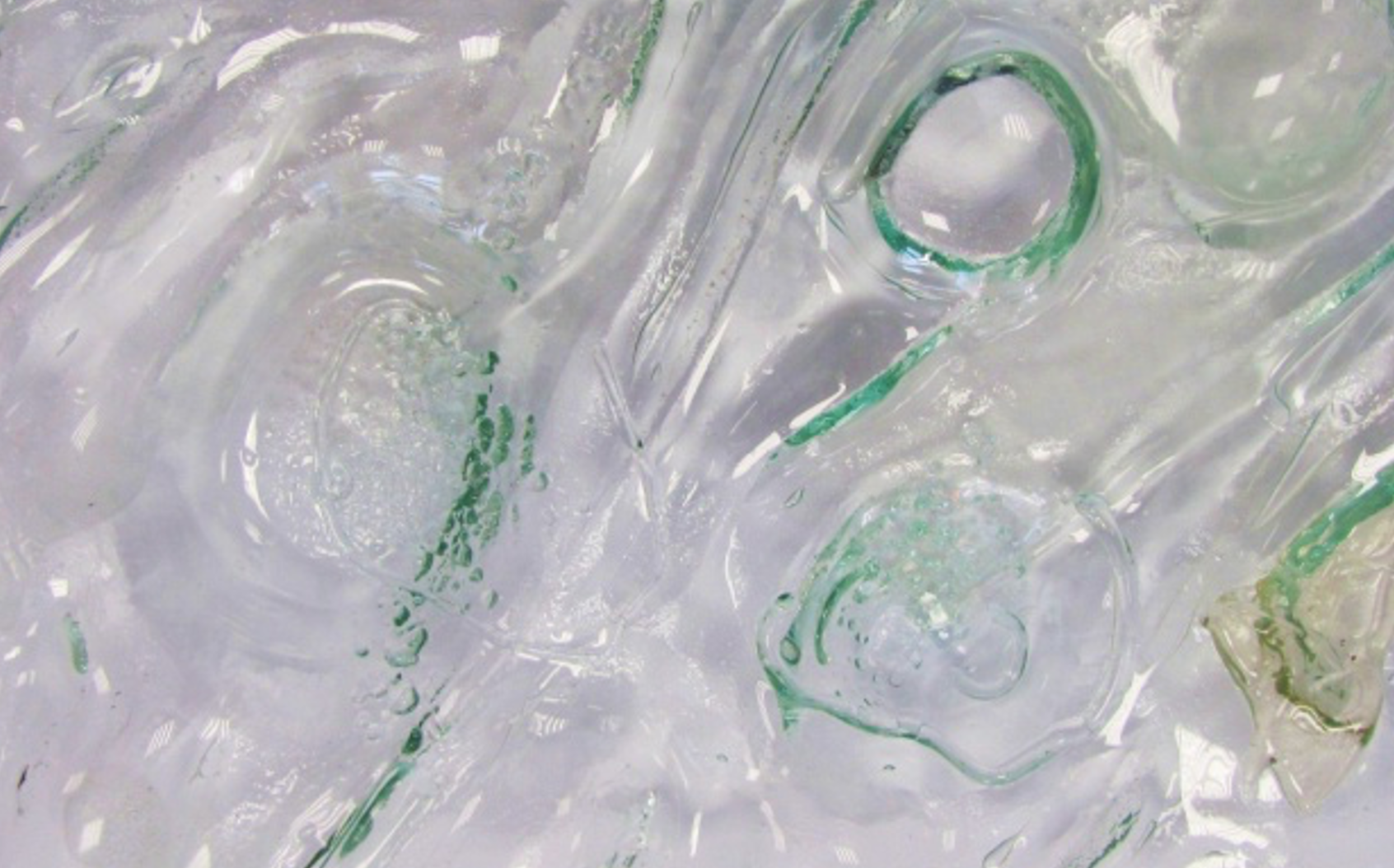
Test piece using rare earth elements under natural light. Image credit: Fernando Quintas.

Test piece using rare earth elements under natural light. Image credit: Fernando Quintas.
×
Final Object; Methods; New Concepts; Thesis Document; Visual Concepts;
Stained Glass: Contemporary Nature and the Seduction of Power
The selected epistemic object focuses on the use of luminescent glass in contemporary stained glass and in public spaces. The author develops laboratory experiments with scientists from the VICARTE research unit to obtain different colors and luminescences, using rare earth elements, namely the lanthanides europium, terbium, cerium, and dysprosium. The stages of the scientific process and the respective scientific methodologies were incorporated into the thesis. The doctoral research is supervised by both an artist and a scientist.
Art and Science; Float Glass; Luminescent Glass; Vitral;
2015
Test pieces of luminescent float glass.
Fernando Quintas
FBAUL
Painting
Test piece using rare earth elements under natural light. Image credit: Fernando Quintas.
Test piece using rare earth elements under natural light. Image credit: Fernando Quintas.
×
Final Object; Methods; New Concepts; Thesis Document; Visual Concepts;
Stained Glass: Contemporary Nature and the Seduction of Power
The selected epistemic object focuses on the use of luminescent glass in contemporary stained glass and in public spaces. The author develops laboratory experiments with scientists from the VICARTE research unit to obtain different colors and luminescences, using rare earth elements, namely the lanthanides europium, terbium, cerium, and dysprosium. The stages of the scientific process and the respective scientific methodologies were incorporated into the thesis. The doctoral research is supervised by both an artist and a scientist.
Art and Science; Float Glass; Luminescent Glass; Vitral;
2015
Book 'Drawings Around The Steps of Herberto Helder'
Mariana Viana
University of Évora - Institute of Research and Advanced Training
Artistic Research, Media, and Cultural Studies
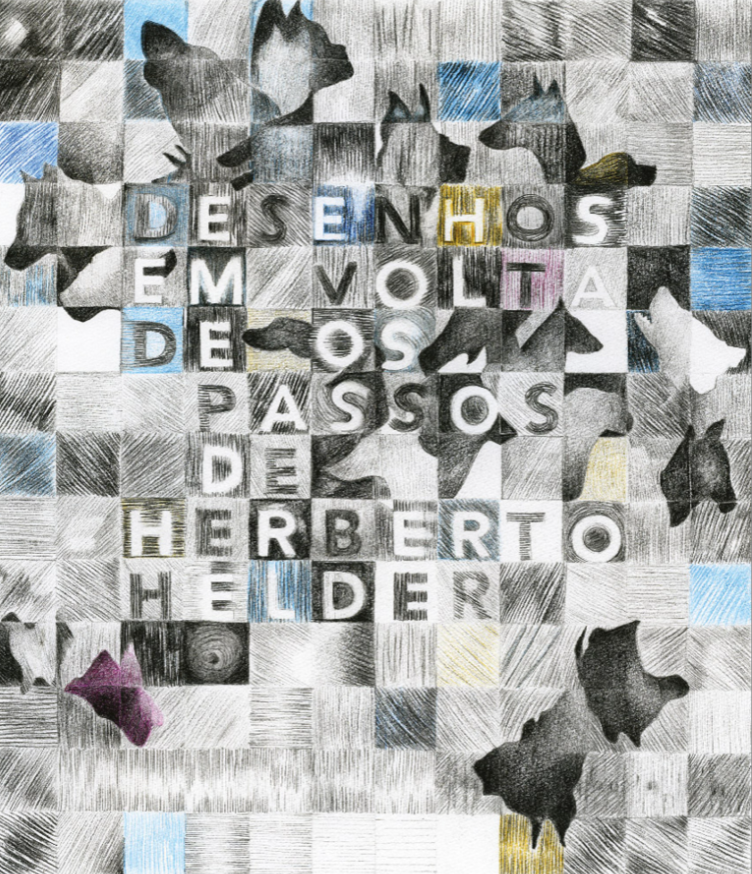
Cover of the Book 'Drawings Around The Steps of Herberto Helder', co-published by Abysmo and Imprensa Nacional, 2018.
×
Final Object; Related Artworks; Visual Concepts;
The steps around Herberto Helder: illustration as an oniric art
The selected epistemic object (EO) consists of the book 'Drawings Around The Steps of Herberto Helder'. This EO is a materialization of an artistic work conceived during the doctoral program and an iteration of the book 'The Steps Around' by Herberto Helder. In this research, the artist links Word and Image, showing us the visual and verbal journey that leads to the creation of the work. The methodology adopted in the creation of this EO and the thesis involves an articulation between empirical research and the traditional theoretical foundation (with a literature review focused on the subject of research).
Herberto Helder; Illustration; Oníric Illustration; Word / Image;
2016
Book 'Drawings Around The Steps of Herberto Helder'
Mariana Viana
University of Évora - Institute of Research and Advanced Training
Artistic Research, Media, and Cultural Studies
Cover of the Book 'Drawings Around The Steps of Herberto Helder', co-published by Abysmo and Imprensa Nacional, 2018.
×
Final Object; Related Artworks; Visual Concepts;
The steps around Herberto Helder: illustration as an oniric art
The selected epistemic object (EO) consists of the book 'Drawings Around The Steps of Herberto Helder'. This EO is a materialization of an artistic work conceived during the doctoral program and an iteration of the book 'The Steps Around' by Herberto Helder. In this research, the artist links Word and Image, showing us the visual and verbal journey that leads to the creation of the work. The methodology adopted in the creation of this EO and the thesis involves an articulation between empirical research and the traditional theoretical foundation (with a literature review focused on the subject of research).
Herberto Helder; Illustration; Oníric Illustration; Word / Image;
2016
Photographs of matrix processes in painting.
Marta Soares
FBAUL
Painting
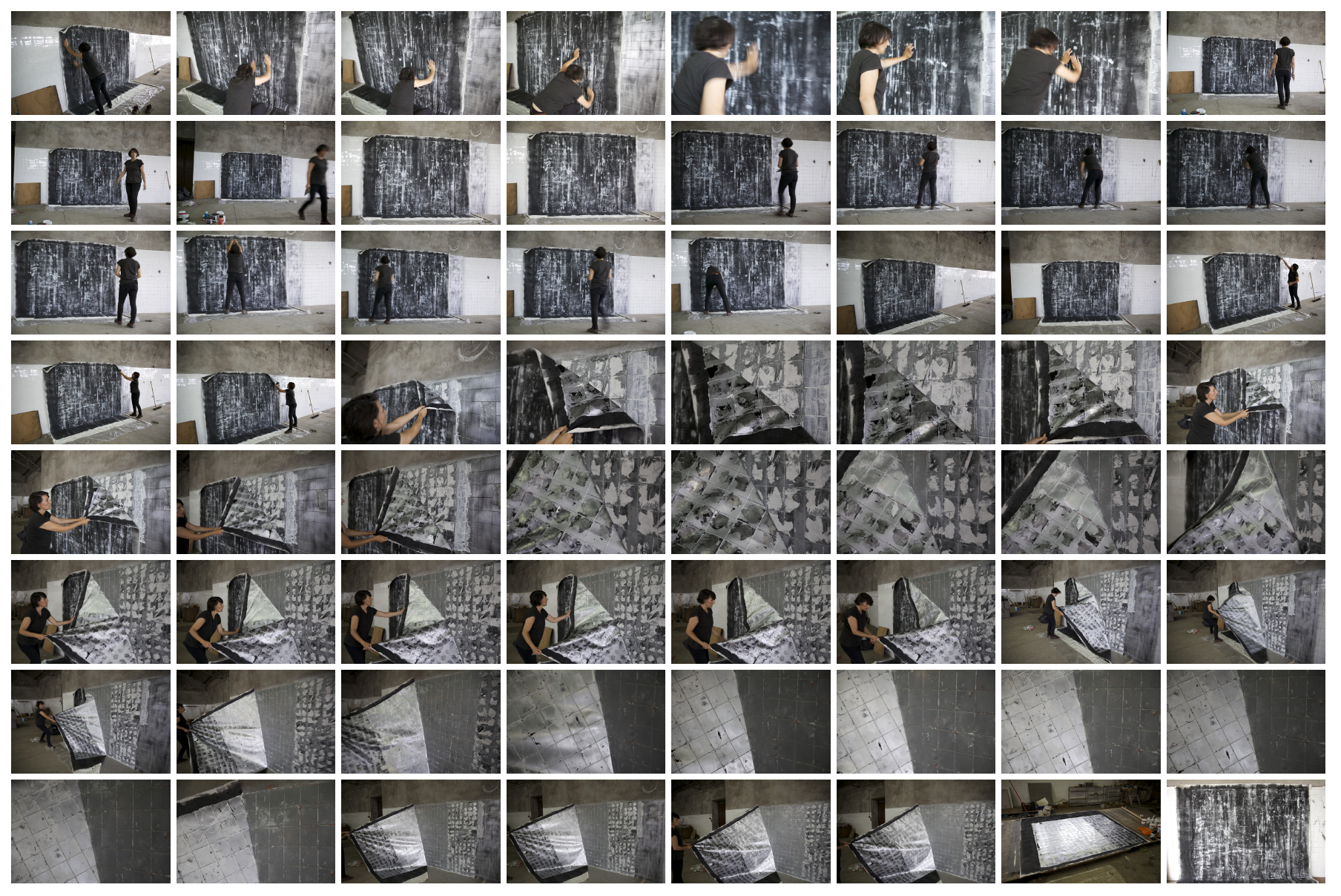
Way of Making II, 2015. 64 Photographs. Image credits: Edgar Massu
×
Methods; New concepts; Visual Concepts;
Matrix, way of making
The author focuses on the 'matrix' as a 'way of making' in her research project. Taking as a starting point the contact between two 'fresh' surfaces, new images are continuously generated and replicated in the transfer of remnants from the previous image. From a methodological perspective, Marta Soares develops a reflective practice that integrates a) the process itself and b) the conceptual framework with other authors.
Matrices; Painting; Process; Reproducibility;
2016
Photographs of matrix processes in painting.
Marta Soares
FBAUL
Painting
Way of Making II, 2015. 64 Photographs. Image credits: Edgar Massu
×
Methods; New concepts; Visual Concepts;
Matrix, way of making
The author focuses on the 'matrix' as a 'way of making' in her research project. Taking as a starting point the contact between two 'fresh' surfaces, new images are continuously generated and replicated in the transfer of remnants from the previous image. From a methodological perspective, Marta Soares develops a reflective practice that integrates a) the process itself and b) the conceptual framework with other authors.
Matrices; Painting; Process; Reproducibility;
2016
"Fields of chance #217", Ano: 2018, Técnica: Desenho-a-algorítmo, 420mm x 594 mm
Pedro Alegria da Silva
Faculty of Fine Arts, University of Porto
Fine Arts

"Fields of chance #217", Year: 2018, Technique: Drawing-to-Algorithm, 420mm x 594mm. Image credits: Pedro Alegria.
×
Final Object; New concepts; Visual Concepts;
Chance as a generative force of the artistic process
The selected epistemic object consists of an image printed and created from algorithms. This process relates to analog artists by incorporating chance and repetition as common elements between the languages. However, digital language takes precedence in the development of the artist-algorithmist's own tools, rather than relying on preexisting ones. Additionally, the images produced deviate from typical digital art conventions by being printed, establishing a relationship between the viewer and the artwork that is not directly mediated by the digital medium. The images resulting from this process – artist-algorithmist – and the integration of this practice into the author's research represent a significant difference from traditional artistic processes within the Portuguese academic context.
Chance; Algorithm; Digital Art; Process;
2022
"Fields of chance #217", Ano: 2018, Técnica: Desenho-a-algorítmo, 420mm x 594 mm
Pedro Alegria da Silva
Faculty of Fine Arts, University of Porto
Fine Arts
"Fields of chance #217", Year: 2018, Technique: Drawing-to-Algorithm, 420mm x 594mm. Image credits: Pedro Alegria.
×
Final Object; New concepts; Visual Concepts;
Chance as a generative force of the artistic process
The selected epistemic object consists of an image printed and created from algorithms. This process relates to analog artists by incorporating chance and repetition as common elements between the languages. However, digital language takes precedence in the development of the artist-algorithmist's own tools, rather than relying on preexisting ones. Additionally, the images produced deviate from typical digital art conventions by being printed, establishing a relationship between the viewer and the artwork that is not directly mediated by the digital medium. The images resulting from this process – artist-algorithmist – and the integration of this practice into the author's research represent a significant difference from traditional artistic processes within the Portuguese academic context.
Chance; Algorithm; Digital Art; Process;
2022
Book developed during Post-Doctoral research (as a continuation of the doctoral investigation). Box with objects (artifacts) and a wooden grid.
Sara Navarro
FBAUL
Sculpture
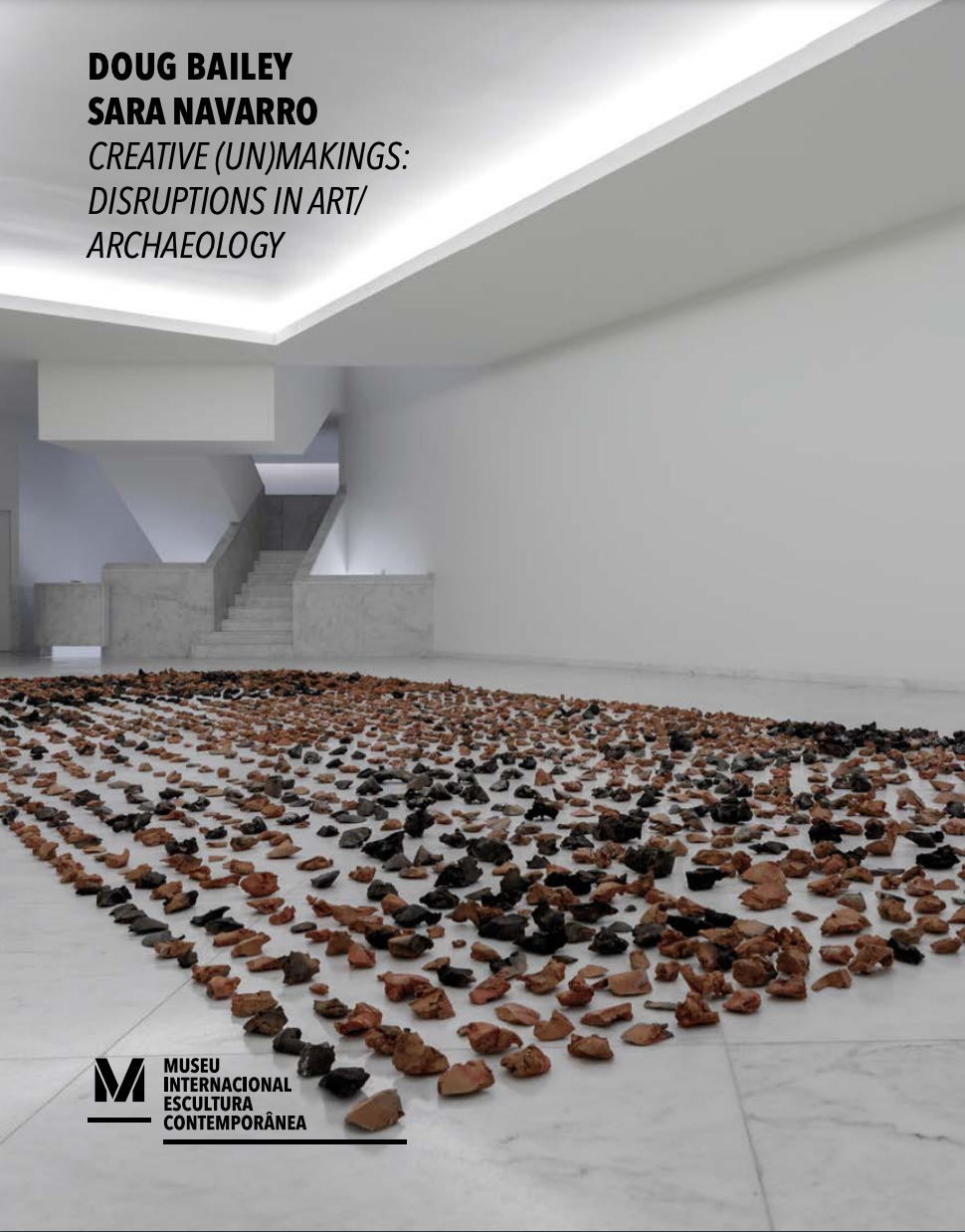
Catalogue of the exhibition 'CREATIVE(UN)MAKINGS: DISRUPTIONS IN ART/ARCHAEOLOGY'. International Museum of Contemporary Sculpture. Available at: http://miec.cm-stirso.pt/wp-content/uploads/2020/10/Doug-Bailey-Sara-Navarro.pdf
×
Thesis Document; New Concepts; Final Object; Related Artworks;
Sculpture, Archaeology, and Museums: Transfigurations and Contemporary Mediations
The selected epistemic object (EO) is a sculpture that explores the boundaries and intersections between archaeological and artistic practices. The thesis and its respective EO articulate a traditional theoretical foundation (with a literature review), empirical methods (through the incorporation of prehistoric ceramic manufacturing processes), and an interdisciplinary approach.
Archaeology; Ceramics; Prehistory; Sculpture;
2014
Book developed during Post-Doctoral research (as a continuation of the doctoral investigation). Box with objects (artifacts) and a wooden grid.
Sara Navarro
FBAUL
Sculpture
Catalogue of the exhibition 'CREATIVE(UN)MAKINGS: DISRUPTIONS IN ART/ARCHAEOLOGY'. International Museum of Contemporary Sculpture. Available at: http://miec.cm-stirso.pt/wp-content/uploads/2020/10/Doug-Bailey-Sara-Navarro.pdf
×
Thesis Document; New Concepts; Final Object; Related Artworks;
Sculpture, Archaeology, and Museums: Transfigurations and Contemporary Mediations
The selected epistemic object (EO) is a sculpture that explores the boundaries and intersections between archaeological and artistic practices. The thesis and its respective EO articulate a traditional theoretical foundation (with a literature review), empirical methods (through the incorporation of prehistoric ceramic manufacturing processes), and an interdisciplinary approach.
Archaeology; Ceramics; Prehistory; Sculpture;
2014
Participatory schemes and methodologies in the production of a public sculpture. Photographs of public meetings.
Sérgio Vicente
FBAUL
Sculpture

Thesis Cover: 'Sculpture as a Public Expression of Citizenship: The Monumentalization of the City of Almada Between 1974 and 2013'

Thesis Excerpt: 'Sculpture as a Public Expression of Citizenship: The Monumentalization of the City of Almada Between 1974 and 2013'

8th Session: Public presentation at the Almada City Museum, January 28, 2012. Image credits: José Esteves.
×
Argumentation; Methods; New Concepts;
Sculpture as a Public Expression of Citizenship: The Monumentalization of the City of Almada between 1974 and 2013
The participatory methodologies used in the production of a public sculpture, documented here through photographs of public meetings, models, and diagrams, represent the mechanisms applied by the author for creation of a public sculpture. The thesis contextualizes the theme within both international and Portuguese frameworks, combining a traditional academic foundation (including a literature review and theoretical basis supported by various authors) with empirical, interdisciplinary, and participatory methodologies that were unprecedented in the context of Public Art in Portugal at the time of its publication.
Almada; Citizenship; Identity; Monuments;Participatory Art; Public Art; Sculpture;
2016
Participatory schemes and methodologies in the production of a public sculpture. Photographs of public meetings.
Sérgio Vicente
FBAUL
Sculpture
Thesis Cover: 'Sculpture as a Public Expression of Citizenship: The Monumentalization of the City of Almada Between 1974 and 2013'
Thesis Excerpt: 'Sculpture as a Public Expression of Citizenship: The Monumentalization of the City of Almada Between 1974 and 2013'
8th Session: Public presentation at the Almada City Museum, January 28, 2012. Image credits: José Esteves.
×
Argumentation; Methods; New Concepts;
Sculpture as a Public Expression of Citizenship: The Monumentalization of the City of Almada between 1974 and 2013
The participatory methodologies used in the production of a public sculpture, documented here through photographs of public meetings, models, and diagrams, represent the mechanisms applied by the author for creation of a public sculpture. The thesis contextualizes the theme within both international and Portuguese frameworks, combining a traditional academic foundation (including a literature review and theoretical basis supported by various authors) with empirical, interdisciplinary, and participatory methodologies that were unprecedented in the context of Public Art in Portugal at the time of its publication.
Almada; Citizenship; Identity; Monuments;Participatory Art; Public Art; Sculpture;
2016
"I’ve tried to erase the walls. It didn’t work."
Susana Rocha
FBAUL
Painting

"I’ve tried to erase the walls. It didn’t work.", Year: 2019, Material: Erasers, Dimensions: Variable
×
Final Object; Related Artworks;
Bound to Fail: Failure as a Paradox in Contemporary Art
"I've tried to erase the walls. It didn't work." is a work that documents a performance, the act of erasing a wall. In this way, disruption, or failure as an artistic potential, becomes the source of innovation and creativity, a fundamental stage in the development of the artwork. On the other hand, the work emphasizes the deconstruction of perfection, the unpredictable, and the imperfect as elements that shape the artwork. Thus, the selected Epistemic Object reflects the theme of the thesis, in which the concept of 'failure' is contextualized within a traditional theoretical foundation (with literature review) and empirical methods.
Anxiety; Artistic Project; Cidadania; Contemporary Art; Failure;
2020
"I’ve tried to erase the walls. It didn’t work."
Susana Rocha
FBAUL
Painting
"I’ve tried to erase the walls. It didn’t work.", Year: 2019, Material: Erasers, Dimensions: Variable
×
Final Object; Related Artworks;
Bound to Fail: Failure as a Paradox in Contemporary Art
"I've tried to erase the walls. It didn't work." is a work that documents a performance, the act of erasing a wall. In this way, disruption, or failure as an artistic potential, becomes the source of innovation and creativity, a fundamental stage in the development of the artwork. On the other hand, the work emphasizes the deconstruction of perfection, the unpredictable, and the imperfect as elements that shape the artwork. Thus, the selected Epistemic Object reflects the theme of the thesis, in which the concept of 'failure' is contextualized within a traditional theoretical foundation (with literature review) and empirical methods.
Anxiety; Artistic Project; Cidadania; Contemporary Art; Failure;
2020
"48", Documentary, Directed by Susana de Sousa Dias, Produced by Ansgar Schäfer, Authored by Susana de Sousa Dias, Year 2009, Duration 92min 50s
Susana Sousa Dias
FBAUL
Multimedia
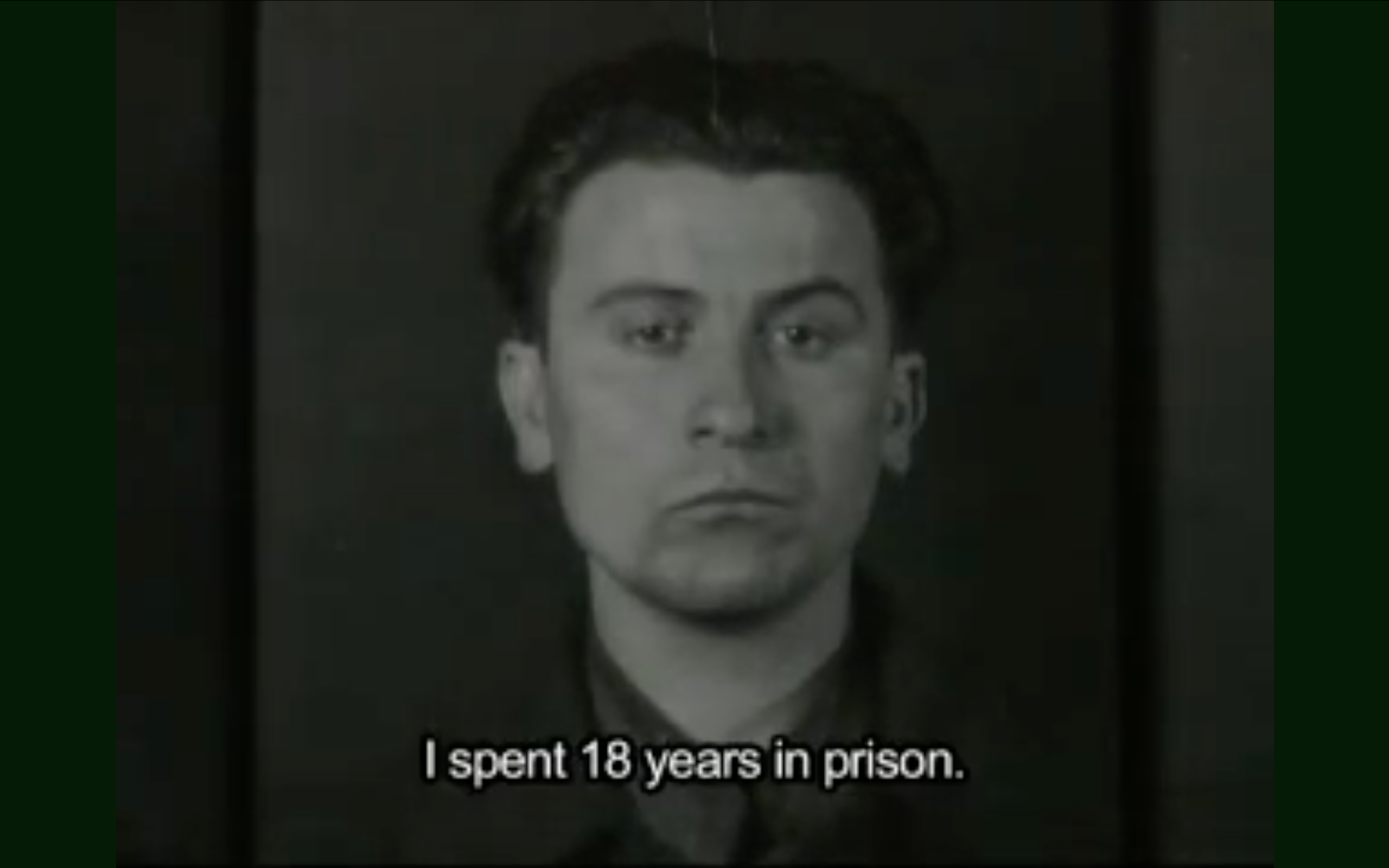
Still Frame of "48". Susana Sousa Dias. Image credits Susana Sousa Dias.
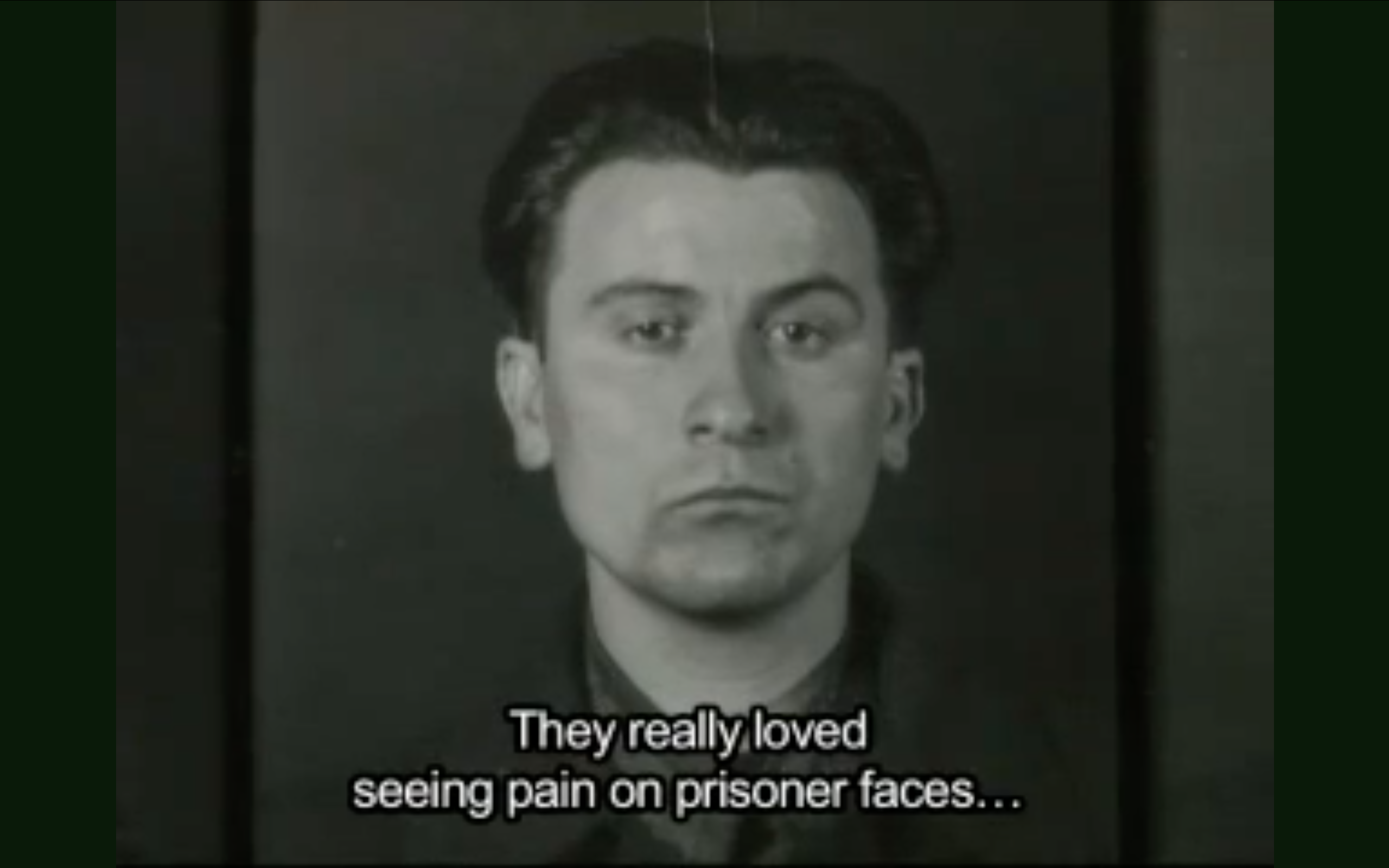
Still Frame of "48". Susana Sousa Dias. Image credits Susana Sousa Dias.
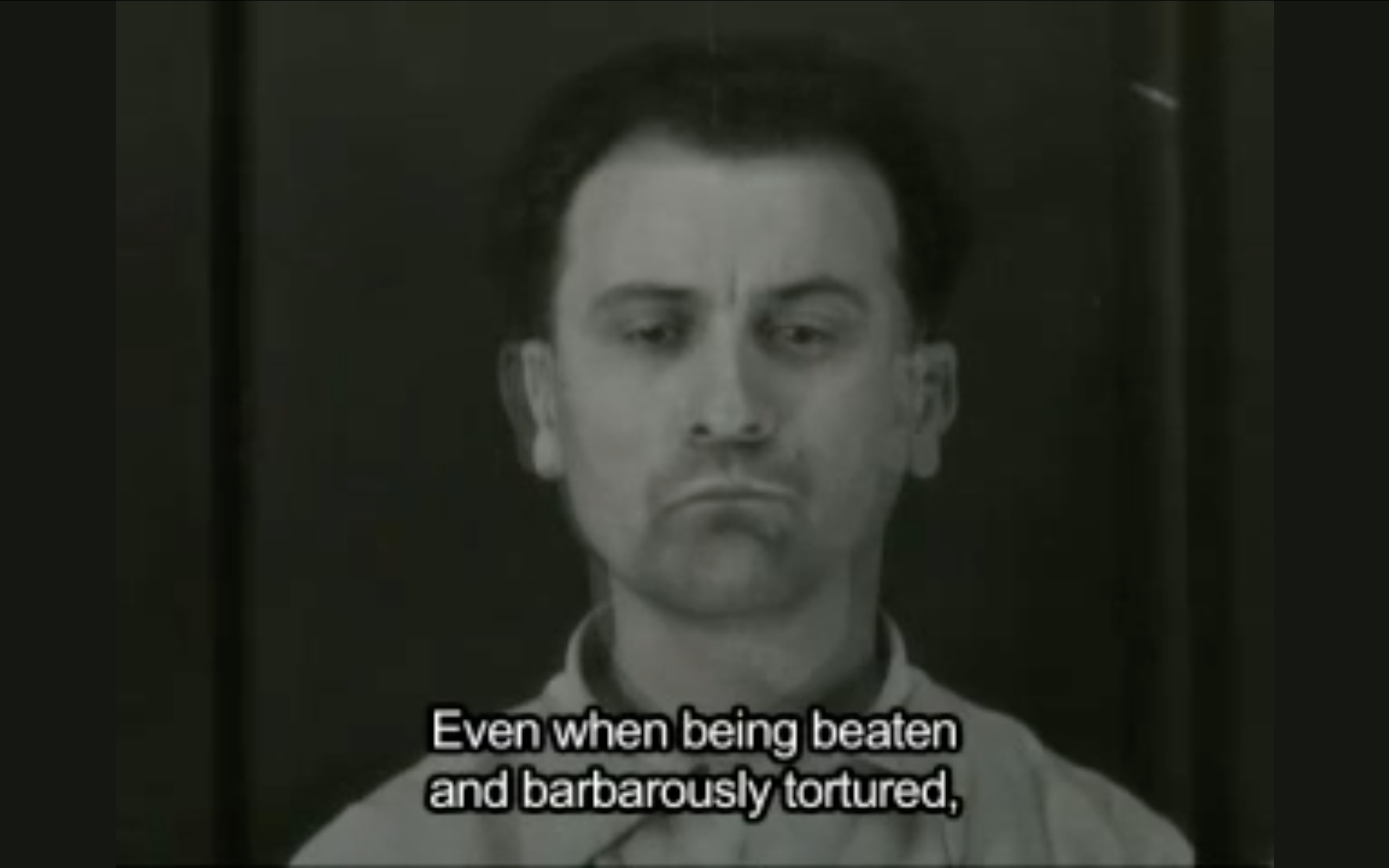
Still Frame of "48". Susana Sousa Dias. Image credits Susana Sousa Dias.
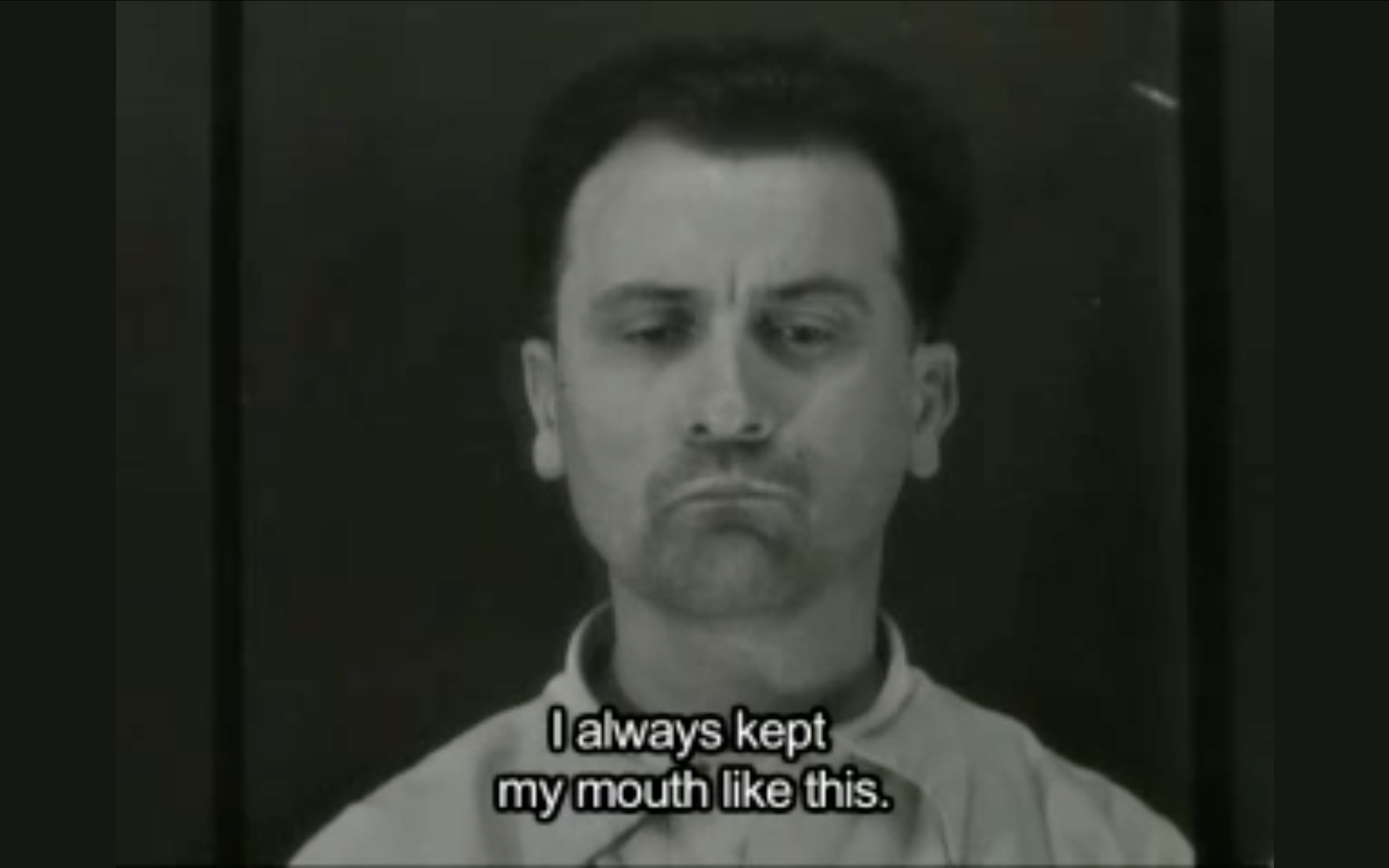
Still Frame of "48". Susana Sousa Dias. Image credits Susana Sousa Dias.
×
Visual Concepts; New Concepts; Final Object;
Unveiling History: Archival Image and Slowed Motion: A Theoretical-Practical Study Based on the Films Natureza Morta and 48
The film "48" highlights the articulation of theory and praxis, elucidating not only the mechanisms of film construction in its interconnection with theoretical issues but also the methods used to resolve cinematographic problems. The methodology adopted in the thesis focuses on artistic practice as a form of research, intertwining an empirical and reflective approach. Through the development of case studies based on the artist's own films, it is observed how the intentional slowing down of speed and the subtle transition between still and moving images affect the perception and interpretation of archival footage. These processes contribute to the construction of narratives that question the conventions of cinematic language, while simultaneously investigating ways to use documentary images as a historical sour
Archive; Documentary film;
2014
"48", Documentary, Directed by Susana de Sousa Dias, Produced by Ansgar Schäfer, Authored by Susana de Sousa Dias, Year 2009, Duration 92min 50s
Susana Sousa Dias
FBAUL
Multimedia
Still Frame of "48". Susana Sousa Dias. Image credits Susana Sousa Dias.
Still Frame of "48". Susana Sousa Dias. Image credits Susana Sousa Dias.
Still Frame of "48". Susana Sousa Dias. Image credits Susana Sousa Dias.
Still Frame of "48". Susana Sousa Dias. Image credits Susana Sousa Dias.
×
Visual Concepts; New Concepts; Final Object;
Unveiling History: Archival Image and Slowed Motion: A Theoretical-Practical Study Based on the Films Natureza Morta and 48
The film "48" highlights the articulation of theory and praxis, elucidating not only the mechanisms of film construction in its interconnection with theoretical issues but also the methods used to resolve cinematographic problems. The methodology adopted in the thesis focuses on artistic practice as a form of research, intertwining an empirical and reflective approach. Through the development of case studies based on the artist's own films, it is observed how the intentional slowing down of speed and the subtle transition between still and moving images affect the perception and interpretation of archival footage. These processes contribute to the construction of narratives that question the conventions of cinematic language, while simultaneously investigating ways to use documentary images as a historical sour
Archive; Documentary film;
2014
Air Satellite micro Moon Gallery, 1 x 1 x 1 cm, Borosilicate glass, 2023
Renato Japiassú
FBAUL
Multimedia
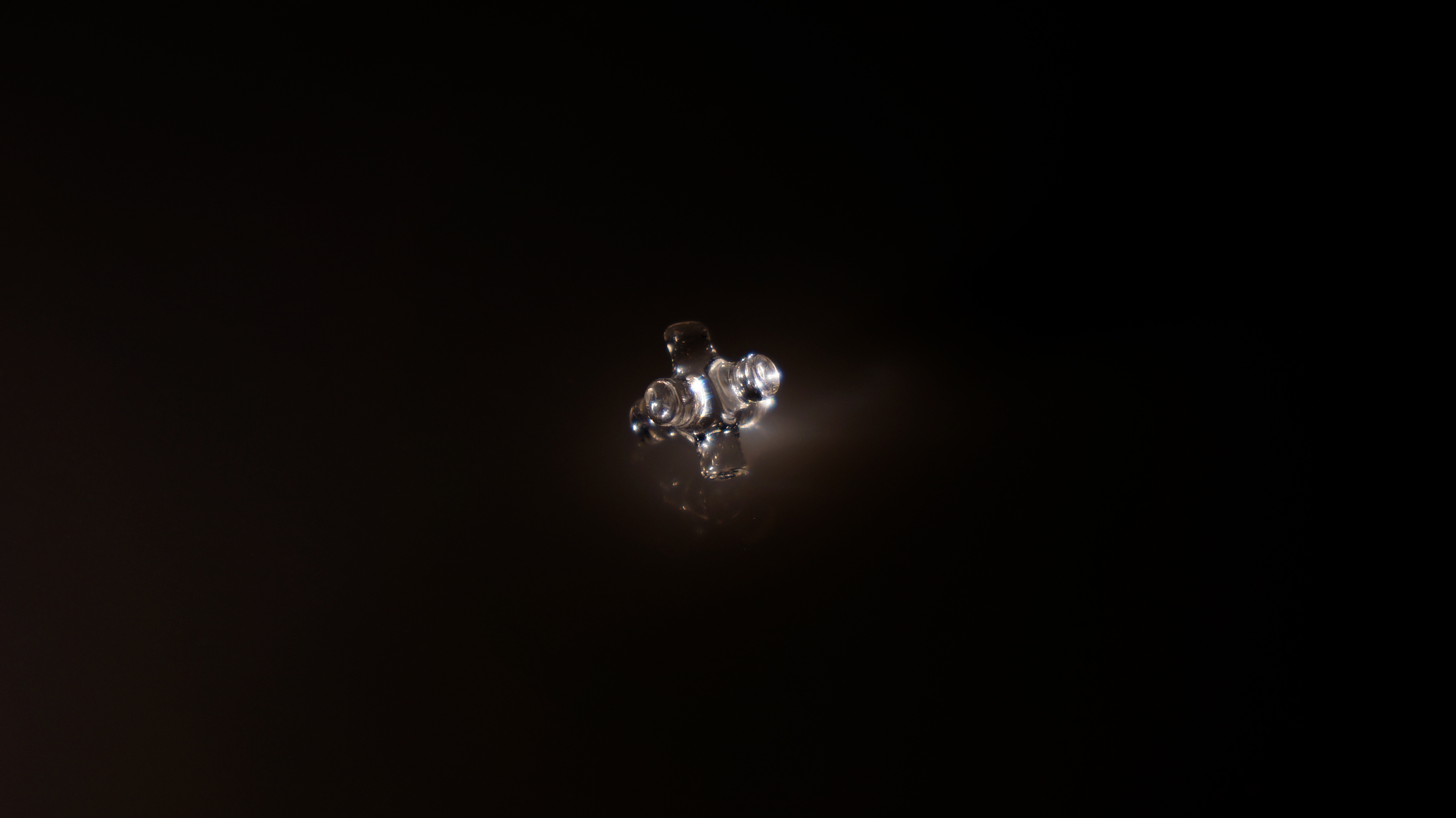
Air Satellite micro Moon Gallery. Créditos da Imagem: Renato Japiassú
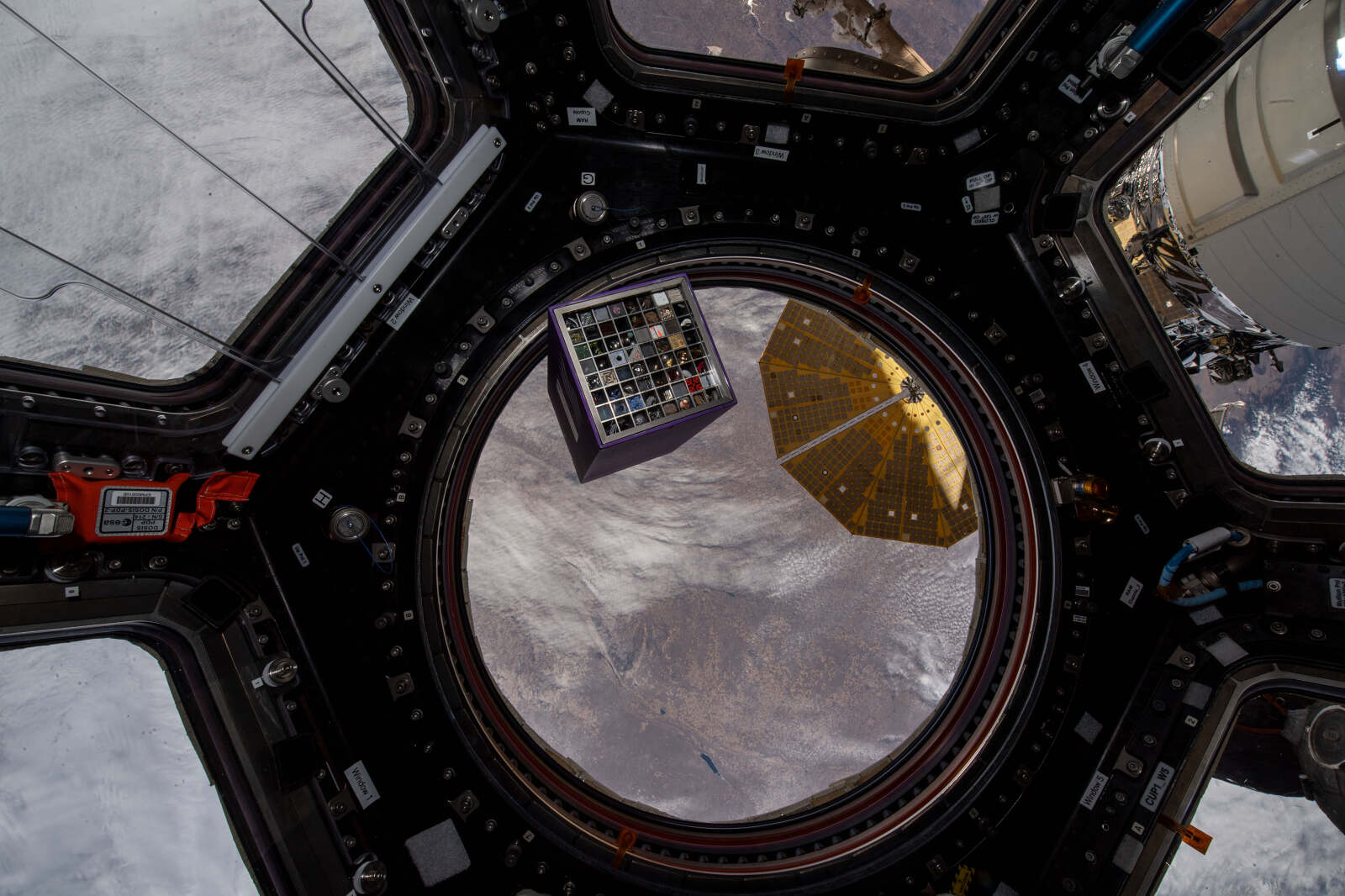
Moon Gallery. Créditos da Imagem: Moon Gallery Foundation. Disponível em: moongallery.eu
×
Visual Concepts; Final Object;
INTER/EXTERIOR PANORAMAS: Nomadic Glass Installations, Scale, and Representation
The selected epistemic object is a glass sculpture titled Air Satellite Micro (1cm x 1cm x 1cm), which is currently in orbit at the International Space Station and will be sent to the Moon in 2025 as part of the Moon Gallery project (moongallery.eu). This work reflects on the idea of a sculpture existing beyond the planet, expanding the boundaries of art in relation to space and matter. It is part of the artist's doctoral research, which develops a reflective practice on how the scale of objects (ranging from miniature to 1:1 scale and colossal) and the documentation of works influence the viewer's experience.
Glass; Installation; Scale; Sculpture; Site-Specific;
2022
Air Satellite micro Moon Gallery, 1 x 1 x 1 cm, Borosilicate glass, 2023
Renato Japiassú
FBAUL
Multimedia
Air Satellite micro Moon Gallery. Créditos da Imagem: Renato Japiassú
Moon Gallery. Créditos da Imagem: Moon Gallery Foundation. Disponível em: moongallery.eu
×
Visual Concepts; Final Object;
INTER/EXTERIOR PANORAMAS: Nomadic Glass Installations, Scale, and Representation
The selected epistemic object is a glass sculpture titled Air Satellite Micro (1cm x 1cm x 1cm), which is currently in orbit at the International Space Station and will be sent to the Moon in 2025 as part of the Moon Gallery project (moongallery.eu). This work reflects on the idea of a sculpture existing beyond the planet, expanding the boundaries of art in relation to space and matter. It is part of the artist's doctoral research, which develops a reflective practice on how the scale of objects (ranging from miniature to 1:1 scale and colossal) and the documentation of works influence the viewer's experience.
Glass; Installation; Scale; Sculpture; Site-Specific;
2022
What color is the sky now?, variable dimensions, 2010
Marta Traquino
FBAUL
Public Art
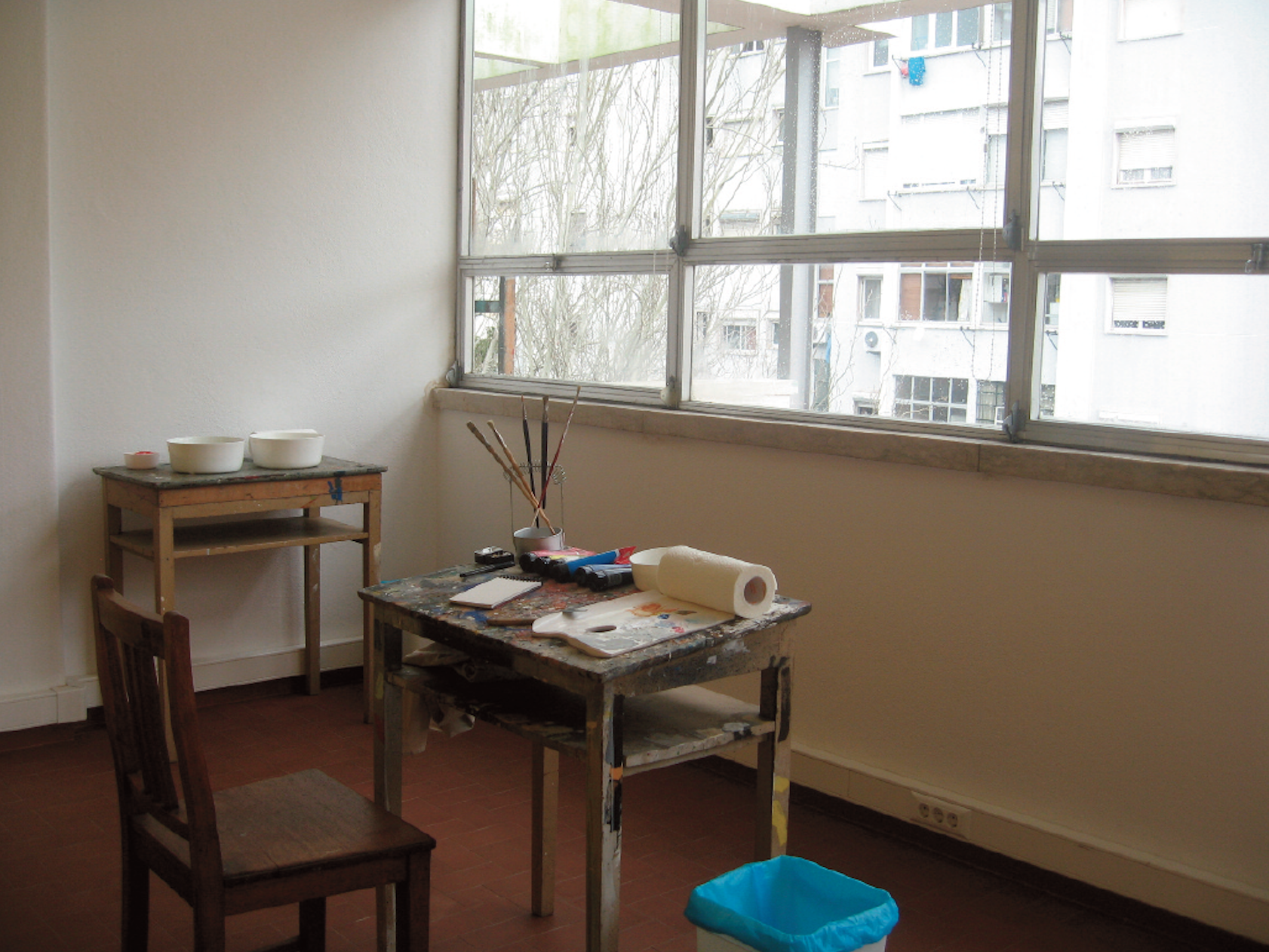
Marta Traquino with the collaboration of the visitors, What color is the sky now?, Coruchéus, Lisbon, 2010, image credits Marta Traquino.

View of the installation / results of the collaborative action, What color is the sky now?, Coruchéus, Lisbon, 2010, image credits Marta Traquino.
×
Argumentation; Final Object; New Concepts; Visual Concepts;
BEING IN THE CITY — URBANITY AND ARTISTIC PRACTICE, PERCEPTIONS AND ACTIONS
The selected epistemic object consists of a collaborative artistic action that invites participants to observe a portion of the sky visible through a window and paint the color they perceive. This proposal is integrated into the doctoral research as a direct and unique experience for the participant, highlighting the connection with time, space, and place. From a methodological perspective, the thesis provides a theoretical contextualization, incorporating the work of several contemporary authors, and presents a reflective, collaborative, and transdisciplinary artistic practice. Thematically, as this is a doctoral investigation in the field of Public Art, Marta Traquino challenges traditional notions of permanence in art—often associated with monuments and enduring symbols that explicitly mark the public space. Instead, her interventions explore possibilities for connection, memory, and perception through subtle actions in the space.
City; Participatory Art; Place; Public Art;
2012
What color is the sky now?, variable dimensions, 2010
Marta Traquino
FBAUL
Public Art
Marta Traquino with the collaboration of the visitors, What color is the sky now?, Coruchéus, Lisbon, 2010, image credits Marta Traquino.
View of the installation / results of the collaborative action, What color is the sky now?, Coruchéus, Lisbon, 2010, image credits Marta Traquino.
×
Argumentation; Final Object; New Concepts; Visual Concepts;
BEING IN THE CITY — URBANITY AND ARTISTIC PRACTICE, PERCEPTIONS AND ACTIONS
The selected epistemic object consists of a collaborative artistic action that invites participants to observe a portion of the sky visible through a window and paint the color they perceive. This proposal is integrated into the doctoral research as a direct and unique experience for the participant, highlighting the connection with time, space, and place. From a methodological perspective, the thesis provides a theoretical contextualization, incorporating the work of several contemporary authors, and presents a reflective, collaborative, and transdisciplinary artistic practice. Thematically, as this is a doctoral investigation in the field of Public Art, Marta Traquino challenges traditional notions of permanence in art—often associated with monuments and enduring symbols that explicitly mark the public space. Instead, her interventions explore possibilities for connection, memory, and perception through subtle actions in the space.
City; Participatory Art; Place; Public Art;
2012
"Túbulo", studies/sketches and sculpture in stainless steel, 2011-2015.
Luís Afonso
University of Évora - Institute of Research and Advanced Training
Visual Art

Studies for the Development of a Kinetic Sound Sculpture. Image credits: Luís Afonso.

"Túbulo" Studies of Composition and Scale. Image credits: Luís Afonso.

"Túbulo" Three-Dimensional Model of the Artwork. Image credits: Luís Afonso.

"Túbulo" Materialization of the Artwork. Polished Stainless Steel Tubes. Image credits: Luís Afonso.
×
Argumentation; Final Object; New Concepts;Visual Concepts;
The Relationship Between Sculpture and Sound: Forms, Materials, and Techniques
The selected epistemic object consists of a sound sculpture made of stainless steel tubes and electronic devices that create an electromagnetic sound field activated by the viewer's proximity, producing random sounds without a musical purpose. This work results from research with a broad theoretical framework and a literature review encompassing materials that generate sound, sound sculptures by contemporary artists, and the possibility of designing new sculptures based on sound energy. The research and materialization of the epistemic object highlight underexplored potentials of sculpture in the field of visual arts, emphasizing its interdisciplinary potential in the context of sound sculptures.
Kinetic Art; Sculpture; Sound Sculpture; Sound;
2015
"Túbulo", studies/sketches and sculpture in stainless steel, 2011-2015.
Luís Afonso
University of Évora - Institute of Research and Advanced Training
Visual Art
Studies for the Development of a Kinetic Sound Sculpture. Image credits: Luís Afonso.
"Túbulo" Studies of Composition and Scale. Image credits: Luís Afonso.
"Túbulo" Three-Dimensional Model of the Artwork. Image credits: Luís Afonso.
"Túbulo" Materialization of the Artwork. Polished Stainless Steel Tubes. Image credits: Luís Afonso.
×
Argumentation; Final Object; New Concepts;Visual Concepts;
The Relationship Between Sculpture and Sound: Forms, Materials, and Techniques
The selected epistemic object consists of a sound sculpture made of stainless steel tubes and electronic devices that create an electromagnetic sound field activated by the viewer's proximity, producing random sounds without a musical purpose. This work results from research with a broad theoretical framework and a literature review encompassing materials that generate sound, sound sculptures by contemporary artists, and the possibility of designing new sculptures based on sound energy. The research and materialization of the epistemic object highlight underexplored potentials of sculpture in the field of visual arts, emphasizing its interdisciplinary potential in the context of sound sculptures.
Kinetic Art; Sculpture; Sound Sculpture; Sound
2015
Thesis "Arder de Mão". João Jacinto. Faculty of Fine Arts, University of Lisbon. Specialization in Drawing. 2013.
João Jacinto
FBAUL
Drawing

Cover of the Thesis "Arder de Mão". João Jacinto. Faculty of Fine Arts, University of Lisbon. Specialization in Drawing. 2013.

Page of the Thesis "Arder de Mão". Drawing. João Jacinto. Faculty of Fine Arts, University of Lisbon.

Page of the Thesis / Introduction "Arder de Mão". João Jacinto. Faculty of Fine Arts, University of Lisbon. 2013.

Page of the Thesis / Introduction "Arder de Mão". João Jacinto. Faculty of Fine Arts, University of Lisbon. Specialization in Drawing. 2013.
×
The 'non-objectivity,' singularity, and mystery of drawing and painting guide João Jacinto's artistic research. The author emphasizes the 'making' the studio practice, the hand, and the gesture that cannot be translated into words. The thesis is developed with a non-linear structure and is organized around a reflective practice that connects themes emerging from the artist's personal thinking and other cited authors.
Artistic Practice; Drawing; Face; Mystery;
2013
Thesis "Arder de Mão". João Jacinto. Faculty of Fine Arts, University of Lisbon. Specialization in Drawing. 2013.
João Jacinto
FBAUL
Drawing
Cover of the Thesis "Arder de Mão". João Jacinto. Faculty of Fine Arts, University of Lisbon. Specialization in Drawing. 2013.
Page of the Thesis "Arder de Mão". Drawing. João Jacinto. Faculty of Fine Arts, University of Lisbon.
Page of the Thesis / Introduction "Arder de Mão". João Jacinto. Faculty of Fine Arts, University of Lisbon. 2013.
Page of the Thesis / Introduction "Arder de Mão". João Jacinto. Faculty of Fine Arts, University of Lisbon. Specialization in Drawing. 2013.
×
The 'non-objectivity,' singularity, and mystery of drawing and painting guide João Jacinto's artistic research. The author emphasizes the 'making' the studio practice, the hand, and the gesture that cannot be translated into words. The thesis is developed with a non-linear structure and is organized around a reflective practice that connects themes emerging from the artist's personal thinking and other cited authors.
Artistic Practice; Drawing; Face; Mystery;
2013
Pâte de verre recipe and sculpture conceived using this technique
Teresa Almeida
DeCA | UA
Art Studies
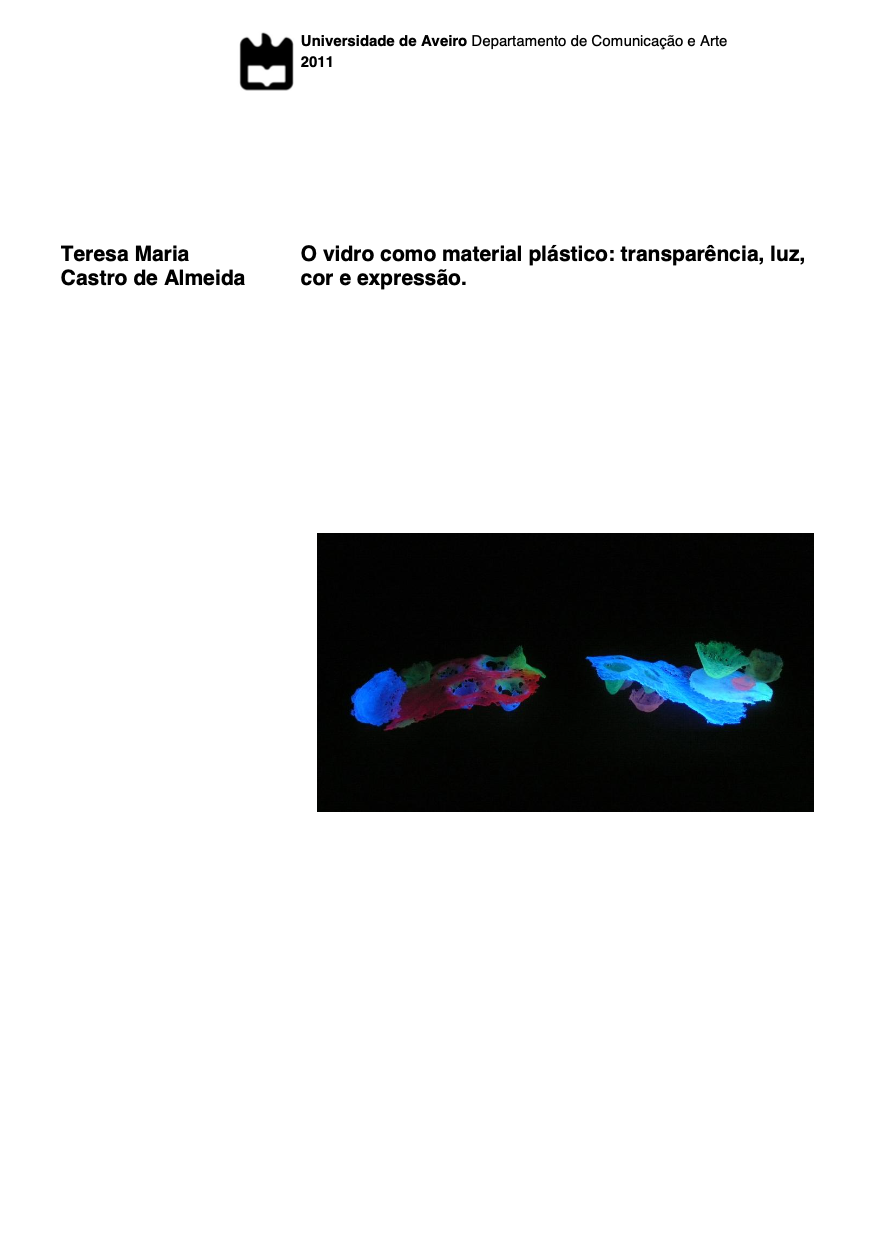
Thesis Cover "Glass as a Plastic Material: Transparency, Light, Colour, and Expression". Teresa Almeida. University of Aveiro. Department of Communication and Art. Art Studies Specialisation. 2011
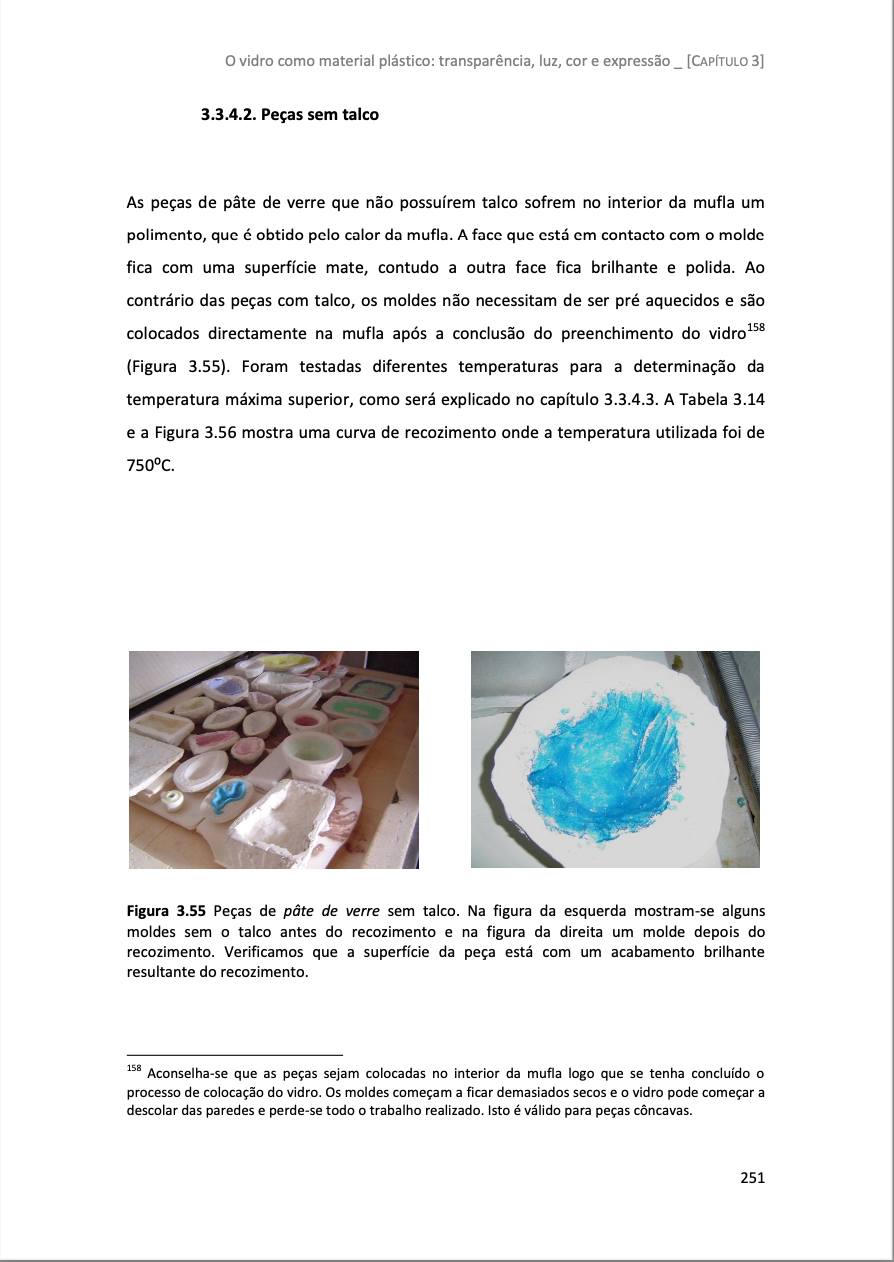
Thesis Page "Glass as a Plastic Material: Transparency, Light, Colour, and Expression". Teresa Almeida. University of Aveiro. Department of Communication and Art. Art Studies Specialisation. 2011
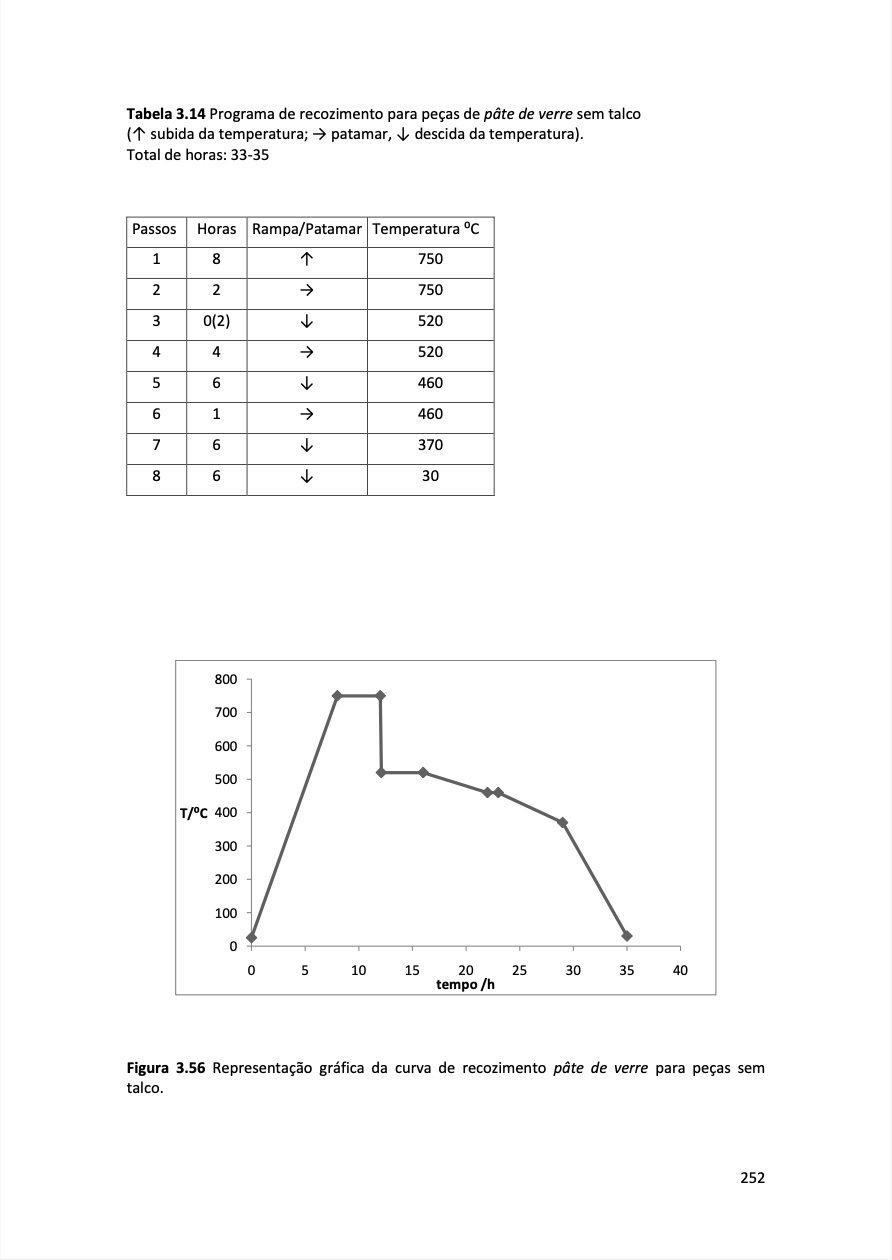
Thesis Page "Glass as a Plastic Material: Transparency, Light, Colour, and Expression". Teresa Almeida. University of Aveiro. Department of Communication and Art. Art Studies Specialisation. 2011
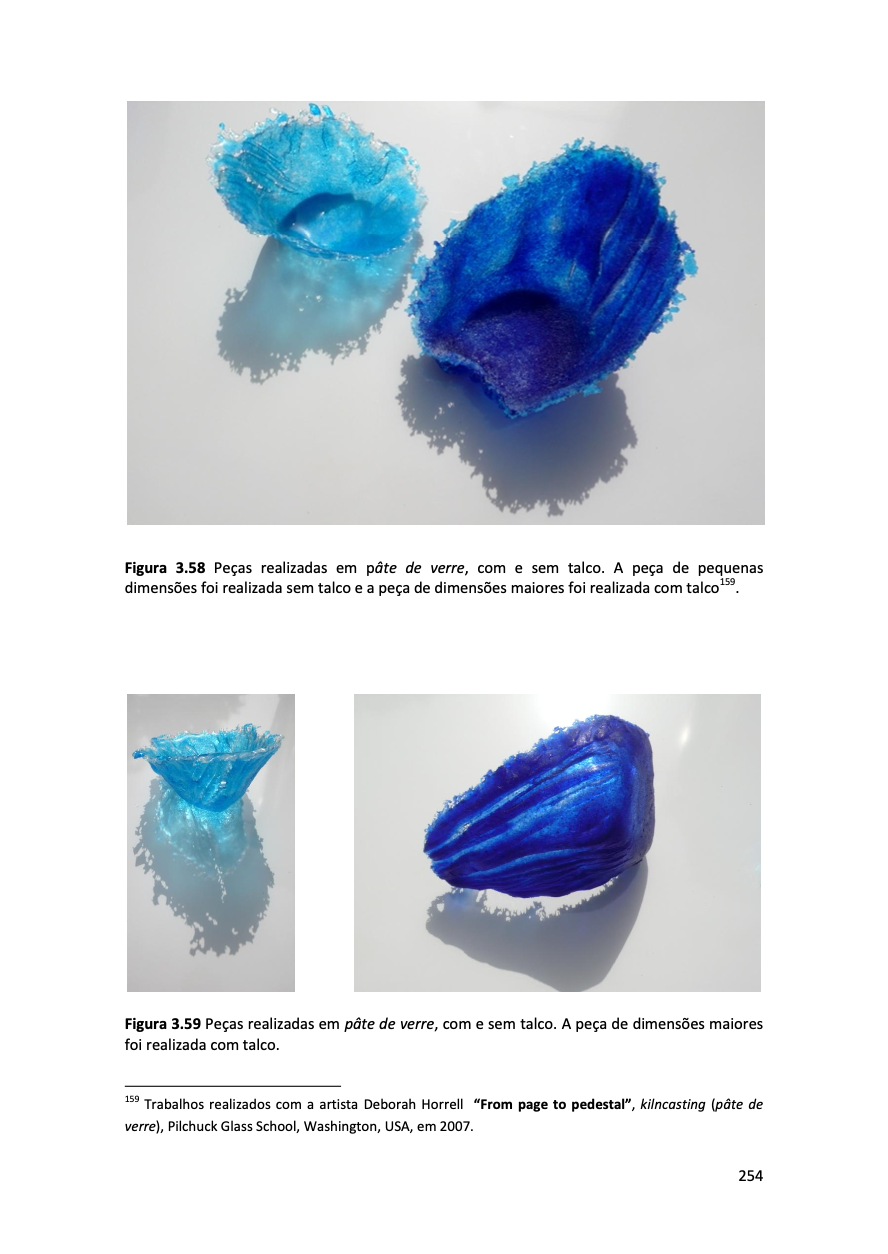
Thesis Page "Glass as a Plastic Material: Transparency, Light, Colour, and Expression". Teresa Almeida. University of Aveiro. Department of Communication and Art. Art Studies Specialisation. 2011
×
Methods; Thesis Document;
Glass as a Plastic Material: Transparency, Light, Colour, and Expression
Os objetos epistémicos selecionados consistem numa receita de pâte de verre e numa obra concebida com esta técnica por Teresa Almeida, salientando-se o contributo científico, técnico e empírico desta tese para a comunidade artística, em particular, na área do vidro. Nesta investigação, a artista enveredou por processos de: a) reinterpretação de técnicas associadas ao vidro; b) desenvolvimento de novos materiais e saberes sobre esta matéria em articulação com cientistas, nomeadamente na área dos esmaltes luminescentes; c) partilha destas técnicas e receitas em open access, para toda a comunidade, em particular no âmbito não industrial, abrindo espaço à experimentação em contextos criativos, educativos e artesanais. Do ponto de vista metodológico, a artista focou-se numa contextualização teórica do vidro no panorama artístico de Portugal (estado da arte e revisão de literatura) focando-se, depois, na partilha do trabalho empírico (técnicas, processos e obras artísticas em vidro luminescente, kiln casting, patê de verre, sandcasting, fusing, slumping).
Pâte de verre; Glass; Luminescent Glass;Stained Glass;
2011
Pâte de verre recipe and sculpture conceived using this technique
Teresa Almeida
DeCA | UA
Art Studies
Thesis Cover "Glass as a Plastic Material: Transparency, Light, Colour, and Expression". Teresa Almeida. University of Aveiro. Department of Communication and Art. Art Studies Specialisation. 2011
Thesis Page "Glass as a Plastic Material: Transparency, Light, Colour, and Expression". Teresa Almeida. University of Aveiro. Department of Communication and Art. Art Studies Specialisation. 2011
Thesis Page "Glass as a Plastic Material: Transparency, Light, Colour, and Expression". Teresa Almeida. University of Aveiro. Department of Communication and Art. Art Studies Specialisation. 2011
Thesis Page "Glass as a Plastic Material: Transparency, Light, Colour, and Expression". Teresa Almeida. University of Aveiro. Department of Communication and Art. Art Studies Specialisation. 2011
×
Methods; Thesis Document;
Glass as a Plastic Material: Transparency, Light, Colour, and Expression
Os objetos epistémicos selecionados consistem numa receita de pâte de verre e numa obra concebida com esta técnica por Teresa Almeida, salientando-se o contributo científico, técnico e empírico desta tese para a comunidade artística, em particular, na área do vidro. Nesta investigação, a artista enveredou por processos de: a) reinterpretação de técnicas associadas ao vidro; b) desenvolvimento de novos materiais e saberes sobre esta matéria em articulação com cientistas, nomeadamente na área dos esmaltes luminescentes; c) partilha destas técnicas e receitas em open access, para toda a comunidade, em particular no âmbito não industrial, abrindo espaço à experimentação em contextos criativos, educativos e artesanais. Do ponto de vista metodológico, a artista focou-se numa contextualização teórica do vidro no panorama artístico de Portugal (estado da arte e revisão de literatura) focando-se, depois, na partilha do trabalho empírico (técnicas, processos e obras artísticas em vidro luminescente, kiln casting, patê de verre, sandcasting, fusing, slumping).
Pâte de verre; Glass; Luminescent Glass;Stained Glass;
2011
Artistic Manifesto "The Artist in the Voice of the Artist", by Francisco Lima
Francisco Cardoso Lima
DeCA | UA
Art Studies
Thesis Cover "The Artist by the Artist, in Their Own Voice". Francisco Lima. University of Aveiro. Department of Communication and Art. Art Studies Specialisation. 2016
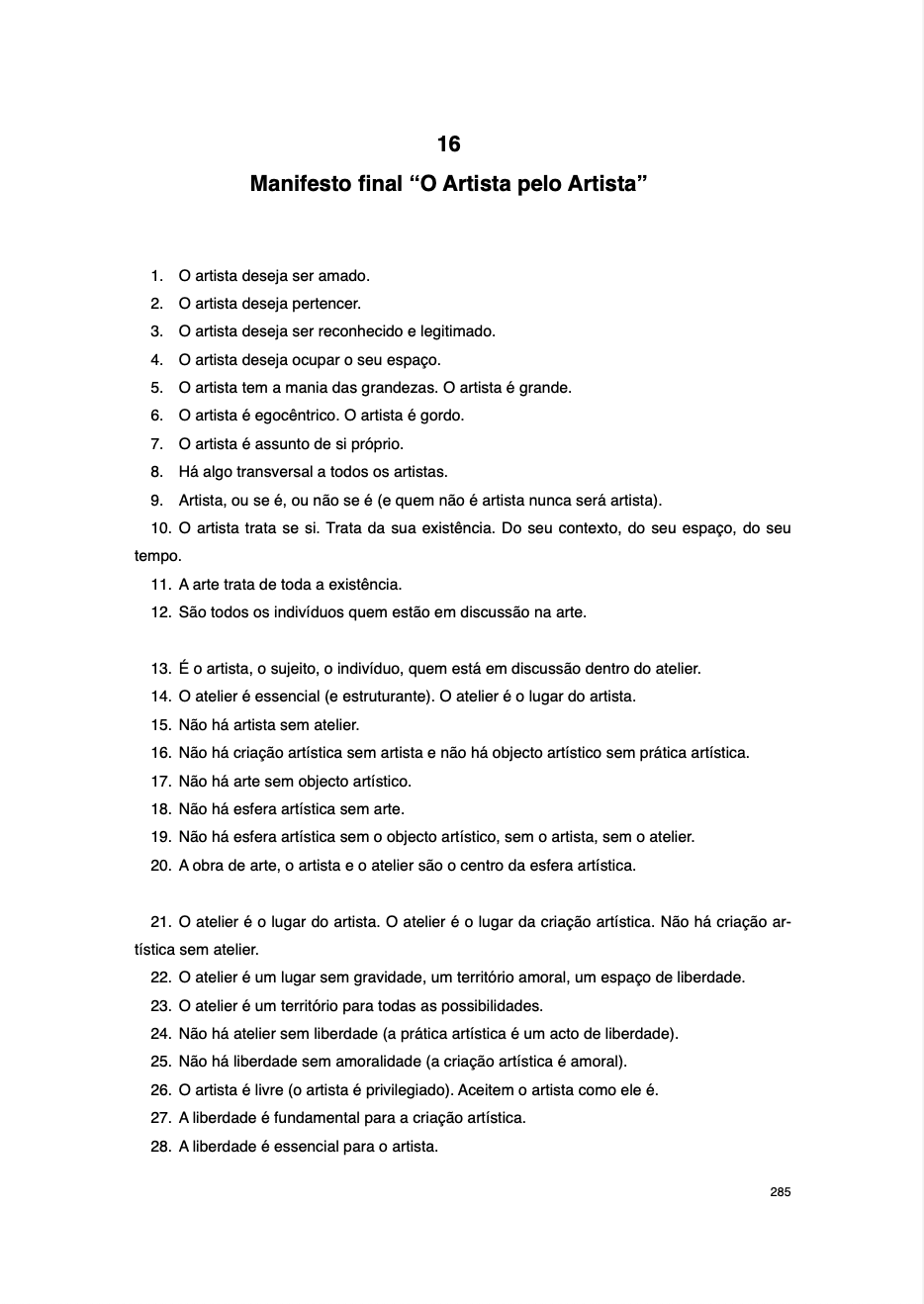
Artistic Manifesto "The Artist in the Voice of the Artist", by Francisco Lima
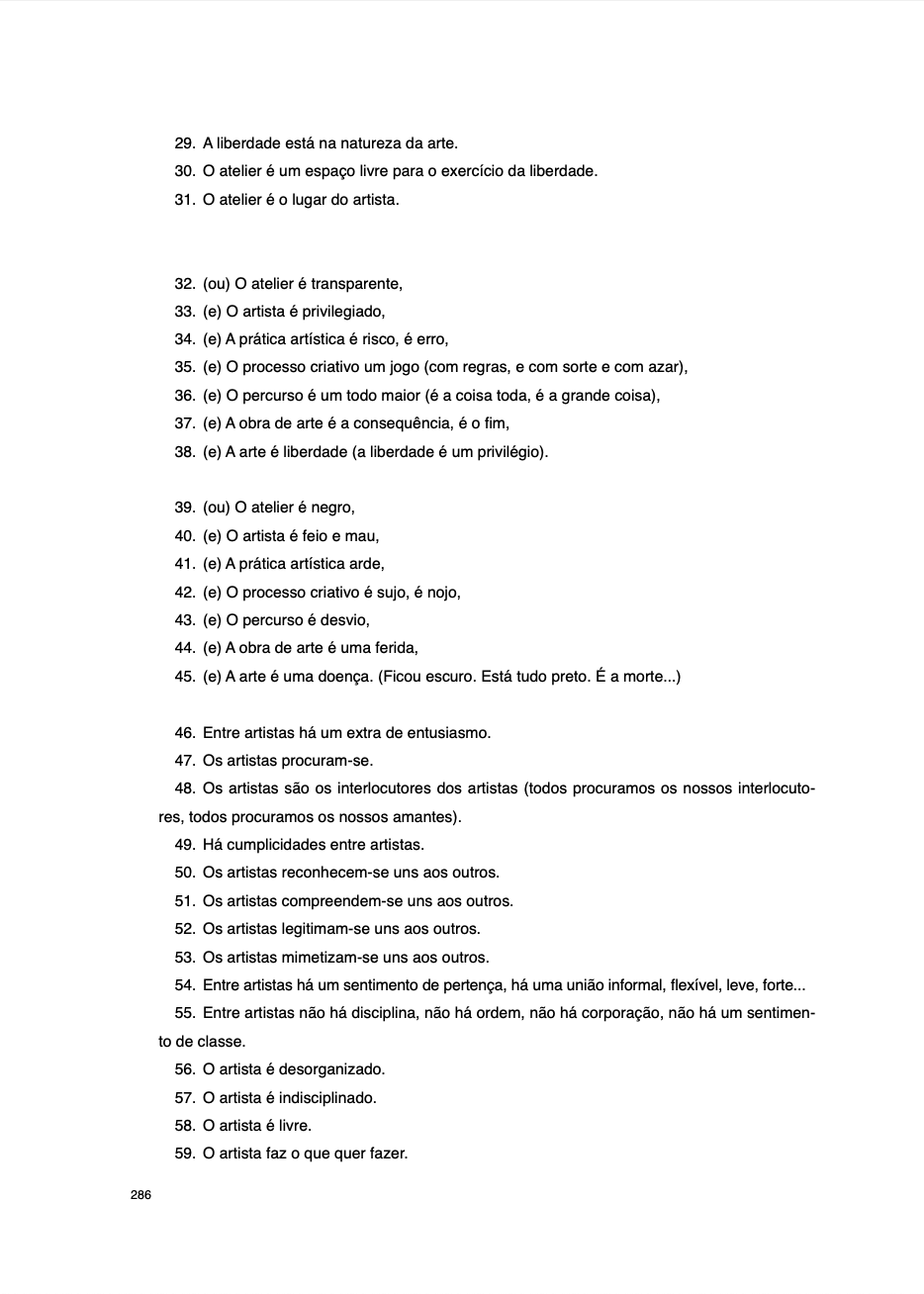
Artistic Manifesto "The Artist in the Voice of the Artist", by Francisco Lima
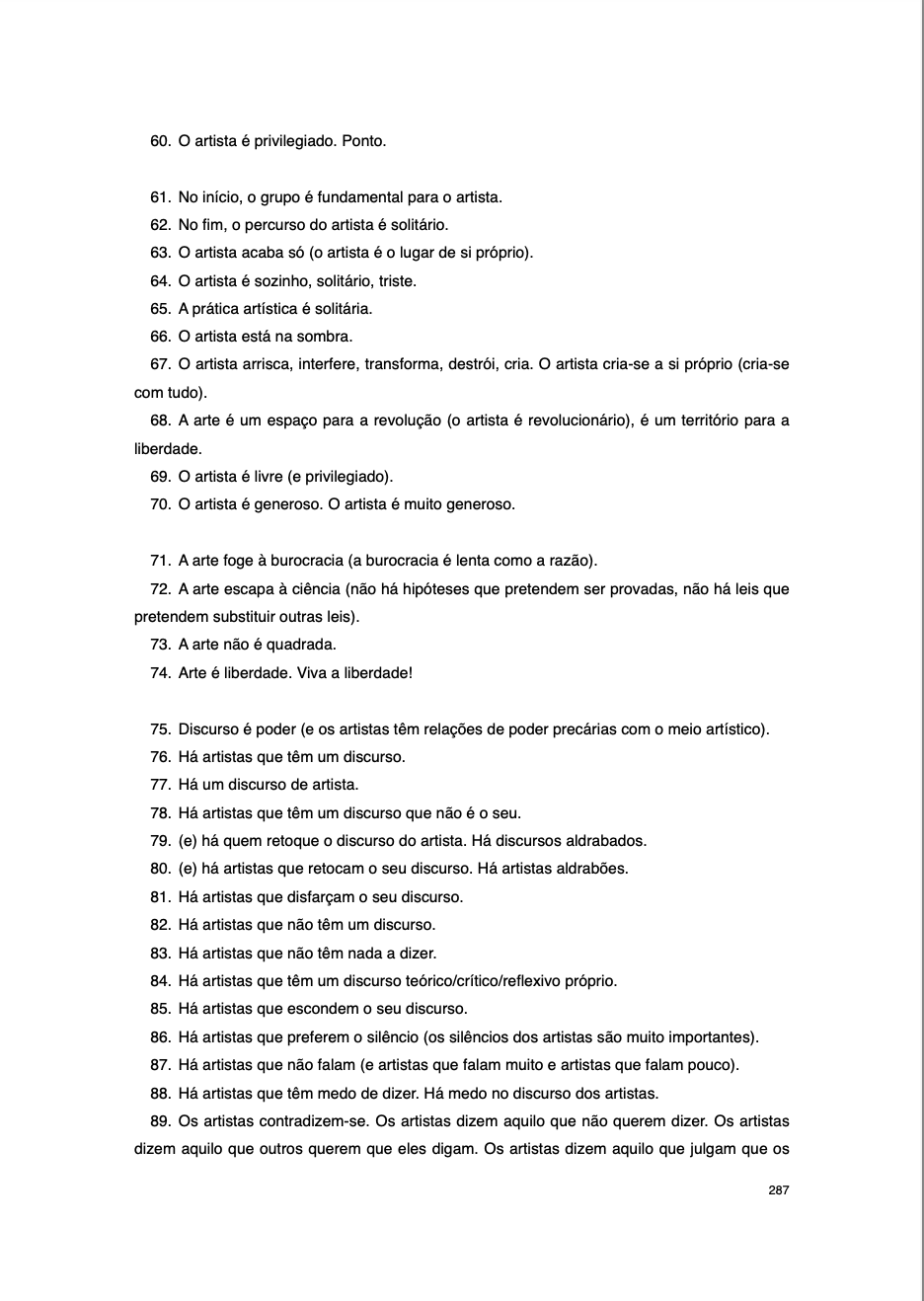
Artistic Manifesto "The Artist in the Voice of the Artist", by Francisco Lima
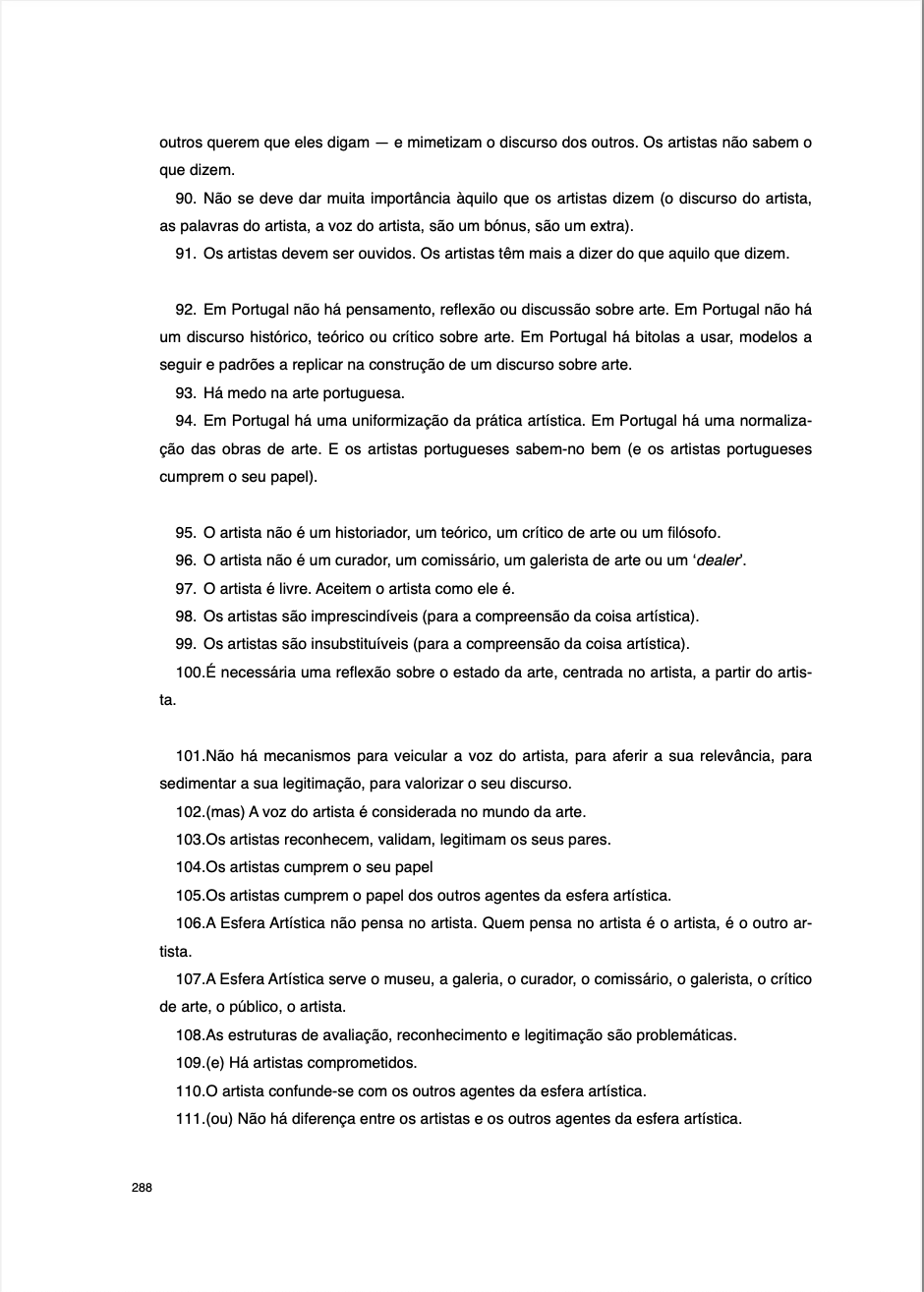
Artistic Manifesto "The Artist in the Voice of the Artist", by Francisco Lima
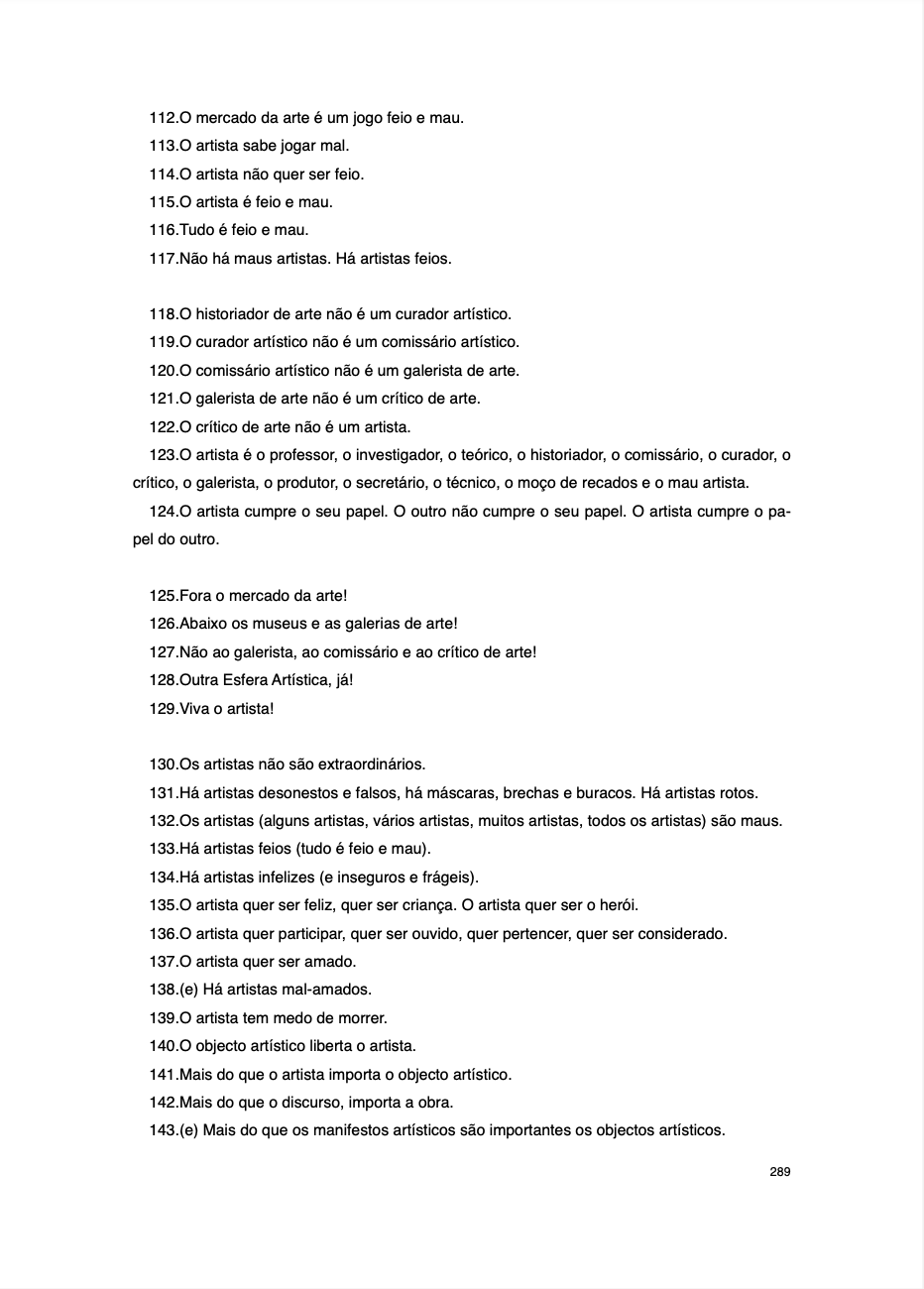
Artistic Manifesto "The Artist in the Voice of the Artist", by Francisco Lima
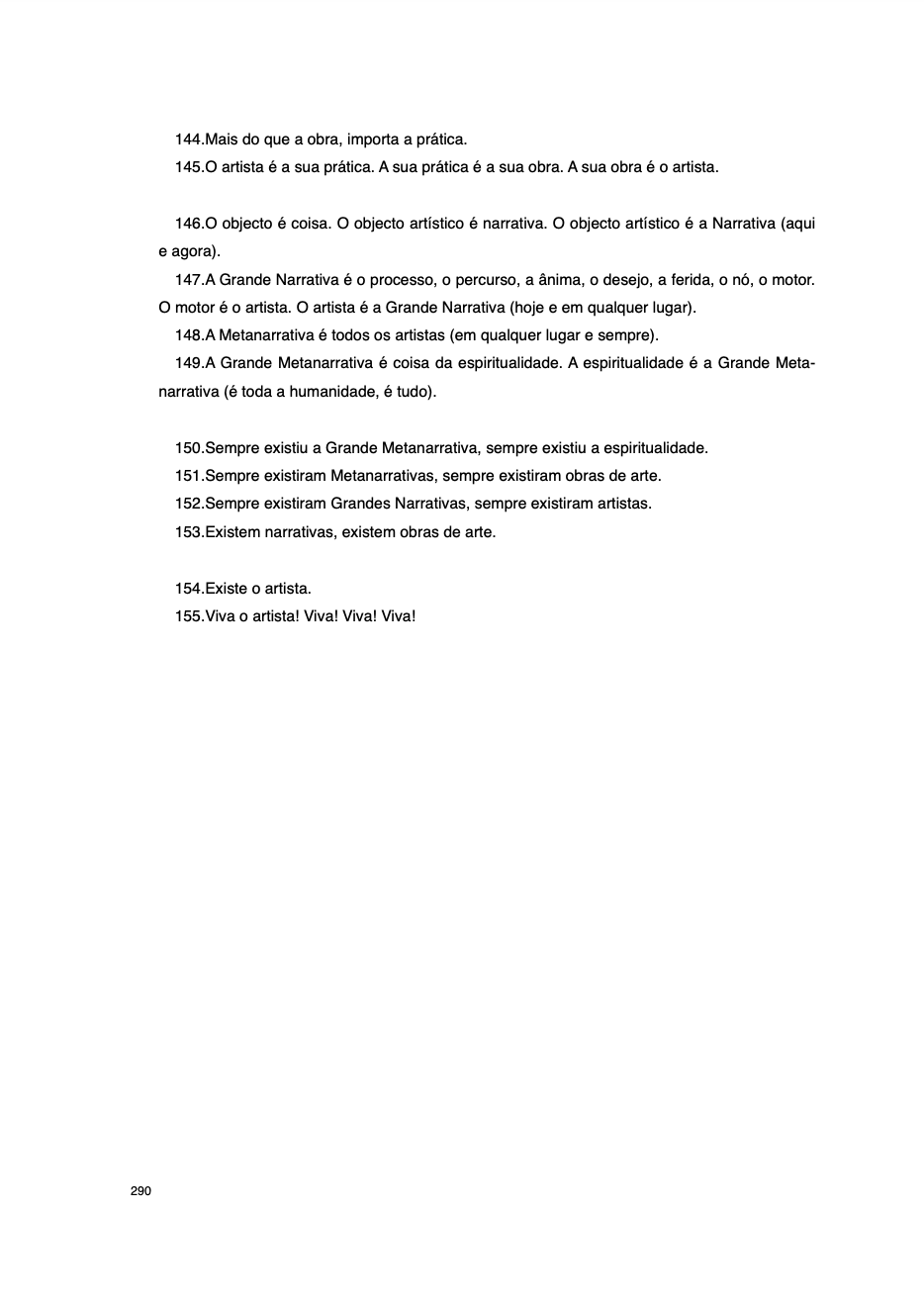
Artistic Manifesto "The Artist in the Voice of the Artist", by Francisco Lima
×
Argumentation;
The Artist by the Artist, in Their Own Voice
The selected epistemic object consists of the artistic manifesto "The Artist in the voice of the Artist", conceived as an authorial reflection anchored in a set of interviews conducted by Francisco Lima with Portuguese visual artists. The emphasis is intentionally placed on the artists’ own voices, rather than those of art critics, curators, historians, or other theorists who reflect on art or artistic practice. From a methodological perspective, the research is based on a qualitative empirical approach, centred on the analysis of the interviews and the development of a practical work that includes the aforementioned manifesto and a process-based artwork, "Artistic Practice as a Tool for Personal Hygiene", composed of photographic images that explore objects associated with everyday hygiene habits, establishing a symbolic correspondence between reflective practice and intimacy.
Artistic Manifesto; Artistic Process; Artistic Writing; Reflective practice;
2013
Artistic Manifesto "The Artist in the Voice of the Artist", by Francisco Lima
Francisco Cardoso Lima
DeCA | UA
Art Studies
Thesis Cover "The Artist by the Artist, in Their Own Voice". Francisco Lima. University of Aveiro. Department of Communication and Art. Art Studies Specialisation. 2016
Artistic Manifesto "The Artist in the Voice of the Artist", by Francisco Lima
Artistic Manifesto "The Artist in the Voice of the Artist", by Francisco Lima
Artistic Manifesto "The Artist in the Voice of the Artist", by Francisco Lima
Artistic Manifesto "The Artist in the Voice of the Artist", by Francisco Lima
Artistic Manifesto "The Artist in the Voice of the Artist", by Francisco Lima
Artistic Manifesto "The Artist in the Voice of the Artist", by Francisco Lima
×
Argumentation;
The Artist by the Artist, in Their Own Voice
The selected epistemic object consists of the artistic manifesto "The Artist in the voice of the Artist", conceived as an authorial reflection anchored in a set of interviews conducted by Francisco Lima with Portuguese visual artists. The emphasis is intentionally placed on the artists’ own voices, rather than those of art critics, curators, historians, or other theorists who reflect on art or artistic practice. From a methodological perspective, the research is based on a qualitative empirical approach, centred on the analysis of the interviews and the development of a practical work that includes the aforementioned manifesto and a process-based artwork, "Artistic Practice as a Tool for Personal Hygiene", composed of photographic images that explore objects associated with everyday hygiene habits, establishing a symbolic correspondence between reflective practice and intimacy.
Artistic Manifesto; Artistic Process; Artistic Writing; Reflective practice;
2013










Project’s Team
Researchers (Institutional affiliation at the time of integration into the project) :
Helena Elias (PI), Faculty of Fine Arts, University of Lisbon, VICARTE Research Unit;
Sofia Ponte (CO-PI), IADE – European University, ID+ Research Unit;
Beatriz Cantinho, School of Fine Arts, University of Évora, CHAIA Research Unit, Collaborating Member of CIAC;
João Castro Silva, Faculty of Fine Arts, University of Lisbon, CIEBA Research Centre;
Fernando Flores Moletta (Research Fellow in the EMERGING project, funded by FCT), Faculty of Fine Arts, University of Lisbon;
Jorge Marques, Faculty of Fine Arts, University of Porto, i2ADS Research Unit;
Margarida Alves, Faculty of Fine Arts, University of Lisbon, CIEBA Research Centre;
Pedro Cardoso, University of Aveiro, DigiMedia Research Unit;
Sónia Rafael, Faculty of Fine Arts, University of Lisbon, ITI LARSyS Research Unit;
Sofia Alexandre (Research Fellow in the EMERGING project, funded by FCT), Faculty of Fine Arts, University of Lisbon
Curatorship and Data Collection:
Helena Elias (PI), Sofia Ponte (CO-PI), Beatriz Cantinho, João Castro Silva, Fernando Flores Moletta, Jorge Marques, Margarida Alves, Pedro Cardoso;
Website Co-Coordination:
Sónia Rafael, Helena Elias, Margarida Alves, João Castro Silva;
Web Design (Concept and Implementation / programing) :
Sofia Alexandre, contact: sofia2000alexandre@gmail.com;
Emerging Matters and ArC
EMERGING is a research project that addresses artistic production within the scope of academic research. It aims, on one hand, to map the formation and development of artistic research carried out within Higher Artistic Education in Portugal, and on the other, to provide the foundations for a collection of academic art emerging from artistic research production in Higher Artistic Education, such as theoretical-practical doctoral theses or artistic works within post-doctoral projects.
The proposal for the ArC collection thus arises from a desire, a circumstance, and a revelation. The desire to find more visible means to facilitate research in advanced artistic training, and the circumstance of having over 60 entries of theoretical-practical theses in Portuguese university repositories, forming an impressive empirical base to showcase the artistic research ecosystem in Portugal. Furthermore, the quantity of theses and post-docs registered is higher compared to other similar European artistic institutions, which also motivated the need to bring this reflective work to the forefront.
ArC is the result of a collection by a multidisciplinary team in visual arts, who, organized into groups, from institutions and respective research centers, analised the theoretical-practical thesis documents published between 2011 and 2022. Based on a theoretical framework drawn from the readings of Barbara Bolt, Candy & Edmonds, Gray et al., we begin with the definition of art-based research, epistemic objects, and the production of artifacts within the Portuguese infrastructure that supports artistic research training and development (the institutions supervising doctoral programs in the arts and their respective research centers).
As a result, the question of what artistic research is, and how it manifests itself in higher artistic education, only arose after institutional reforms at the third-cycle level, which primarily took place in Europe following the implementation of the Bologna Treaty. Examples of artistic research models and their ecosystems then began to emerge in various artistic circuits, with artistic practice as both a methodological process and a result. Since 2011, schools and faculties in Portuguese universities have legitimized research whose production is represented by the artist's individual practice and reflections extending into the space of their relationship with the academy itself. The establishment of Research Centers or individual art scholarships awarded by the Foundation for Science and Technology began to pave the way for an institutional infrastructure for artistic research.
The Framework of ARc
Questioning what artistic research is and how it manifests itself, when considering it within the framework of art-based research, begins with the problem of the existence of an artifact (Candy and Edmonds, 2018), whether it is a sculpture, a drawing, video, artist’s book, photography, or website, among others, framed within the results of the research. We adopt the position of an art based research, which presents both the process and the result through artifacts produced, which can play a significant role in the transfer of knowledge within the artistic sphere and other fields of knowledge, as Gray et al. (2018) affirm about “epistemic things”, which emerge during the display (not the exhibition) of the ongoing work of academic artistic research.
Mapping Epistemic Objects in Potential: Now and Then
The mapping of ARc was organized into three typologies that are not rigid but often overlap. Discourses, Iterations, and Materializations are visible parts of the project’s results, which allowed us to gather the possible set of elements proposed here, based on what the EMERGING team defined as what could speculatively be epistemic objects - derived from the multimodal analysis of PDF documents of doctoral theses and post-doc reports. The temporal boundary presented (2011-2022) is just a starting point, as it is based on the empirical data collected for the project. At this stage, the ARc platform presents an initial core of 28 authors, a selection that does not yet reflect all the entries that were analyzed by the EMERGING team. However, the ARc platform is designed to be expanded as new entries are published in the respective university repositories, therefore fully functioning as a tool for sharing and disseminating these investigations, the epistemic objects that constitute the collection, and respective authors, as well as providing methodological support to future researchers in artistic and related fields. This will be a future challenge, but also an opportunity for the team to work on and design a new collaboration.
The ARc Platform: What Are Discourses, Iterations, and Materializations? Instructions for Use
ARc presents three possible typologies for reading potential epistemic objects: Discourses, Iterations, and Materializations. A relationship that was not without its conflicts, as the plurality of discourses reveals the deviations, contours, settlements, appropriations, parallelisms, symbioses, incorporations, refinements, or challenges to the formats of theses and academic research rhetoric. In terms of navigation, the platform offers two distinct modes. The first is a spatial, exploratory mode in which the user can freely explore, zoom in or out, and move through the space, selecting concepts and the respective authors emerging from the three constellations: ‘Discourses,’ ‘Iterations,’ and ‘Materializations’. Navigation on the platform becomes an exercise of discovery and ‘reverie.’ The second, more classic and structured mode, features a top menu organized in a tree structure. In this menu, the user can select ‘Discourses,’ ‘Iterations,’ or ‘Materializations,’ or even all three options together. Then, the user can choose a theme and the respective authors who worked on it, ultimately arriving at each author's page. Within each author’s page, the user can view the epistemic objects, the different typological reading possibilities, the methodologies developed by the author in their research, and the link to the thesis. The proposal takes into account that we should not only consider the final artistic object but also the methodological enrichment for the research practice itself, that is, the paths taken by the artist-researcher.
Discourses emphasizes the dialogue that artists establish with the theoretical-practical nature of academic work and possibilities for dissemination within the physical-material body of the written document – the thesis, which we considered a multimodal materialization (the written text, the page, the visual diagram, the content organization, the separation or merging of text, visual text, and hypertext – all material as much as the result and its conclusion). Sometimes, they express methodological paths alternative to academic rhetoric, a performative writing in dialogue with theoretical references and in relation to their performance work, with the thesis document being an epistemic object. There are also performative forms of reflection on artistic production within this context, through dialogues between literatures, shared curatorial practices, multidimensional, digital or physical, involving feminist perspectives. This typology also includes theses with a critical tone toward conventional academicism, which exclude the centrality of literature review and state of the art in their doctoral research, reject the description and critical analysis of the creative process itself, and advocate for the presence of mystery and intuition as fundamental elements of artistic research. Thus, they explore more subjective approaches, autobiographical narratives, or personal discursive constructions. The Discourses constellation is not static and is compatible with Iterations and Materializations. There are also works that incorporate Iteration and Materialization when accounting for the construction of an artistic thought on the very circumstance of the act of creation as an act of investigation and exhibiting the work in professional circuits.
Iterations emphasizes the paths taken within artistic practice as research and provides methodological possibilities that may potentially spur the beginning of new research. In this context, works are connected to the central research thread, derived and reconfigured processes, methods, or formats. Thus, forms of thinking about research, visual processes like visual atlases, diagrams, images based on documentation of actions, diaries, and artist books, which, after a process of artistic maturation, also become materializations, all fall under this category.
The Materializations presents a body of artistic work exposed as a terminal artifact, also marking an addition – an excess – in relation to the thesis or post-doctoral research document, which sometimes becomes autonomous from the field of writing, yet still compatible with the artist's argument and positioning. With Materializations, we return to the evidence of the artifact, the thing that raised the question, "Is this research?”, and that gave body to extensive critical literature on artworks within academic research, but also to a substantial body of artistic production that urgently needs nurturing.